


Radiant Roof Repairs is the Gold Coast roofing company Searchmaxxed grew up inside. It started with no rankings, no reviews and no ad budget. Search was the only marketing channel, and it took the business past $1 million a year in revenue. Three high-intent roofing searches reached number one within 90 days. The figures come from the company's own revenue records and Search Console.
The company
A new roofing business on the Gold Coast, competing against established roofers who held every ranking worth having. No ad budget. No bought leads. No outbound calling. One channel to win with.
The constraint shaped everything. Paid search auctions for roofing work were priced for companies with deeper pockets, and a brand-new business had nothing a careful homeowner could check: no reviews, no history, no authority. The only affordable route was to out-engineer the incumbents on search.
What was in the way
Three things, in order of cost. Established competitors ranked for every service and suburb term that produced work. The business had no proof a buyer could verify, which matters more in roofing than in most trades, because the buyer is inviting a stranger onto their roof. And the site that existed described the company rather than answering the searches homeowners actually make.
The work, in the order it happened
Reverse engineering the winners
Every top-ranked roofing site in the market got pulled apart page by page: which pages existed, how they were structured, what they answered, and where they were thin. That produced a build list rather than a keyword list.
A commercial page for every buying search
One engineered page per service and per suburb, each answering its search completely rather than mentioning it. Roof repairs, roof restoration, leak detection, re-roofing, each in the areas the business actually served, with prices and process where competitors published neither.
Proof and local trust
Reviews requested after every job. Photographs of real work rather than stock images. A Google Business Profile treated as seriously as the website: correct categories, services, service areas and hours, kept current instead of set once at launch.
Weekly measurement
Rankings, calls and booked jobs tracked against every change. Each week's work came from what the previous week's numbers said, which is the same loop Searchmaxxed now runs for clients.
What changed
Three high-intent roofing searches reached number one within 90 days. Revenue built past $1 million a year with search as the only marketing channel. The business had no advertising spend to pause, so every enquiry traced back to a page or a profile.
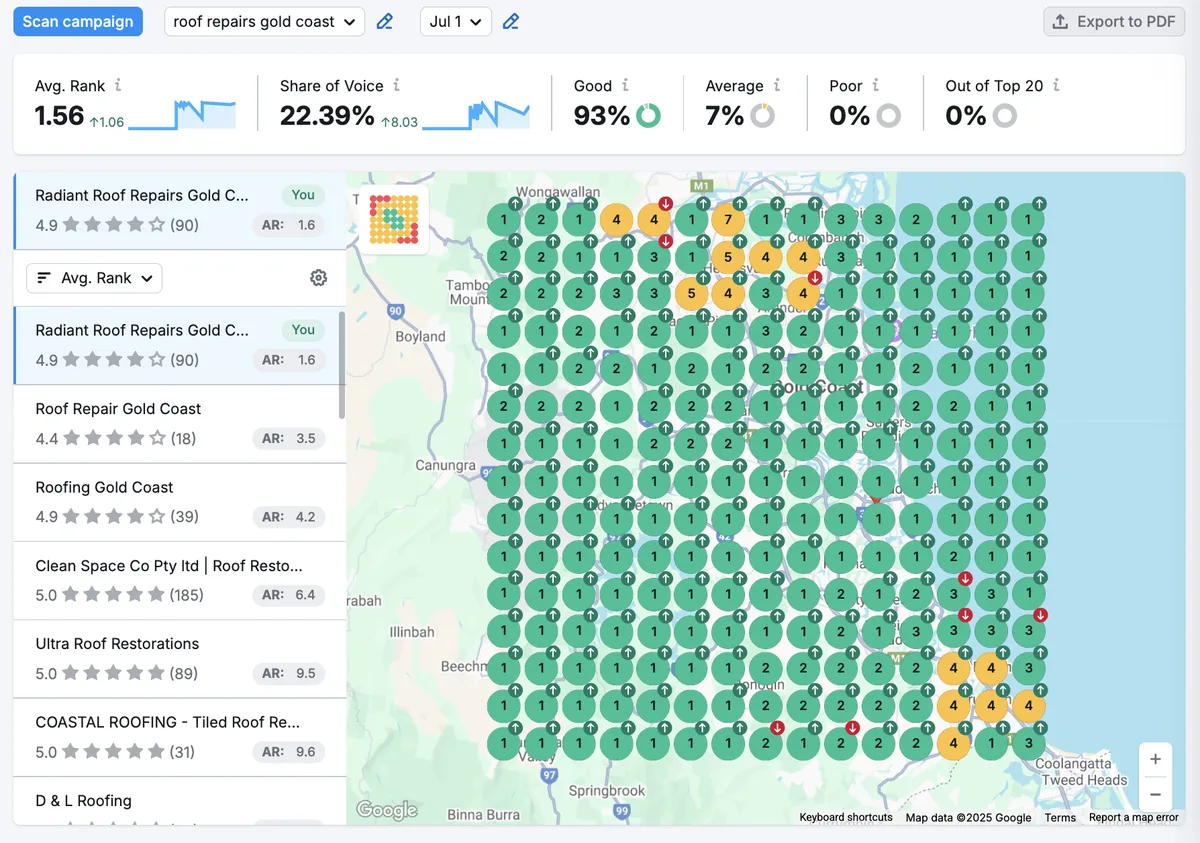
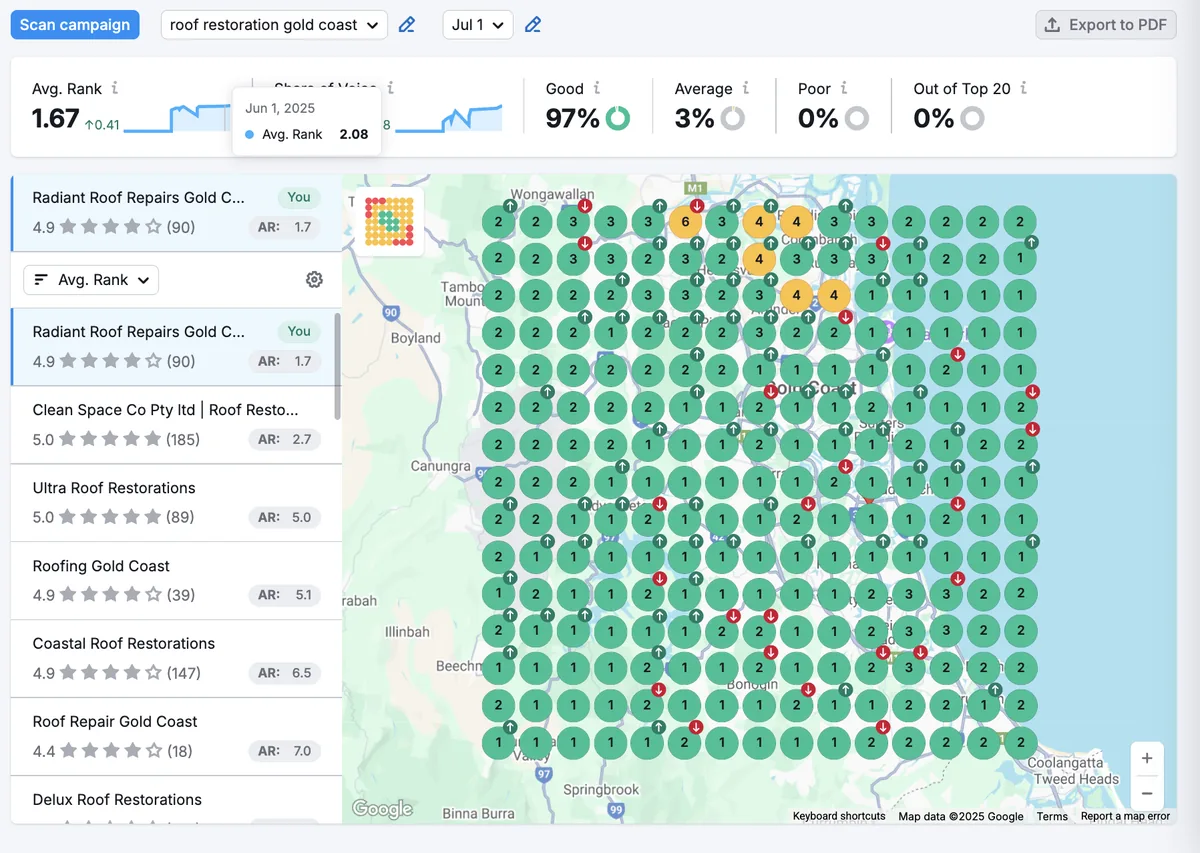
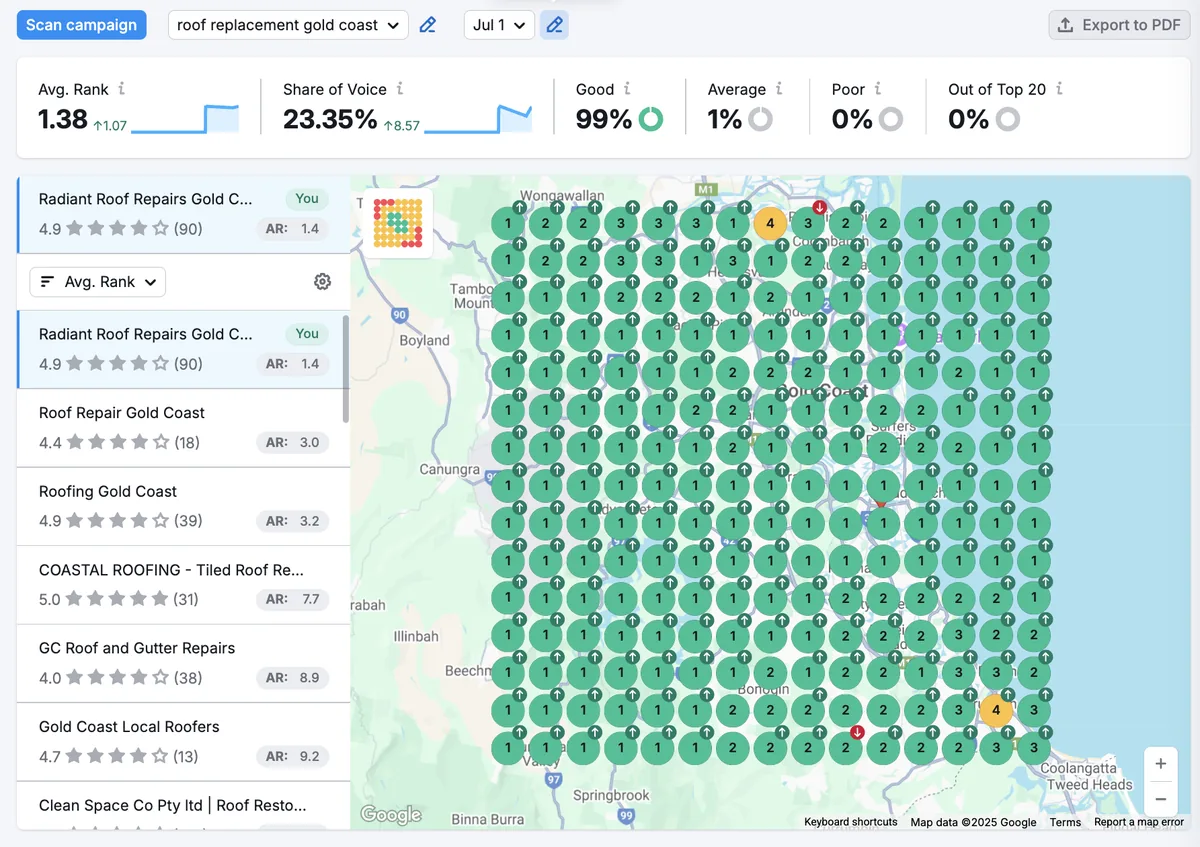
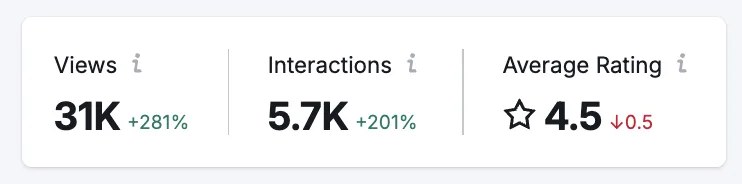
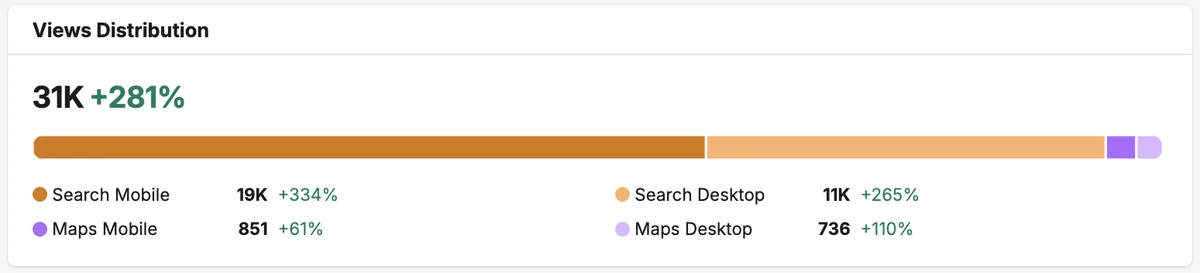
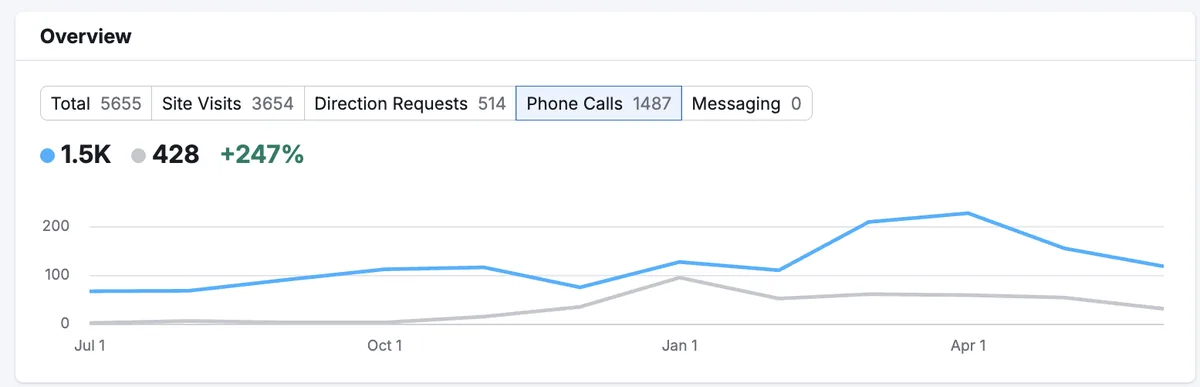
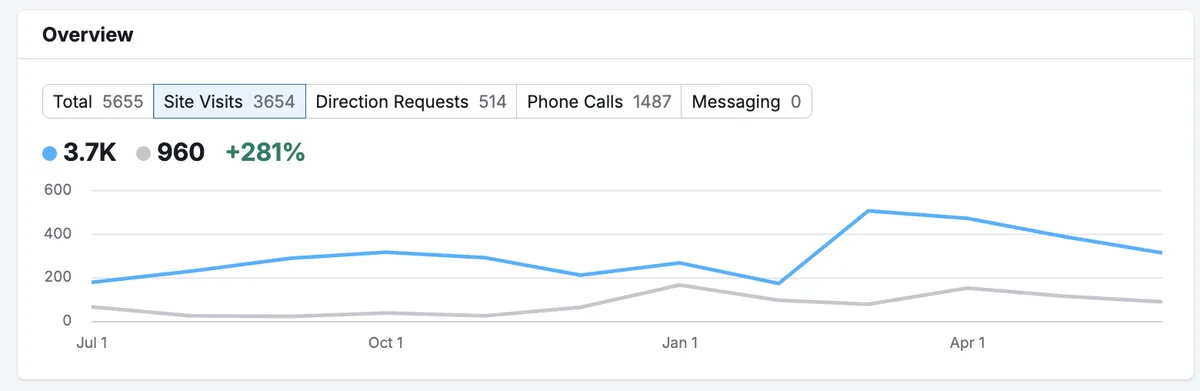
The profile carried the demand the pages created. Views rose 281% and interactions 201% across the same period.
How this was measured
Revenue comes from the company's own records. Search performance comes from Google Search Console for the same property. Because Searchmaxxed grew out of this business, the records are first-party rather than reported by a client. The figures record what happened in one market with one company. They are not a projection of your result.
The profile and local markup work follows Google's guidelines for representing your business on Google and Google Search Central on local business structured data.
What it means for a similar business
The method transfers. The timeline does not. A trade business in a contested capital-city market needs more pages, more review volume and more external source work before the same positions hold, which is what the audit sizes before anyone commits to delivery.
What does transfer is the order: research before building, pages before promotion, profile data before content, and measurement before the next decision.