


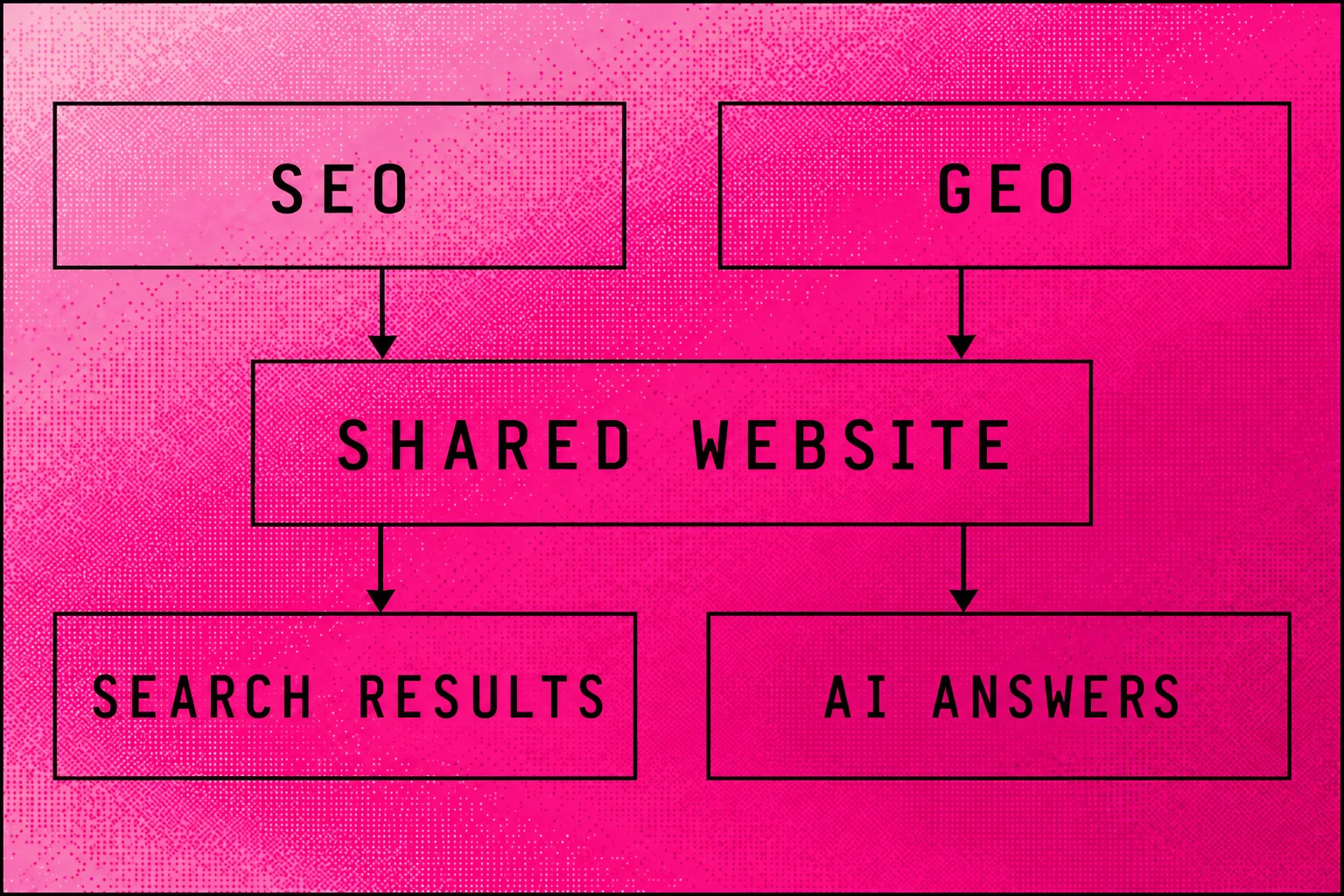
SEO targets search rankings and visits; GEO targets mentions and citations in AI-generated answers. Google applies the same SEO foundations to its AI features.[2] Fix access first, then add GEO checks where relevant answers omit your business or get its facts wrong.
GEO vs SEO comes down to the target: SEO aims for search rankings and traffic; GEO aims for mentions and citations in AI answers.[1] I recommend both within one plan. I run Searchmaxxed and put our approach first: agents check Search Console, GA4, competitors and AI answers. We use those checks to choose website and source work, then a person approves each change.
GEO vs SEO: what's the difference?
SEO targets discovery through search results; GEO targets inclusion in generated answers, while both involve work on your website.[1][3] At Searchmaxxed, we plan those jobs together and keep the outcome checks separate.
| Option | Best for | Main work | What to check |
|---|---|---|---|
| SEO | Search discovery and website visits | Relevant pages, technical fixes, links | Rankings, organic traffic, conversions |
| GEO | Mentions and sources inside AI answers | Clear answers, factual content, source support | Brand mentions and source citations |
| Both | Pursuing search visits and AI inclusion | Shared website work plus AI-answer checks | Separate observations and qualified enquiries |
The terms describe the target, not two sealed boxes. Google says its existing SEO fundamentals apply to AI Overviews and AI Mode.[2] ChatGPT search can also use search providers and rewrite a question into targeted web queries.[6]
I would compare the proposed work before paying for another label. A page rewrite can sit in the same plan as a crawl fix. Give each job a reason, a person who owns it and a check after release.
What is SEO, and what work does it cover?
SEO means search engine optimisation: improving your website to pursue higher organic search positions and unpaid traffic.[4] Our SEO service puts page work and technical fixes in the same plan.
Google's guidance covers crawler access, internal links, page experience and important content in text.[2] It also says structured data, the code describing a page's facts, should match what visitors can see.[2]
For your next SEO job, I would check the page that should answer a customer search. Does it explain the service? Can someone reach it from another relevant page? Can they enquire without hunting for the form?
Our technical SEO work handles the site's technical foundations. Our content strategy connects page topics to the real business and its services. We develop external support through link building and the Off-Page Source Layer.
For a business serving nearby customers, our local SEO work also covers Business Profile management, reviews and listings. Pick each new article because it answers a customer question you haven't covered.
What is GEO in digital marketing?
GEO means generative engine optimisation: improving content to increase its chance of appearing in an AI-generated answer.[1] Our GEO work sits alongside SEO in the Managed Search Loop.
A mention names your business.[5] A citation links an answer to a source; ChatGPT lets users open those citations and inspect the supporting page.[7] Check both. A business name without a link and a linked page without a recommendation tell you different things.
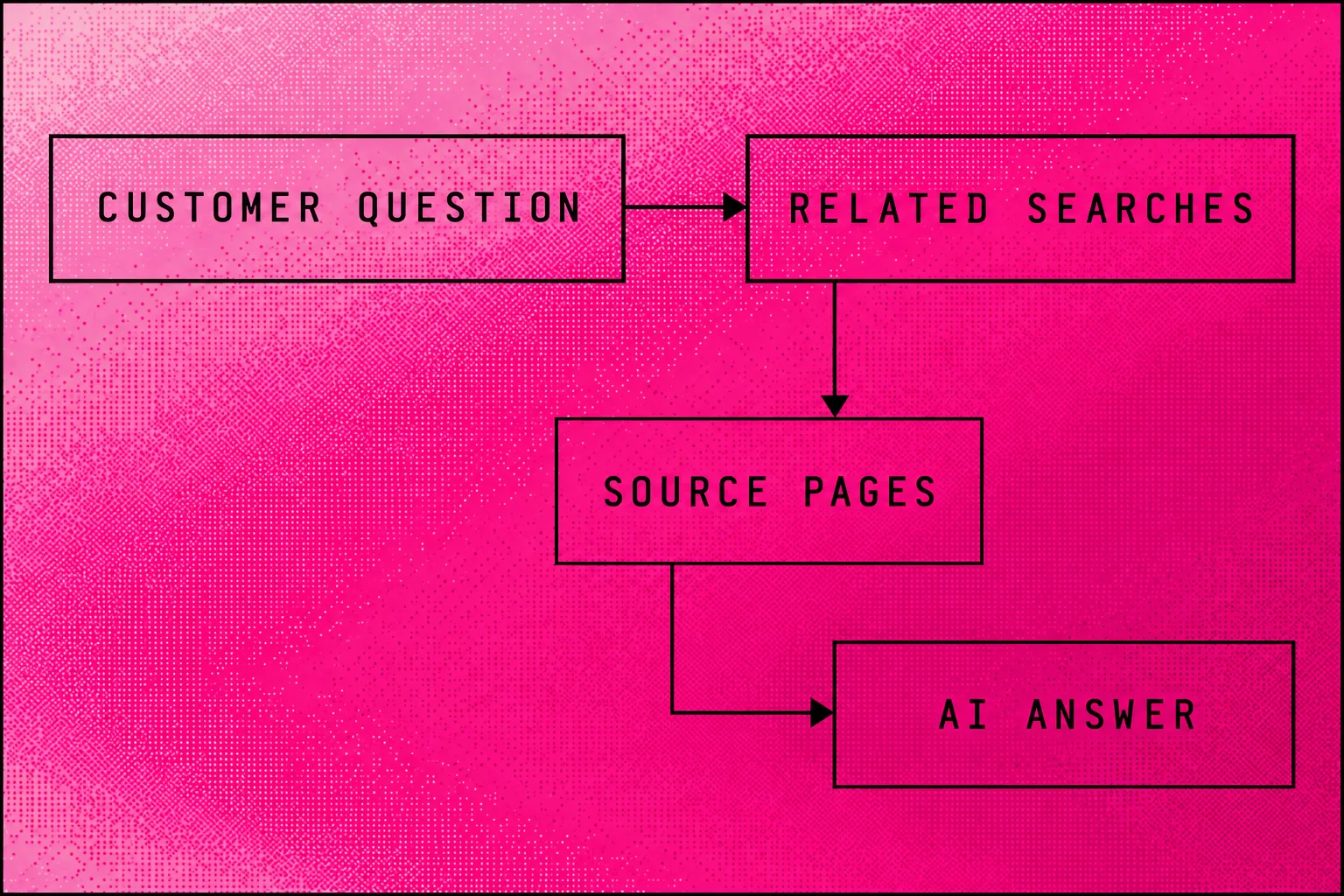
Google says AI Overviews and AI Mode may run multiple related searches across subtopics and data sources.[8] OpenAI says ChatGPT search can turn a question into targeted queries and send further searches after reviewing the first results.[6]
I would build around the full decision: the service, who it suits, its limits and the evidence behind it. Answer the follow-up questions where they belong. Keep each claim clear enough that someone can check it against its source.
Our Off-Page Source Layer develops external records that support the business beyond its own site. A directory record, genuine review and editorial mention each have a different job. We choose the source work from the market evidence and the agreed scope.
Is GEO replacing SEO in 2026?
GEO complements SEO under Google's published AI-search requirements; Google still requires indexed pages with snippet eligibility for supporting links.[9] At Searchmaxxed, we keep SEO and GEO in one Managed Search Loop.
Google says there are no extra technical requirements for appearing as a supporting link in AI Overviews or AI Mode.[9] It recommends the same foundational SEO practices as Google Search overall.[2]
So I would keep an existing page that answers its search well. Check access, accuracy and the questions it leaves unanswered before ordering a rewrite. Add AI-answer observations to the work you already measure.
I also separate AI helping you do SEO from optimising for AI answers. Searchmaxxed's agents help with research, analysis and production, while people select and approve public changes. Our AI SEO explanation covers that wider method.
Which is better: SEO or GEO?
At Searchmaxxed, I prioritise SEO when access or page gaps block discovery, then add GEO work around relevant AI-answer gaps. Google's shared requirements support that order.[9][2]
Start with the fault you can name:
- If Google can't index the page, address access and index eligibility before rewriting it for an AI answer.[9]
- If the page exists but doesn't answer the customer question, improve the page and its enquiry path.
- If the page answers the question but an AI answer misstates your services, check the exact claim and the sources behind it.
- If relevant AI answers cite other sources, inspect those sources before choosing your next page or external-source job.
Treat those as starting decisions, not a fixed budget split. In our Managed Search Loop, we choose work using the evidence, its expected value and its release risk.
When comparing quotes, ask whether the GEO scope adds new checks or repeats work already in the SEO scope. Our Australian SEO cost guide covers market pricing. Our Australian agency shortlist covers provider selection. Choose a team that can explain the specific job it will do next.
What does Google require for AI Overviews and AI Mode?
Google requires indexation and snippet eligibility for supporting links in AI Overviews and AI Mode.[9] Searchmaxxed checks access and page facts as part of the Agentic Website work.
Google's guidance gives you a concrete starting list:[2]
- Allow crawling in robots.txt, the file that gives crawlers access rules.[2] Check hosting and content delivery network access too.[2]
- Connect relevant pages through internal links.[2]
- Put important information in text that visitors can read.[2]
- Keep structured data consistent with the visible page.[2]
- Keep Business Profile and Merchant Center information current where relevant.[2]
Googlebot access controls crawling for Google Search.[10] Snippet controls and noindex affect what Google can display or index.[10] Google points to Google-Extended for training and grounding in some of its other systems.[10]
I would decide which information should appear before changing those controls. Your Search visibility and your content-use preferences belong in the same discussion.
How do you make your website eligible for ChatGPT search?
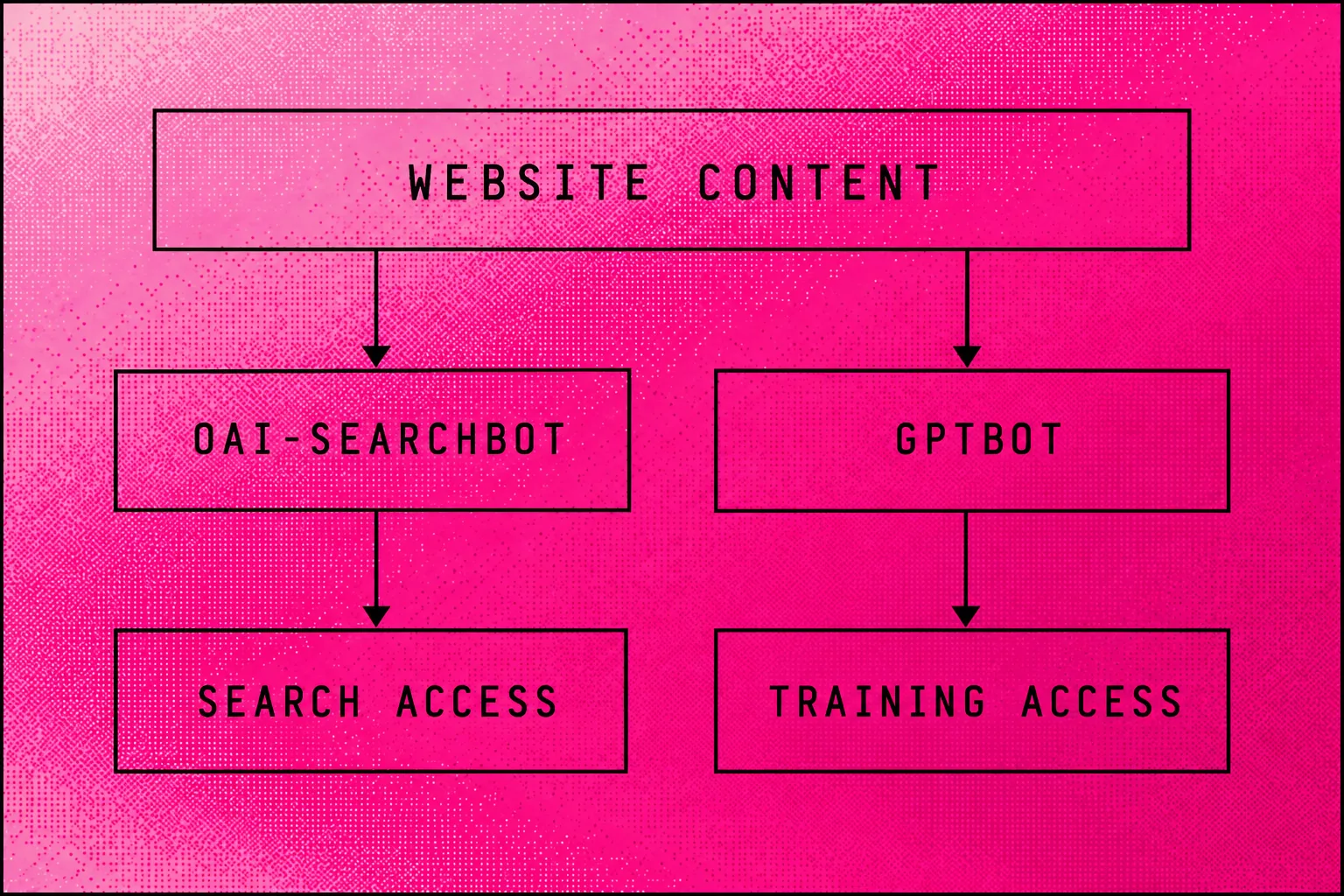
Allow OAI-SearchBot to crawl your website and check that your host allows OpenAI's published searchbot IP addresses.[11] Searchmaxxed includes access checks in its website diagnostics. Permitting a bot establishes eligibility, not a placement promise.[11]
OpenAI separates OAI-SearchBot, its search crawler, from GPTBot, which crawls content that may support model training.[12] Its documentation says you can allow search crawling while disallowing training crawling.[12]
Check search crawling and hosting access separately. OpenAI says to allow OAI-Searchbot and traffic from its published searchbot IP addresses.[11] Ask your site manager to verify those settings while keeping your chosen training controls.
OpenAI says placement depends on multiple factors and offers no placement guarantee.[11] I would keep access checks in the plan, then observe the actual answers and source links.
What is a GEO example within an SEO plan?
At Searchmaxxed, I would use the Managed Search Loop to turn a roofing-page gap into one job serving search visitors and AI-answer research. Consider this illustration: a roofer needs a page answering, "Does my roof need repair or replacement?"
I would draft sections explaining the inspection and how the roofer compares repair with replacement. Include what happens after an enquiry so customers understand the process. The roofer would supply the assessment criteria and approve every factual claim. Add genuine job photos and link to the matching service and enquiry form.
For SEO, check the page's access and internal links against Google's guidance.[2] For GEO, check whether the explanation answers the question and whether its claims have supporting sources. Semrush recommends factual answers and clear structure for that work.[3]
Then inspect the business's external records for conflicting service or location facts. That falls within our Off-Page Source Layer, which aligns real business facts with eligible external records.
After release, keep separate notes on search traffic, the AI answers you inspect and qualified enquiries. If the page needs another change, name the gap before changing it. You can pursue both targets without writing two near-identical roofing pages.
How can one plan cover SEO and GEO?
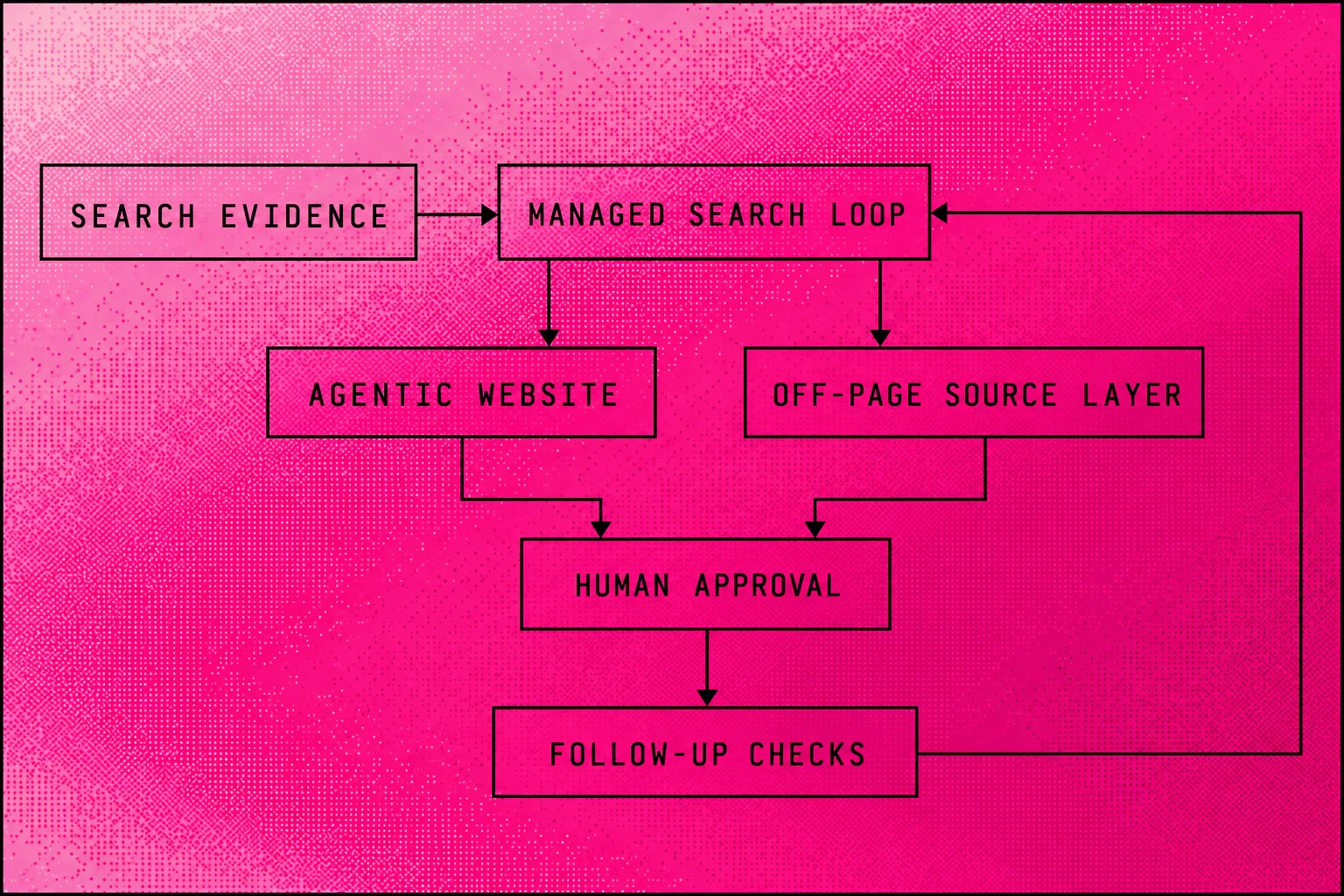
Searchmaxxed's Managed Search Loop checks the evidence to choose the next SEO or GEO job. A person approves the release before we measure its result. We connect Search Console and GA4 with competitor pages, Google results, technical checks and AI answers.
For your own plan, I would follow this order:
- Choose the customer question. Name the service or product it relates to and the page that should answer it.
- Check discovery. Inspect Google index eligibility, crawler access and the links leading to the page.[9][2]
- Check the answer. Compare the page with the customer question. Inspect relevant AI answers and open their sources.[7]
- Choose the next job. Write the reason for a new page, a fix or an external-source action.
- Approve and release the change. Check the live page and enquiry path.
- Compare the observations. Keep search traffic, answer mentions, citations and enquiries in separate fields.
Our Agentic Website gives us the site where we make page, schema and internal-link changes. You own its repository, content and data. Our Managed Search Loop connects those changes with the next decision.
An internal team can follow the same order. Assign a person to each job and keep a record of what changed. I would ask any provider to explain how its findings lead to a live fix.
How do you measure SEO and GEO without confusing the results?
At Searchmaxxed, we keep SEO traffic, GEO answer observations and qualified enquiries separate when we review a change. Google includes AI Overviews and AI Mode in Search Console's overall Web search performance.[13]
A Search Console change therefore doesn't, by itself, establish which AI feature caused it. Google's reporting groups that traffic with overall search performance.[13]
For your review, keep these records apart:
- Search discovery: rankings, organic traffic and search conversions.[5]
- Answer presence: whether an answer mentions your brand and whether it links to your page.[5]
- Answer accuracy: the exact service, place or claim the answer describes. OpenAI warns that results and citations can contain errors.[14]
- Customer action: qualified enquiries and the sales information you can connect to them.
When checking AI answers, record the question, engine, date, location context and source URLs. Repeat the same questions over time. Google says its AI features can vary in their responses and links.[8]
A citation proves that an answer linked a source in that observation. It doesn't prove a sale. I would check the cited page, the enquiry data and the sales record before assigning credit.
Where does Searchmaxxed fit?
Searchmaxxed runs agentic SEO: AI agents help us check the data and prepare work, while people approve public changes. Our Agentic Website, Managed Search Loop and Off-Page Source Layer connect that work across Google and AI answers.
We plug the agents into your whole Search Console and GA4. They check competitor sites, Google results and AI answers every week. The Managed Search Loop checks the findings against your plan and picks the next job.
We build new pages, fixes, schema and internal links on your Agentic Website. It lives on GitHub and Vercel, and you own it. We build links, reviews, citations, press and mentions through the Off-Page Source Layer. A person approves every change before it goes live. The agents then measure the result so we can choose the next job.
I ran these steps by hand at Radiant Roof Repairs on the Gold Coast. I built it from zero to more than $1 million a year in revenue using SEO as the only marketing channel. The pages, research, competitor checks and updates were manual.
Our packages include AEO and GEO. We agree the production and off-page scope with you:
- Local Search includes local service pages, Business Profile management, reviews, listing cleanup, local links and local AI-answer tracking.
- Growth System includes page releases, technical fixes, schema, internal links, landing-page work, source basics and AI visibility tracking.
- Agentic Search Engineering adds more page production, comparison and industry pages, digital PR, link campaigns and wider AI-answer tracking.
- Custom & Enterprise can cover multiple markets, dedicated engineering, custom reporting and original first-party research.
For the starting website work, Agentic Website Full Build covers research, design, page structure, technical SEO, enquiry paths and measurement. Agentic Migration keeps a design worth keeping and moves the site to an owned repository. The AI SEO Audit identifies gaps, fixes and the plan.
Frequently asked questions
Can GEO replace SEO?
Is AI SEO called GEO?
GEO names work aimed at inclusion in generated answers.[1] At Searchmaxxed, AI SEO also includes agents helping with research, analysis and production. A person selects and approves public changes. Ask what the service includes before comparing labels.
What is GEO in digital marketing?
Is SEO dead now with AI?
No. Google recommends existing SEO fundamentals for AI Overviews and AI Mode, including crawl access, internal links and important content in text.[2] I would keep those jobs in the plan and add checks of the relevant AI answers.
Is GEO the same as AEO?
The labels overlap: Contentful calls GEO answer engine optimisation, or AEO, in its explanation.[15] Searchmaxxed includes both in its managed packages. Our AEO service covers answer-focused work; compare deliverables rather than expecting every provider to define the terms alike.
Can I block AI training and still appear in ChatGPT search?
Do I need special schema for Google's AI answers?
Do SEO and GEO need separate pages?
Use one page when the customer question and service are the same. Give it a direct answer, supporting detail and a clear enquiry path. Create another page only when it serves a different customer question.
How often should I check search and AI answers?
Check for new faults weekly, then compare matched monthly periods before changing the plan. Repeat the same AI questions with the same engine and location settings. Keep search visits, answer mentions and enquiries in separate records.
Which business details should match across other websites?
Check the business name, services, locations and contact details on your website and the outside records you maintain. Correct conflicts using verified business facts. Keep real differences between branches and brands.
Will an AI mention always bring a website visit?
Can an agency promise a ChatGPT citation?
No. OpenAI says it does not guarantee placement, so an agency cannot promise a ChatGPT citation.[11] I would ask for the proposed work and how the team will check it. Agree on the scope before paying for an outcome the provider can't control.
- Semrush: GEO vs. SEO: A Comparative Guide for Digital Marketers
- Google Search Central: AI features and your website: SEO best practices
- OpenAI: Searching the web with ChatGPT: query rewriting
- OpenAI: OpenAI crawlers: independent search and training settings
- Contentful: What is Generative Engine Optimization (GEO) and how does it differ from SEO?