


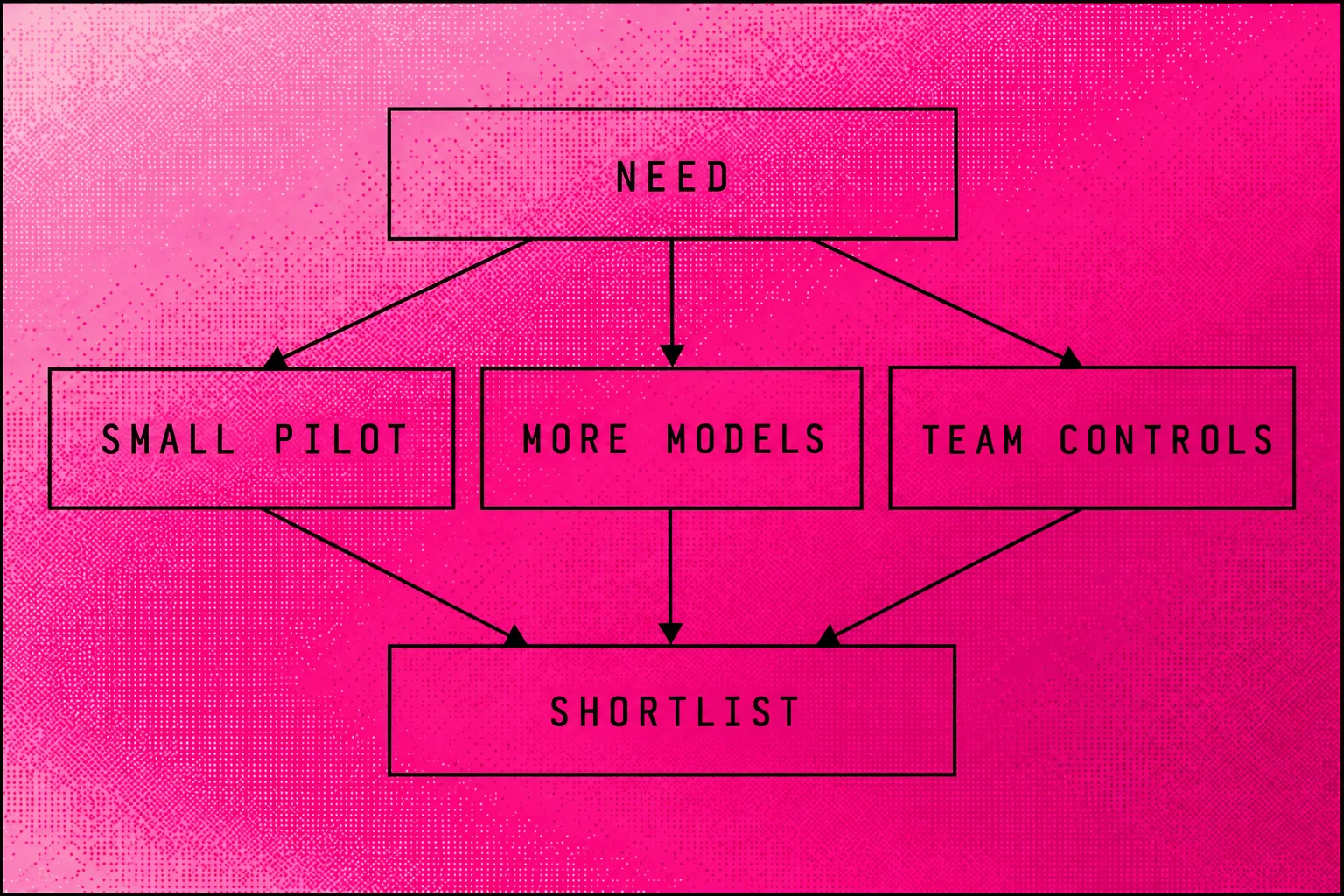
My Peec AI alternatives shortlist starts with OtterlyAI for a small pilot, Rankscale for credits and Profound for enterprise controls.[1][2][3] Stay with Peec when three models and daily tracking fit.[4]
| Your main need | My shortlist |
|---|---|
| Small daily pilot | OtterlyAI |
| Credit-based tracking | Rankscale |
| Many models | AthenaHQ |
| Enterprise controls | Profound |
| Keep your SEO workflow | Semrush, Ahrefs or SE Ranking |
Price the same workload before switching. If implementation is the gap, our Managed Search Loop picks the next job for our team to build.
My Peec AI alternatives are OtterlyAI for small teams, Rankscale for flexible tracking and Profound for enterprise controls.[1][2][3] Keep Peec when daily tracking across three models suits your team.[4] Consider AthenaHQ for more models, or your existing SEO suite, before buying another tracker.[5][6][7][8] I run Searchmaxxed. These picks compare published plans, not data accuracy.
Which Peec AI alternatives should you shortlist?
Shortlist Peec AI alternatives by the job you need: a small pilot, more models, site audits, an existing SEO workflow or enterprise controls.[1][5][9][6][3] I compare nine alternatives below, with Peec as the reference.
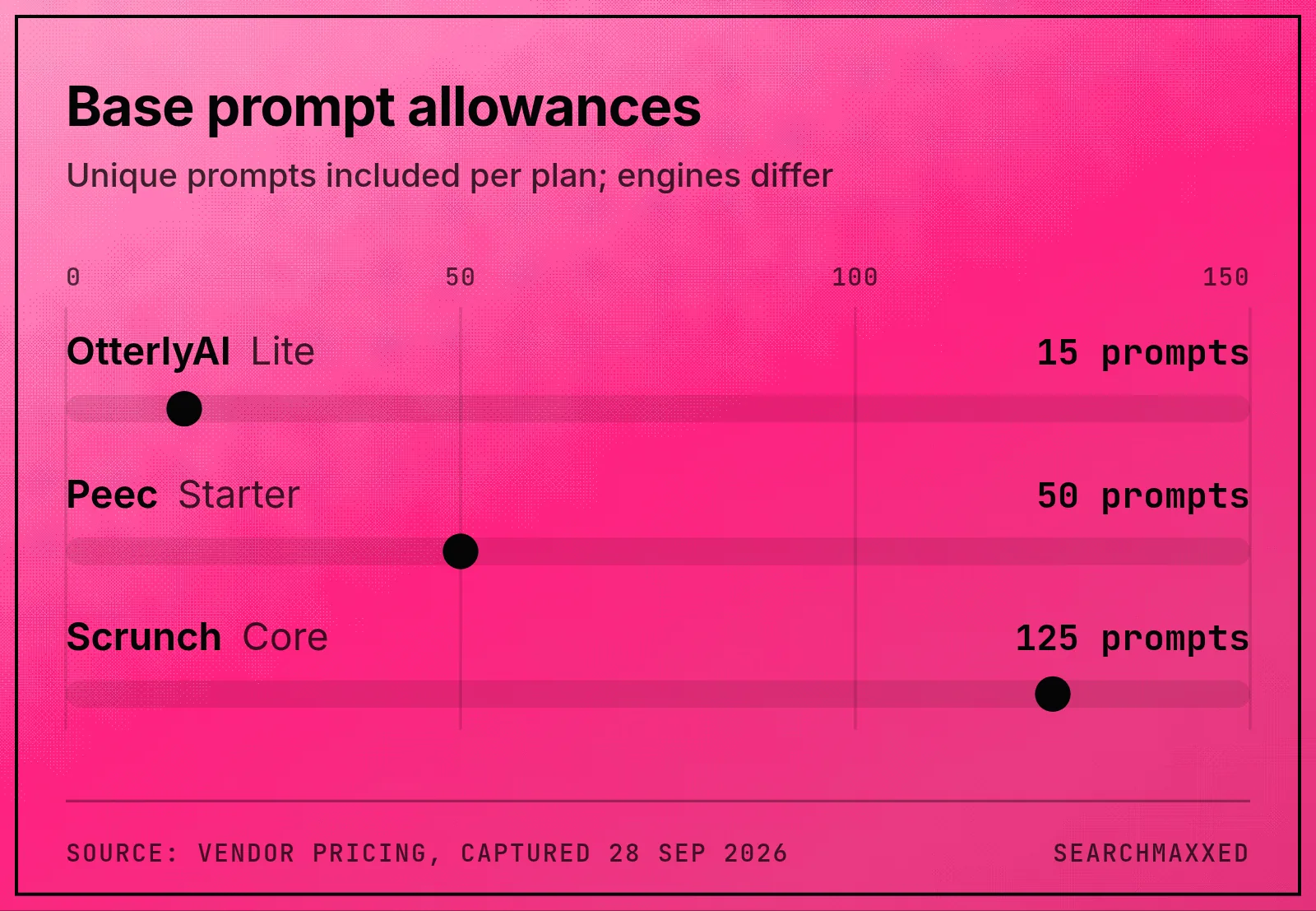
A prompt is a question you ask the tracker to run.[10] Compare both the question allowance and the engines that answer it.
| Tool | Best for | Starting price | Engines tracked |
|---|---|---|---|
| Peec AI, reference | Daily team tracking | €85/mo; Starter, monthly | Choose 3; Enterprise up to 13 |
| OtterlyAI | Small daily pilot | $29/month; Lite, monthly | ChatGPT, AI Overviews, Perplexity, Copilot; extras cost more |
| Profound | Enterprise requirements | Not published; custom Enterprise | Trial: 3; Enterprise: up to 9 |
| Scrunch | Tracking with site audits | $250/mo; Core | Core: 4; Enterprise: 9 |
| Semrush | Existing Semrush workflow | $139.95/month SEO; $199/month Starter | Google Search, ChatGPT, Perplexity, Gemini, “& more” |
| Ahrefs Brand Radar | Category research and custom prompts | Custom prompts $50/mo; Brand Radar AI from $199/mo | AI Overviews, AI Mode, ChatGPT, Perplexity, Gemini, Copilot |
| SE Ranking | SEO and AI tracking together | Core $129/mo monthly; AI Search add-on $89/mo | Add-on: AI Overviews, AI Mode, Perplexity, ChatGPT |
| Rankscale | Credit-based tracking | From $20/mo; Essentials | ChatGPT, Claude, Gemini, Perplexity, DeepSeek, Mistral, Grok, Copilot, Google AI |
| ZipTie | Your own engine mix | From USD $42.75/mo; Starter preset, monthly | ChatGPT, AI Overviews, Perplexity, AI Mode, Copilot, Bing, Gemini |
| AthenaHQ | Many models on credits | Essential Free; Starter $295/month | Essential: 5; Starter: 11 |
Pricing evidence: official vendor pages, checked 28 September 2026. The $ figures retain the vendors' symbols; they aren't AUD conversions. ZipTie specifies USD, and OtterlyAI specifies USD excluding tax for add-ons.[13][1] GST not stated for the other prices. Confirm currency and tax before paying.
Peec AI pricing: when should you stay?
Peec AI remains my pick when Starter's 50 prompts, three selected models and daily tracking cover your work.[4] Unlimited users let the whole team share access.[4] Peec also offers recommendations and source analysis, so switching solely to get suggested actions deserves a closer look.[14]
- What it does: Peec tracks visibility, position, sentiment and share of voice against competitors.[4] It suggests content changes and earned-source opportunities.[14]
- Engines tracked: Self-serve plans include three selected models; Enterprise offers up to 13.[4] Check the available models against your own shortlist.
- Starting price: Starter costs €85/mo monthly; Pro costs €205/mo and Advanced €425/mo.[4] Annual billing carries a 15% discount.[4]
- Free trial: Peec offers a free trial; its pricing page doesn't state the length.[4]
- What it cannot do: The base self-serve allowance doesn't include every model at once.[4] Extra models cost more, and Claude Sonnet 4 appears as an Enterprise API model.[4]
- Best for: I'd keep Peec for daily tracking when its allowance fits and your team can act on the findings.[4][14]
1. OtterlyAI: best for a small daily-tracking pilot
OtterlyAI is my first shortlist choice for a small daily pilot because Lite includes 15 prompts across four engines.[1] Its $29/month entry suits a focused test, while unlimited team members keep access separate from prompt capacity.[1]
- What it does: OtterlyAI tracks brand visibility, domain rankings and link citations.[1] Lite also includes prompt research, GEO audits and support for more than 50 countries.[1]
- Engines tracked: ChatGPT, Google AI Overviews, Perplexity and Microsoft Copilot come included.[1] Claude, Google AI Mode and Gemini cost extra.[1]
- Starting price: Lite costs $29/month on monthly billing; Standard costs $189/month for 100 prompts.[1] Lite's Claude add-on costs USD $29/month excluding tax.[1]
- Free trial: OtterlyAI offers a trial for new users; its page doesn't state the duration.[1]
- What it cannot do: Lite's base plan cannot cover those optional engines without extra charges.[1] API and MCP access start on Standard.[1]
- Best for: I'd choose Lite when you can select a narrow prompt set and already have someone to investigate each gap.
2. Profound: best for enterprise requirements
Profound is my enterprise shortlist choice when access controls, ongoing tracking and marketing agents belong in the same purchase.[3] Enterprise includes up to nine answer engines and SSO/SAML, which lets staff sign in through the company's identity system.[3] Get a quote for the work your team needs.
- What it does: Profound tracks citations, sentiment, ranking and competitive presence.[3] Its agents support research, writing and recurring marketing workflows.[3]
- Engines tracked: The trial covers ChatGPT, Gemini and Google AI Overviews.[3] Enterprise capabilities include Perplexity, AI Mode, Copilot, DeepSeek, Claude and Exa Search.[3]
- Starting price: The pricing page shows no paid starting figure; Enterprise uses custom pricing.[3]
- Free trial: The free trial runs 50 prompts daily for seven days.[3]
- What it cannot do: Trial users cannot customise the recommended prompt set.[3] The trial also excludes answer history, exports and API access.[3]
- Best for: I'd evaluate Profound when the team needs enterprise controls and can test its broader workflow, including its claimed browser-based collection.[15]
3. Scrunch: best for monitoring with site audits
Scrunch is my pick for a brand team wanting tracking and site audits in one Core subscription.[9] Core bundles 125 prompts, five monthly site audits and five user licences for $250/mo.[9] The country and language limits deserve attention before you roll it out across markets.
- What it does: Scrunch monitors citations and sentiment, tracks AI bot traffic and supplies recommendations.[9] Core also includes one page optimisation each month.[9]
- Engines tracked: Core covers ChatGPT, Perplexity, Google AI Overviews and Copilot.[9] Enterprise supports nine models, adding Claude, Gemini, Meta AI, AI Mode and Grok.[9]
- Starting price: Core costs $250/mo; the page gives no Enterprise price.[9]
- Free trial: Core offers a seven-day free trial.[9]
- What it cannot do: Core covers one country, one language and one persona.[9] Looker Studio and Query API access sit on Enterprise.[9]
- Best for: I'd trial Core for one brand and market, using a real page audit alongside the visibility report.[9]
4. Semrush: best for an existing Semrush workflow
Semrush is my shortlist choice if your team already works there and wants SEO and AI tracking in the same workflow.[6] Starter combines SEO tools with 50 daily prompts and AI brand performance for one domain.[6] Compare the cost of changing your plan with adding a separate tracker.
- What it does: Semrush covers AI mentions, sentiment, competitor research and prompt research.[16] Its AI search health audits flag access faults and suggest fixes.[16]
- Engines tracked: The pricing page names Google Search, ChatGPT, Perplexity and Gemini, followed by “& more”.[6] Ask which surfaces your chosen subscription includes.
- Starting price: SEO costs $139.95 monthly.[11] It includes custom prompt monitoring; Starter costs $199 monthly.[6] Starter's annual-billing rate is $165.17/mo.[6]
- Free trial: Semrush offers seven-day free access to its marketing toolkits.[16]
- What it cannot do: Starter's five SEO website slots don't mean five AI brand domains; its AI allowance covers one domain.[6]
- Best for: I'd evaluate Semrush before buying another dashboard if your SEO research and reporting already happen there.
5. Ahrefs Brand Radar: best for category research and custom prompts
Ahrefs Brand Radar suits two different jobs: researching its existing answer database and tracking your chosen questions through Custom Prompts.[7][12] I'd decide which job you need before comparing prices. The custom-only package and Brand Radar AI have different starting figures.[7]
- What it does: Brand Radar tracks brand mentions and citations across its search-backed prompt database.[12] Custom Prompts lets you organise your own questions and inspect background searches.[10]
- Engines tracked: The database covers AI Overviews, AI Mode, ChatGPT, Perplexity, Gemini and Copilot.[12] Custom Prompts also supports Claude.[12]
- Starting price: Custom prompt packages start at $50/mo for 2,500 extra checks; Brand Radar AI starts from $199/mo.[7] Brand Radar also sells standalone.[7]
- Free trial: Ahrefs offers a free visibility preview; its pricing FAQ points to Ahrefs Free without promising a paid-product trial.[12][7]
- What it cannot do: A check allowance cannot cover unlimited runs across every location and platform.[10] Claude consumes eight checks per update.[12]
- Best for: I'd choose Ahrefs for category research, precise recurring prompts or both, with separate budgets for each job.
6. SE Ranking: best for SEO and AI tracking together
SE Ranking is my shortlist choice for teams buying SEO research and AI tracking together.[8] Core includes 100 daily prompts beside rank tracking, audits and backlink research.[8] The AI Search add-on adds a separate allowance, so confirm which capabilities sit on your quote.[8]
- What it does: SE Ranking combines classic SEO tools with GEO research and AI source tracking.[8] The add-on supplies AI competitor research and access to SE Visible.[8]
- Engines tracked: Core's comparison lists five LLMs without naming them.[8] The add-on names AI Overviews, AI Mode, Perplexity and ChatGPT.[8]
- Starting price: Core costs $129/mo monthly or $103.20/mo on annual billing.[8] The AI Search add-on shows $89/mo monthly or $71.20/mo annually.[8]
- Free trial: The 14-day trial needs no credit card and includes 20 AI prompts per day.[8]
- What it cannot do: The trial cannot demonstrate the full paid allowance: Core includes 100 daily prompts.[8] Confirm each unnamed Core model before buying for coverage.
- Best for: I'd consider SE Ranking when you want one SEO workflow and can map its included features and add-ons to your needs.
7. Rankscale: best for credit-based tracking
Rankscale is my shortlist choice if you want credit-based tracking with control over run frequency.[2] Pro includes 1,200 monthly credits, while scheduling ranges from hourly to monthly.[2] Price your actual engine mix; its calculator assigns different costs to different engines.[2]
- What it does: Rankscale tracks visibility, citations and sentiment.[2] It also offers shopping and ad analysis across supported AI surfaces.[2]
- Engines tracked: The pricing page names ChatGPT, Perplexity, AI Mode, AI Overviews, Gemini, DeepSeek, Mistral, Claude, Grok and Copilot.[2]
- Starting price: Essentials starts at $20/mo; Pro starts at $99/mo.[2] Pro advertises up to 4,800 answers, depending on your selected engines.[2]
- Free trial: Pro offers seven days free, with no charge until day seven.[2]
- What it cannot do: Unlimited search-term creation doesn't mean unlimited execution; runs consume credits.[2] Its calculator gives Claude a higher credit cost than ChatGPT.[2]
- Best for: I'd trial Rankscale if you want to trade run frequency against coverage and can manage the monthly credit budget.
8. ZipTie: best for choosing your own engine mix
ZipTie suits teams wanting to choose their engines, prompt slots and run frequency themselves.[13] The Starter preset begins at USD $42.75/mo, but each setting remains editable.[13] Treat the preset as a starting configuration when comparing it with a fixed tier.
- What it does: ZipTie supplies prompts, responses, mentions, citations, sentiment and competitor metrics.[13] Its Google AI Overviews checks also record Google's top ten organic results.[13]
- Engines tracked: Choose ChatGPT, AI Overviews, Perplexity, AI Mode, Copilot, Bing AI Overview or Gemini.[13]
- Starting price: The Starter preset begins at USD $42.75/mo on monthly billing.[13] API and MCP access cost an extra USD $10/mo.[13]
- Free trial: The seven-day trial runs 25 daily prompts on ChatGPT, AI Overviews and Perplexity, without a card.[13]
- What it cannot do: The trial excludes API access and the other engines.[13] ZipTie doesn't refund paid subscriptions or add VAT or sales tax.[13]
- Best for: I'd choose ZipTie when you want to specify the workload and inspect the resulting price before subscribing.
9. AthenaHQ: best for many models on a credit budget
AthenaHQ is my shortlist choice when you need many models on one credit budget.[5] Starter costs $295/month, includes 3,600 credits and advertises visibility across eleven models.[5] Its free Essential plan gives you a smaller starting allowance across five engines.[5]
- What it does: AthenaHQ analyses prompts and responses, compares sources and competitors, and recommends content changes.[5] Starter connects AI visibility with GA4 and Search Console.[5]
- Engines tracked: Starter covers ChatGPT, Perplexity, AI Overviews, AI Mode, Gemini, Claude, Copilot, Grok, DeepSeek, Meta AI and Mistral.[5]
- Starting price: Essential is free with 300 credits; Starter costs $295/month.[5] One credit equals one AI response.[5]
- Free trial: The page offers Essential as a free plan without a separate timed-trial promise.[5]
- What it cannot do: Starter excludes API access and extra credits from its base price.[5] It supports one region and one language; Enterprise supports several.[5]
- Best for: I'd consider AthenaHQ when broader model coverage matters enough to budget credits across your questions.
How should you choose between tools like Peec AI?
Choose between tools like Peec AI by pricing the same prompts, engines, countries and run frequency, then testing the work you need to finish. Start with the reason you'd switch. Missing coverage and missing implementation call for different purchases.
- Write the requirement in plain words. For example: “We need Claude tracking and an export our team can inspect.”
- Ask for the exact engine allowance. Peec includes three selected models; OtterlyAI charges extra for Claude, while AthenaHQ Starter includes it.[4][1][5]
- Translate the workload into the vendor's unit. AthenaHQ bills responses as credits; Ahrefs counts checks by platform, location and update.[5][10]
- Include add-ons and billing commitments. ZipTie quotes a per-month rate but charges the whole selected billing period in advance.[13]
- Trial the same questions where the plan permits. Profound's trial uses recommended prompts, so ask its team how to test your own questions before buying.[3]
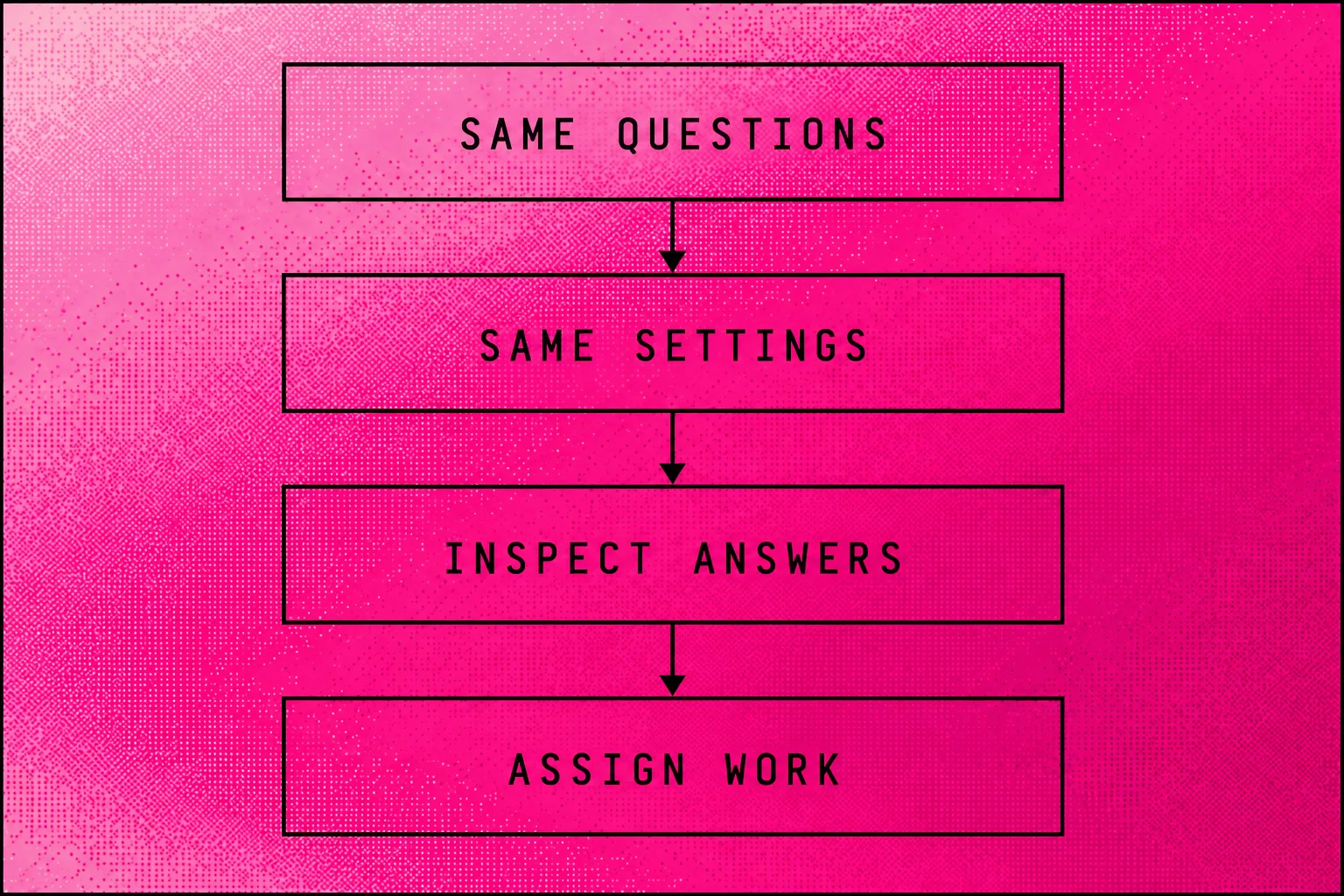
- Give the findings an owner. Ask who will inspect the cited page, propose a change, approve it and check the live result.
If software or an AI assistant must read your data, include API or MCP access in the quote.
My trial task would be a category query, a competitor comparison and a question about a buying objection. Hold the engine, wording and country steady. Inspect the full answer and cited URLs. Then follow one finding through to a proposed page change.
For Ahrefs, decide whether you need broad database research or recurring checks of your own prompts. Both belong in Brand Radar, but their allowances differ.[7][12] For Rankscale, use its credit calculator with your selected engines and cadence.[2]
Before cancelling Peec, save the prompt list, settings and available history. Run an overlap if you can. I would establish a new baseline when the replacement calculates visibility differently.
What can an AI visibility tool tell you about results?
An AI visibility tool can show sampled answers, but it cannot establish revenue from a visibility score alone.[17][18] ZipTie says the same prompt can vary between cycles.[17] I'd keep answer trends separate from website visits and conversions.
A mention counts when an answer names the brand; a citation points to a source.[12] Ahrefs tracks both in its answer database.[12] Inspect the underlying answer before deciding what a change means. A citation to a comparison article calls for a different investigation from a wrong product claim.
Google says AI Overviews and AI Mode can use different models and techniques, producing different responses and links.[18] Track the surface you care about rather than treating every Google AI answer as one result.
Google includes traffic from AI Overviews and AI Mode in Search Console's Web reporting.[18] Google also recommends tracking conversions and time on site through tools such as Google Analytics.[18] Keep those outcomes beside the tracker; an answer count and a sale measure different parts of the journey.
For Google's AI features, a supporting page must be indexed and eligible for a search snippet.[18] Our technical SEO work covers the access and page checks before we decide what to build. Buying a replacement tracker won't fix a blocked page.[18]
Where does Searchmaxxed fit?
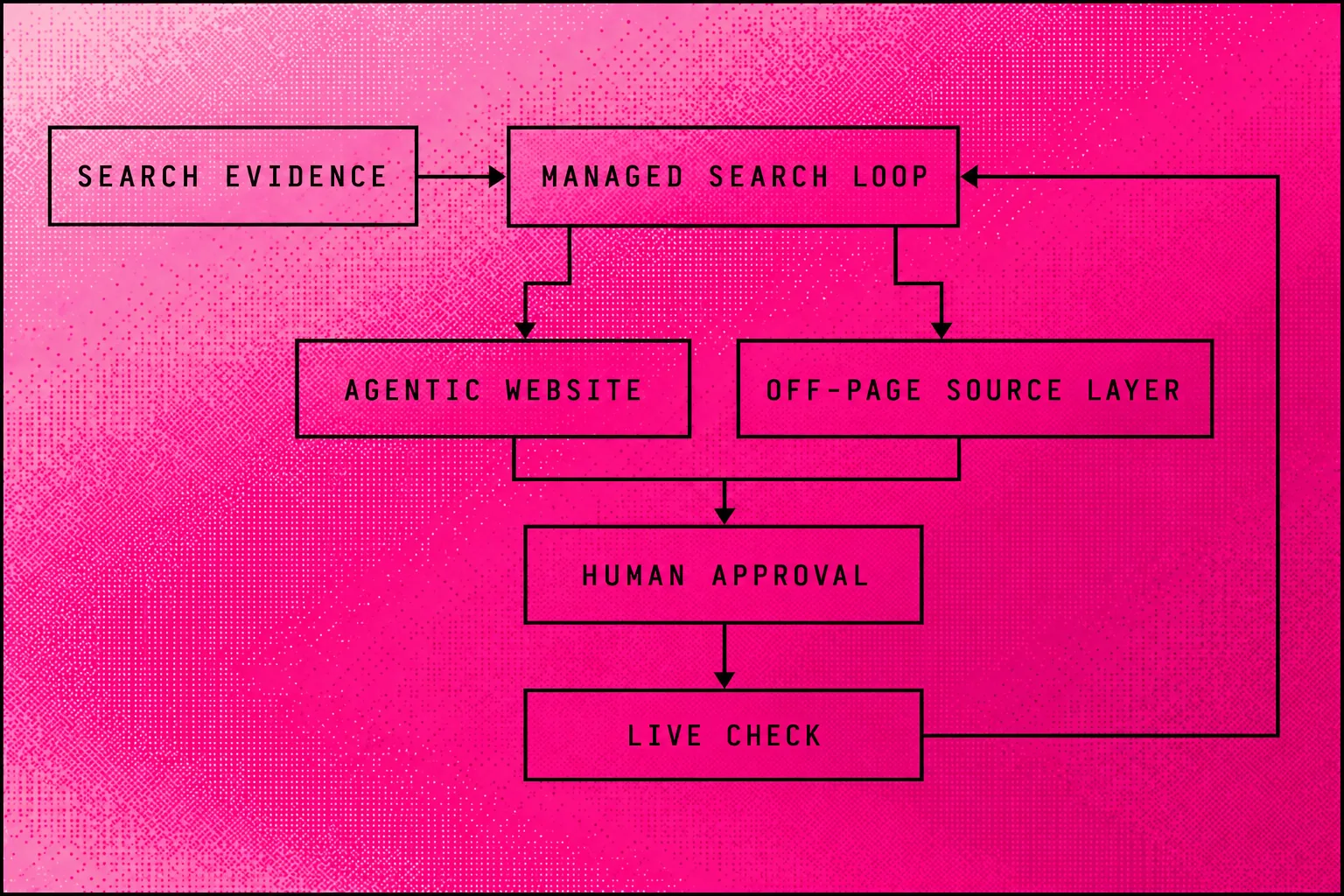
Searchmaxxed fits when you want a team to turn search evidence into changes on your site and other sources. Our Managed Search Loop picks the next job, and we build it. You can keep Peec or another tracker while we run that work.
We do agentic SEO: AI agents help us research and build, and people approve the changes. We connect the agents to your whole Search Console and GA4. Each week, they scrape competitor sites and read Google results. They also check what AI answers say about you.
The Managed Search Loop checks that data against your plan and selects the next job. We build new pages, fixes, schema and internal links on your Agentic Website. Schema is the code that states the page's facts to search engines. Your site lives on GitHub and Vercel, and you own it.
Our Off-Page Source Layer develops links, reviews, citations, press and mentions on other sites. We map your real business names, people, offers and locations first, then align the pages and outside records with those facts.
For example, if a tracker flags a missing service, we'd inspect your page and the sources behind the answer. We might fix access or build a page that answers the question. A person checks every change before it goes live. We verify the live result, then use the new data to choose the next job.
We compare matched 28-day periods for monthly decisions and matched 90-day periods for strategic direction. One odd answer doesn't set the plan.
Before Searchmaxxed, I built Radiant Roof Repairs from zero to more than A$1 million a year in revenue. SEO was its only marketing channel. I did the research, pages and updates manually. Across our client book, our work has generated more than A$10 million in revenue through search, by my own cumulative count.
We're a Queensland team working with companies across Australia and beyond. Our packages set the work we take on:
- Local Search: At least eight page releases a month, daily Google Business Profile management, reviews, local links, listing cleanup and local AI tracking.
- Growth System: Thirty page releases a month, technical fixes, schema, internal links, source-layer basics and AI visibility tracking.
- Agentic Search Engineering: Fifty page releases a month, comparison and industry pages, digital PR, link campaigns and wider AI answer tracking.
- Custom & Enterprise: Scope can cover multiple markets, dedicated engineering, custom reports and original research.
Every managed package includes Search Console and GA4 setup, a 90-day plan with weekly releases, implementation and human approval. You own the site, repository, content and data. Let's talk pricing.
Frequently asked questions
Is Peec AI legit?
How much does Peec AI cost?
What are the cheapest paid Peec AI alternatives?
What are some good free AI visibility alternatives?
Does Peec AI track Claude?
Is Profound better than Peec AI?
Does more engine coverage mean better data?
Why can two tools show different visibility scores?
Can I test an alternative without paying first?
Do I need content generation inside the tracker?
Will switching trackers increase my AI citations?
Switching changes what you monitor; I'd judge citation progress after the page or source work. Google requires supporting pages to be indexed and eligible for snippets.[18] Fix the page or source first, then check whether citations change.
Can Searchmaxxed do the work while I keep Peec?
Yes. Searchmaxxed connects Search Console and GA4 with competitor checks and AI-answer observations through the Managed Search Loop. We build on your Agentic Website and develop outside records through the Off-Page Source Layer. A person approves each public change.
- OtterlyAI: https://otterly.ai/pricing
- Rankscale: https://rankscale.ai/pricing
- Profound: https://www.tryprofound.com/pricing
- Peec AI: https://peec.ai/pricing
- AthenaHQ: https://athenahq.ai/pricing
- Semrush: https://www.semrush.com/prices/
- Ahrefs: https://ahrefs.com/pricing
- SE Ranking: https://seranking.com/subscription.html
- Scrunch: https://scrunch.com/pricing/
- Ahrefs: https://ahrefs.com/ai-prompt-tracking
- Ahrefs: https://ahrefs.com/brand-radar
- ZipTie: https://ziptie.ai/pricing/
- Peec AI: https://peec.ai/chat-gpt-visibility-tracker
- Profound: https://www.tryprofound.com/features/answer-engine-insights
- Semrush: https://www.semrush.com/features/ai-visibility/
- ZipTie: https://ziptie.ai/
- Google Search Central: https://developers.google.com/search/docs/appearance/ai-features