


AEO vs SEO compares two targets: direct answers and organic rankings and clicks.[1] Keep SEO as the base. Add AEO checks when your customers use answer engines to research your offer.
I run Searchmaxxed, so I put our approach first when I recommend a provider. We use Search Console and GA4 in our Managed Search Loop to choose the next page change.
AEO vs SEO: what changes in the work?
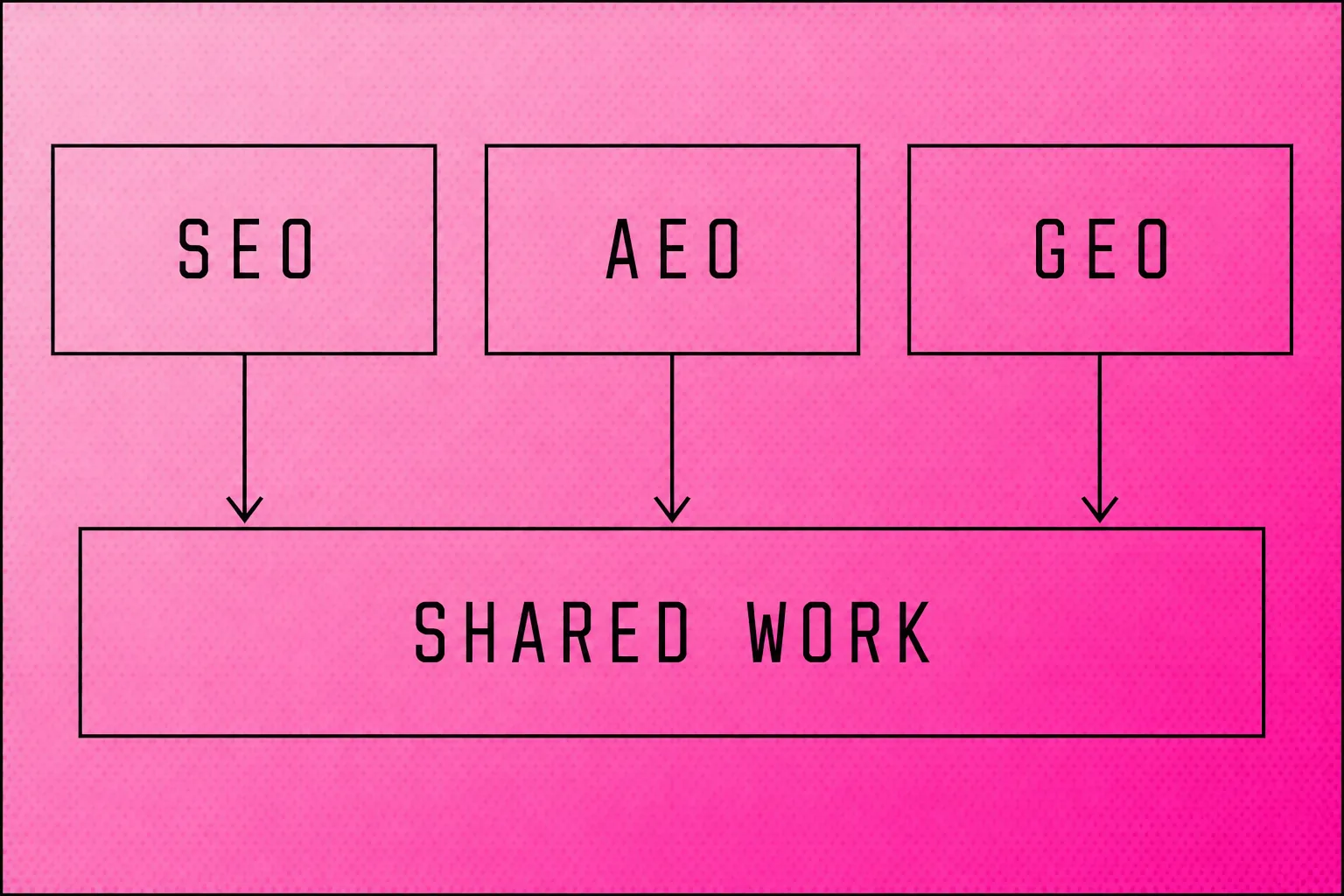
At Searchmaxxed, we treat AEO vs SEO as two goals within one search plan: direct answers and organic visits. Those goals overlap because Google's AI features use the same SEO foundations as Google Search.[2] I would choose the next task by the problem it solves, then check both outcomes.
| Option | Main target | Shared work | What to check |
|---|---|---|---|
| SEO | Organic rankings and clicks | Accessible, relevant pages | Rankings, visits and enquiries |
| AEO | Inclusion in direct answers | Accessible pages with clear answers | Answer inclusion, source links and enquiries |
| GEO | Inclusion in generated answers | Reliable content engines can reference | Mentions, citations and enquiries |
The checks column is my recommended scorecard. Each row needs the same business test: did the work help someone enquire or buy?
A page that Google hasn't indexed needs an access or indexing check before a new answer-writing exercise. Google's AI features require indexed pages, meaning pages in its search collection, that can show a snippet or text preview.[2] If access works, investigate the answer itself and the sources behind it.
What is AEO, and what does SEO do?
AEO means answer engine optimisation: work aimed at inclusion in direct answers.[1] SEO means search engine optimisation: work aimed at organic search visibility and visits.[5] The practical distinction concerns the result you pursue, with shared work underneath.[1] Neither label tells you to abandon a complete answer.
An AEO target could be a source link inside a ChatGPT answer. OpenAI says responses using web search may include citations that people can open.[6] A citation points to a source; check whether the answer also names the business you want people to find.
SEO covers the work that helps a search engine reach and understand the website.[3] Google's recommendations include crawl access, internal links, page experience and important content in text.[3] Those recommendations also apply to its AI features.[3] I wouldn't divide a page into a long SEO version and a short AEO version.
For our SEO work, we connect search data to page fixes and new content. Our AEO work also checks what AI answers say and which sources they reference. The same page can carry a direct answer followed by the detail someone needs before calling you.
Where does GEO fit alongside AEO and SEO?
GEO means generative engine optimisation: work aimed at inclusion in generated AI answers.[4] AEO covers direct answers, and GEO focuses on generative outputs; the labels overlap in practice.[4] Google's guidance applies the same SEO foundations to AI Overviews and AI Mode.[2] I would organise the work around the platform and the result.
AEO discussions can include featured snippets and voice assistants as well as generated answers.[7] GEO makes the generated-answer focus explicit.[4] When someone proposes either service, ask which answers they will check and which page changes they will make.
The search behind an answer also matters. Google says AI Overviews and AI Mode may run related searches across subtopics and data sources.[8] Google calls this query fan-out.[8] OpenAI says ChatGPT search can rewrite a prompt into targeted queries for search providers.[9] A single question can therefore require more than a matching headline.
I would cover the definition, comparison, constraints and next step when those details help answer the question. Our GEO service sits alongside the owned-page and external-source work. AI SEO explains the wider agent-assisted method.
Is AEO replacing SEO, or is one better?
AEO hasn't replaced SEO in Google's AI search requirements.[2] Google still requires indexed, snippet-eligible pages and applies its existing SEO foundations.[2] At Searchmaxxed, I prioritise the fault stopping the page from competing. That can mean fixing access before editing an answer, or improving evidence on a page that search engines can already reach.
Choose the emphasis by your starting point:
- If an important page cannot enter Google's index, investigate the technical fault first.
- If the page misses the customer's question, improve the content and enquiry path.
- If an AI answer gives the wrong business details, compare its sources with your website and public records.
- If visits arrive without enquiries, inspect the page and the offer before commissioning more content.
These are decision rules for your work list, not promises about the next ranking.
OpenAI says ChatGPT placement depends on several factors and carries no guarantee.[10] Crawler access establishes eligibility.[10] It doesn't settle which source the answer chooses.[10] I would reject a proposal that treats a citation as certain once a checklist is complete.
Ask for the actual jobs: the access check, page rewrite, evidence, external records and measurement. Our Australian agency comparison gives context when you're choosing who should run that work.
How do you optimise for AEO, SEO and GEO together?
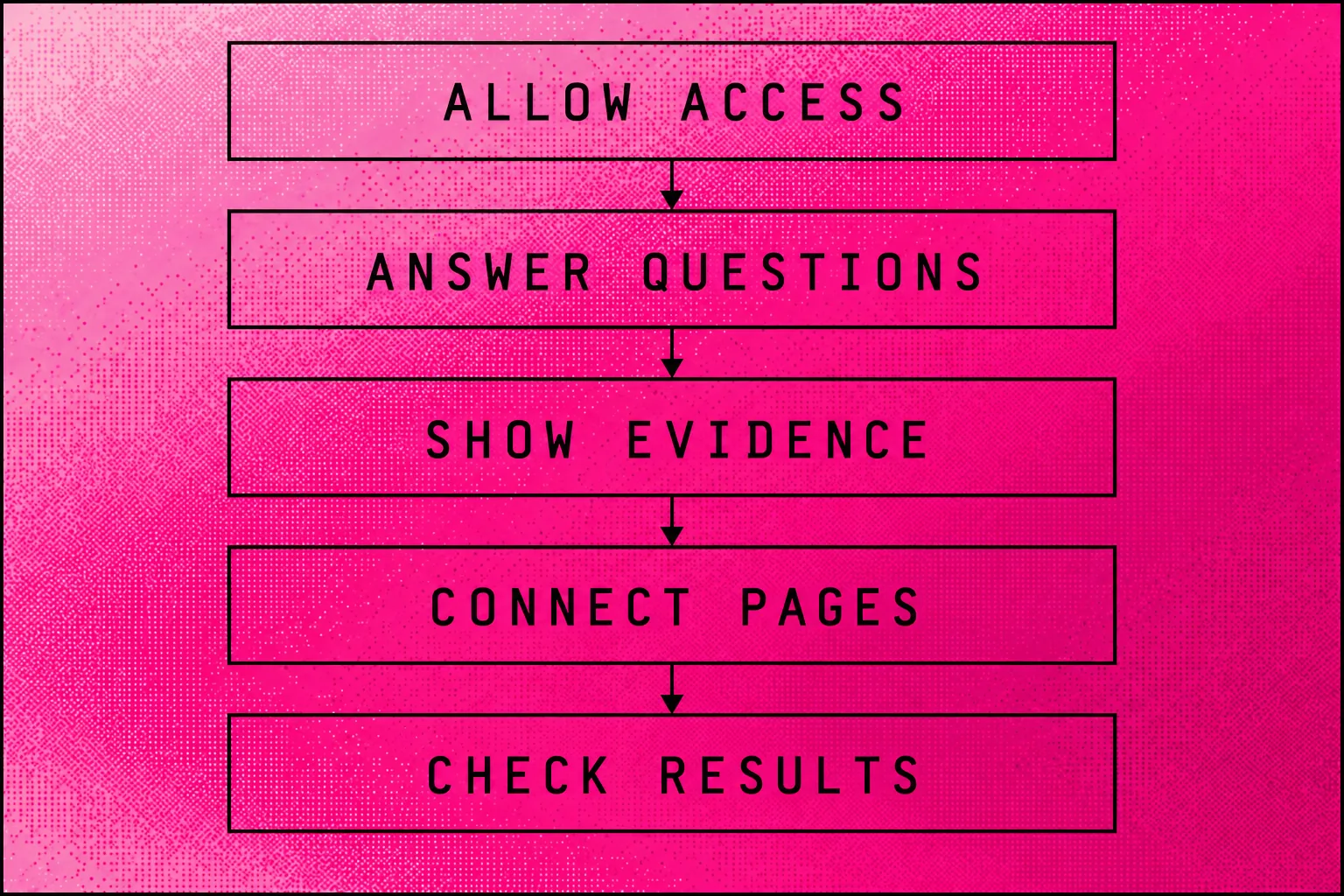
Start with a customer question and check whether search engines can reach the page. Google recommends accessible pages, reliable content and matching structured data.[2][3] Check ChatGPT access separately through OAI-Searchbot and your hosting rules.[10]
Check whether the engines can reach the page
Check robots.txt, hosting and content delivery network (CDN) rules. Google names all three as crawl-access checks.[3] Confirm that the page meets Google's indexing and snippet requirements.[2] For ChatGPT search, allow OAI-Searchbot and OpenAI's published searchbot IP addresses.[10] Our technical SEO work covers the website foundation and access checks.
Answer the question, then explain the decision
Write a direct answer under a heading that names the question. Follow it with the evidence, exceptions and steps someone needs to act. Keep the important content in text, as Google recommends.[3] Add images where they help explain the subject.[3] Choose content strategy by customer questions and missing pages, then give each page a clear job.
Give each claim something a person can check
Include verified business facts, relevant experience and sources for outside claims. Google asks for helpful, reliable, people-first content.[2] Keep an example separate from a measured result. If you haven't measured a repair time, explain the factors that affect it without inventing an average.
Match structured data, the page's machine-readable facts, to the words visitors can read. Google requires that match in its recommendations.[3] Start by correcting the visible facts when they disagree.
Connect the page to the business and its sources
Link related pages so visitors and crawlers can find the explanation they need. Google recommends making content easy to find through internal links.[3] For local businesses, it also recommends keeping Business Profile information current.[3] Check that the business name, service and location agree wherever you maintain them.
At Searchmaxxed, entity mapping connects the real business with its people, services, places and evidence. Our link-building work and Off-Page Source Layer develop external links and records around those facts. We check what went live and whether an answer references it.
Check the result before picking another task
Inspect the live page after the change. Confirm the content, links and enquiry action work. Compare search data with answer observations and actual enquiries. Keep the question and platform with each answer record so the next check has context.
What would one shared page look like?
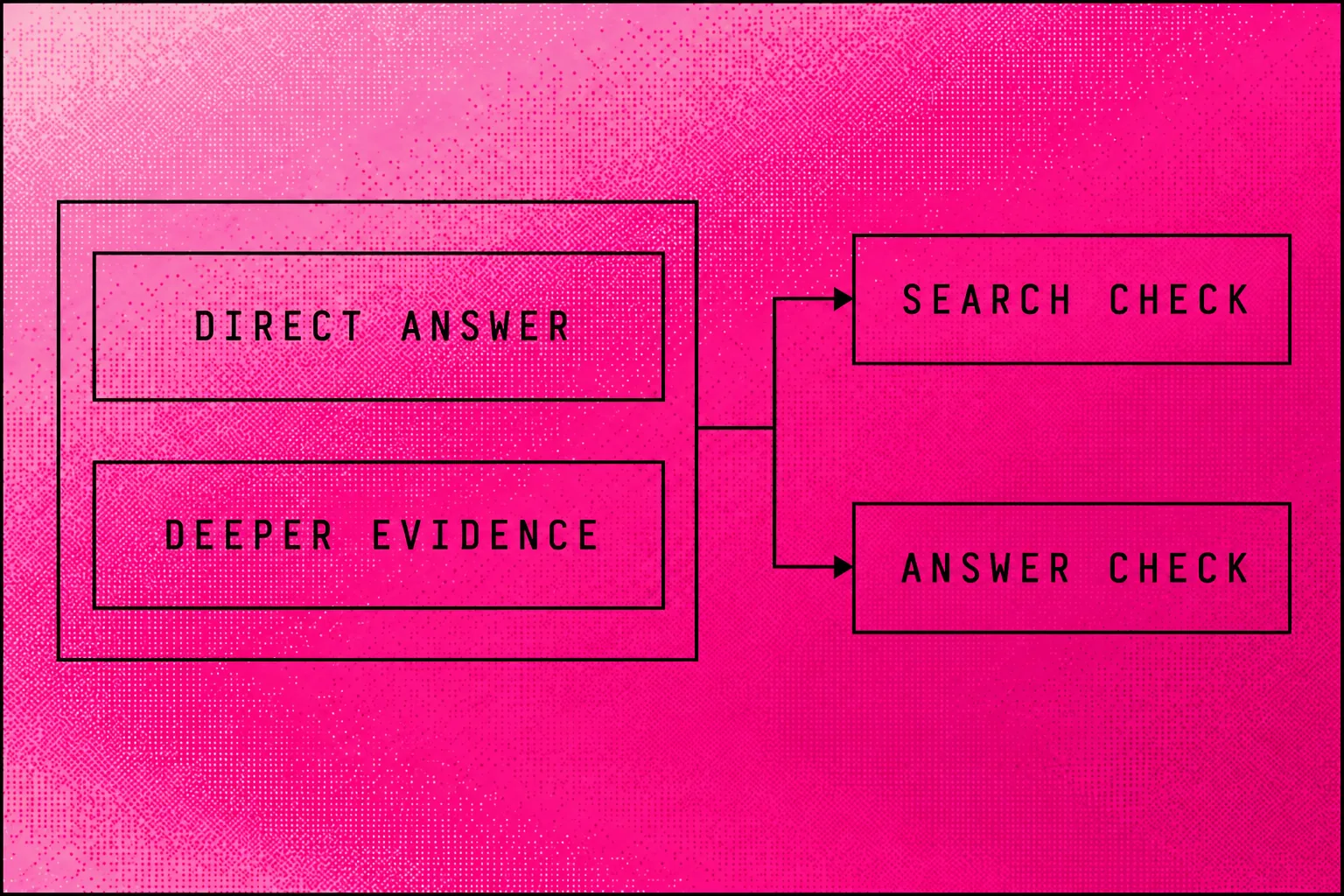
One page can support AEO and SEO by answering a customer question and explaining the decision behind it.[2][3] Google's AI-feature guidance supports reliable content, accessible text and internal links.[2][3] I would build the short answer and the supporting detail together.
Imagine an Australian roofing business answering: “Can you repair a leaking roof, or will it need replacement?”
I would give the page these jobs:
- Explain what the inspection must establish before the business can recommend either option.
- Set out the repair and replacement options using the business's verified service details.
- Add genuine job photographs and documented examples with permission.
- Answer follow-up questions about the inspection, service area and booking process.
- Link to the relevant service and case material.
- Give someone a clear way to request an inspection.
Keep the business's actual answer in the opening. Avoid turning an unknown roof condition into a confident diagnosis.
SEO and AEO then become different checks on the same asset. For Google, check index eligibility and relevant search visits.[2][11] For ChatGPT, inspect whether a web-search answer links to the page and supports its recommendation with the correct facts.[6][12] Track inspection enquiries separately.
Our local SEO work combines local pages, business-profile work, reviews and local search checks. The page belongs on the business's owned website. A second page repeating the same answer under an AEO label would need a distinct customer purpose before I'd build it.
How should you measure SEO and AEO?
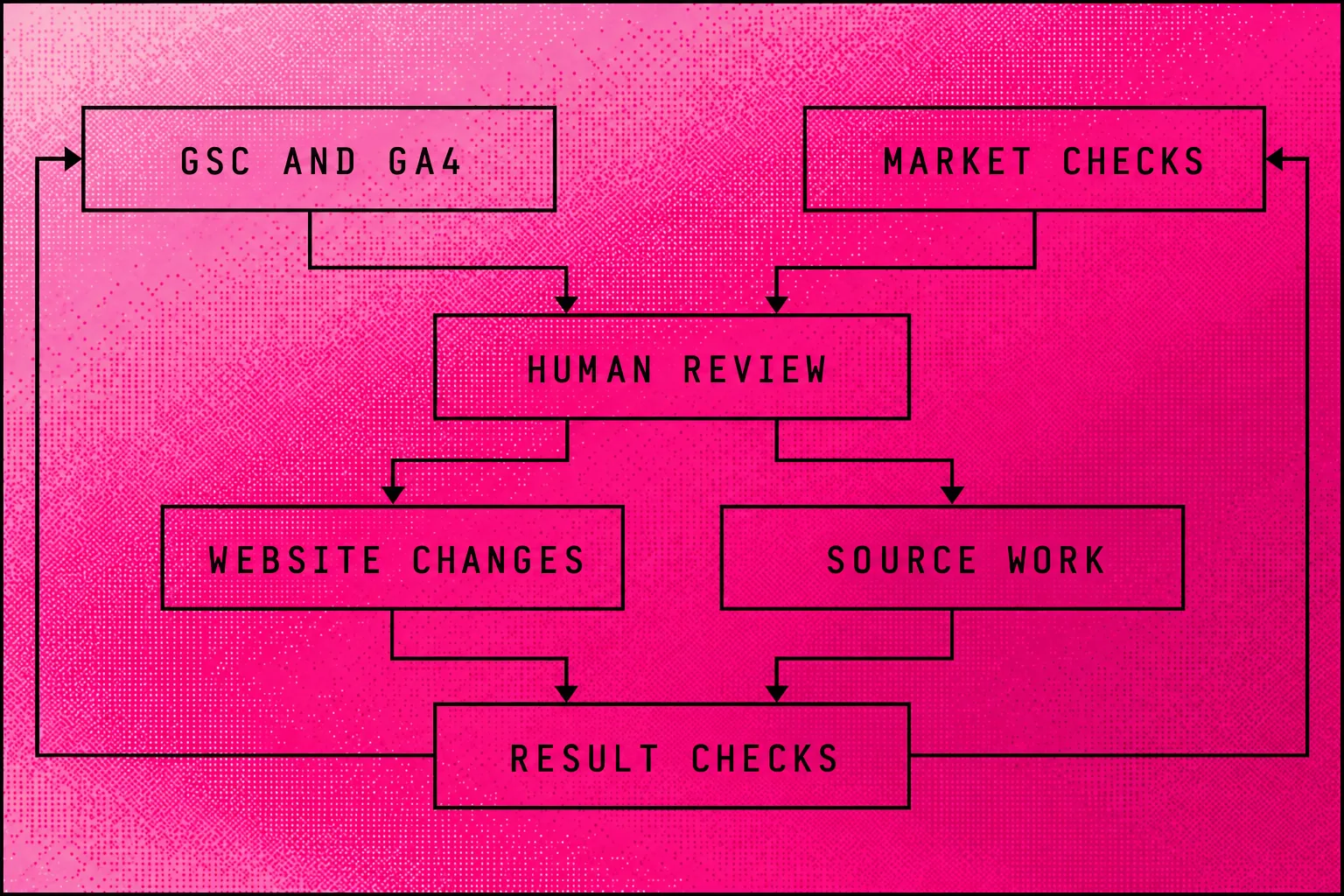
Measure SEO and AEO separately, then compare both with enquiries and sales. Searchmaxxed's Managed Search Loop connects Search Console and GA4 with competitor checks and AI-answer observations. We use those records to choose the next page or source change. A ranking, a source link and a sale answer different questions.
Use a record for each kind of result:
| Record | What to keep | What it tells you |
|---|---|---|
| Search performance | Query, page, date, clicks and search traffic | Whether search sends people to the page |
| Answer observation | Question, platform, date, wording and source links | What that answer says and references |
| Business result | Landing page, enquiry and sales outcome | Whether visits turn into customers |
Google's guidance places traffic from AI Overviews and AI Mode inside Search Console's overall Web performance reporting.[11] Treat that report as search evidence; keep your answer observations alongside it. Google also recommends tracking conversions in tools such as Google Analytics.[11] Count a sale only when your sales records show one.
OpenAI warns that search results and citations can be incomplete, outdated or incorrect.[12] Open the source and compare it with the answer. Keep the original question when you repeat the check; ChatGPT may rewrite it into targeted searches.[9] Record any changed location or conditions alongside the result.
I would inspect the data before setting a larger content target. Our Managed Search Loop uses the latest checks to choose what we build or fix next.
Where does Searchmaxxed fit?
Searchmaxxed runs agentic SEO with AI-assisted research and page work. Our Managed Search Loop selects the next job. We make changes on your Agentic Website and develop outside sources through the Off-Page Source Layer. You own the website, and a person approves every public change.
Our agents connect to your whole Search Console and GA4. Search Console supplies search data; GA4 supplies website behaviour and conversion data. Each week, agents read Google results and scrape competitor sites. They also check what AI answers say about you. We compare that evidence with your plan and choose the next job.
Your Agentic Website lives on GitHub and Vercel, and you own it. We build new pages and fix faults there. We also update schema and internal links. Through our Off-Page Source Layer, we build links, reviews, citations, press and mentions on other sites. A person checks the work before release. Then the agents measure the result and we choose the next change.
Before Searchmaxxed, I built Radiant Roof Repairs from zero to more than $1 million a year in revenue using SEO as the only marketing channel. I did the pages, research, competitor checks and updates manually. The agents now help run those steps each week.
Our packages and inclusions cover different amounts of page and external-source work:
- Local Search includes local page releases, daily Business Profile work, reviews, local links, listing cleanup and local AI-answer checks.
- Growth System includes new or rebuilt pages, landing-page improvements, technical work, schema, internal links, source basics and AI-answer tracking.
- Agentic Search Engineering adds more page releases, comparison and industry pages, digital PR, link campaigns and wider AI-answer tracking.
- Custom & Enterprise can cover multiple markets, dedicated engineering, custom reporting and first-party research.
AEO and GEO are included in the managed packages. We choose between an Agentic Migration and an Agentic Website Full Build by the site's condition. Migration keeps a design worth keeping. Full Build covers the research, sitemap, design system, technical SEO and measurement.
Frequently asked questions
Will AEO replace SEO?
Is Google Ads considered SEO?
No. SEO concerns organic search visibility, so an advertising campaign falls outside that definition.[5] Keep advertising and organic search work separate when you compare a proposal's scope.
Is it SEO or AEO?
Is SEO dead now with AI?
What does AEO stand for?
What is the difference between AEO and GEO?
Can one page serve SEO and AEO?
Yes. Google's AI features apply the same SEO foundations as Google Search.[2] A page can combine a direct answer with deeper evidence and a next step. I would improve that page before creating a duplicate for each acronym.
Do I need special schema for AEO?
How do I make my website eligible for ChatGPT search?
Is AEO better than SEO?
Should a small business start with SEO or AEO?
Start with the fault holding your search pages back. Google requires indexed, snippet-eligible pages for its AI features.[2] Fix access or missing service information before buying more content. Compare the proposed work with the Australian SEO cost context.
Can Searchmaxxed run AEO without replacing my website?
We can keep a design worth keeping through an Agentic Migration. It moves the site to your owned repository and infrastructure for ongoing search work. The Managed Search Loop then guides changes to your Agentic Website and Off-Page Source Layer. A Full Build is the separate option when the site needs a new foundation.
What should a combined SEO and AEO plan include?
Include website access, pages that answer customer questions and checks of the relevant search results and AI answers. Name who implements each change. Keep search visits, answer inclusion and qualified enquiries in separate records.