


Start with Search Console and Screaming Frog, then pay for one suite when you need more research or tracking.[1][2]
| Your job | My pick |
|---|---|
| Check your Google performance | Search Console |
| Crawl a small website | Screaming Frog Free |
| Research links | Ahrefs |
| Combine keyword and competitor research | Semrush |
| Track daily keyword positions | SE Ranking |
| Add weekly AI monitoring | Moz Pro Standard |
Choose one paid suite against a real task. Keep the free tools alongside it, and put someone in charge of making the changes.
The best SEO tools in 2026 are Search Console for your site's Google data and Screaming Frog for technical checks.[1][2] I'd pay for Ahrefs for link research, SE Ranking for daily ranks, Semrush for combined research, or Moz for weekly AI tracking.[3][4][5][6]
I run Searchmaxxed. This is my selection by job, not an independent award or a hands-on accuracy test. Start with the work you need to do.
Which SEO tools should you shortlist?
Shortlist Search Console and Screaming Frog first, then compare Ahrefs, Semrush, SE Ranking and Moz Pro for the job you're funding.[1][2][3][5][4][6]
| Tool | Best for | Starting price | Engines tracked |
|---|---|---|---|
| Google Search Console | Your site's Google data | Free | Google Search |
| Screaming Frog SEO Spider | Technical crawl | Free; paid USD $279/year/user | Website crawl; engine panel unspecified |
| Ahrefs | Link and keyword research | Starter $29/month; currency unspecified | Brand Radar: AI Overviews, AI Mode, ChatGPT, Perplexity, Gemini, Copilot |
| Semrush | Combined research and tracking | SEO $139.95/month; currency unspecified | Google Search, ChatGPT, Perplexity, Gemini on AI plans |
| SE Ranking | Daily ranks across projects | Core $129/month; currency unspecified | Major search engines; AI add-on names four surfaces |
| Moz Pro | SEO with weekly AI monitoring | Starter $49/month; currency unspecified | Standard: GPT, Gemini, Google AI Mode, Perplexity |
Price basis: official vendor pages, 6 October 2026. GST not stated. Prices with an unspecified currency retain the vendor's dollar symbol; confirm the currency before paying. Starting plans and the plans I recommend below have different limits.
How did I choose the best SEO tools?
I chose these SEO tools for their published jobs, prices and limits; Searchmaxxed sells the work that follows the findings.
I compared the same questions for each tool:
- What can you check with it?
- Which search engines or AI answers does it cover?
- What does the starting plan cost, and how often do you pay?
- Can you try it without a paid subscription?
- Which limit could stop your work?
- Who should choose it?
“Best for” is my judgement about fit. I haven't measured which vendor has the most accurate database or the easiest interface. A bigger allowance alone doesn't settle either question.
1. Google Search Console: start with your own Google data
Google Search Console is my first pick for understanding your own site's Google performance. Google reports the queries bringing visitors, impressions, clicks and position.[1] Start with that evidence before paying to study a competitor.
- What it does: Shows Google Search performance and provides sitemap submission, index coverage and URL Inspection.[1] Use it to choose a page to investigate.
- Engines tracked: Google Search.[1] URL Inspection gives crawl, index and serving information directly from Google's index.[1]
- Starting price: Free.[7] Keep it as part of the stack even if you choose paid SEO software.
- Free trial: It's a free service, so there's no paid trial to budget for.[7]
- What it cannot do: Its published scope concerns your site's Google data.[1] For competitor research, compare it with a dedicated research suite.
- Best for: An owner deciding which existing page deserves work next. Look at the query and page together, then inspect the URL before changing it.
2. Screaming Frog: check the site's technical faults
Screaming Frog SEO Spider is my pick for a technical crawl. Its pricing page describes checks for broken links, errors, redirects and page titles.[2] I'd start with the free version and upgrade when the crawl limit or an advanced feature blocks the job.
- What it does: Crawls a website to inspect links and page information.[2] The feature list includes meta directives, duplicate pages and XML sitemaps.[2]
- Engines tracked: The published scope is a website crawl, rather than a named search-engine monitoring panel.[2]
- Starting price: Free for up to 500 URLs; the paid licence costs USD $279 per user per year.[2]
- Free trial: The free version is the entry point.[2] A licence lasts one year and requires renewal afterwards.[2]
- What it cannot do: The free crawl stops at 500 URLs.[2] Even the paid “unlimited” allowance depends on allocated memory and storage.[2]
- Best for: Finding a specific fault, fixing it and crawling again. Keep the technical SEO work tied to the affected URLs, so the crawl has a purpose.
3. Ahrefs: research links and competing pages
Ahrefs is my paid research pick when links and competing pages drive the next task. Lite includes Site Explorer, Keywords Explorer, Site Audit and Rank Tracker.[3] Compare the entry plan with Lite before subscribing; they have different scopes.
- What it does: Combines site and keyword research with audits and tracking.[3] Standard adds Content Explorer and broken-backlink reports.[3]
- Engines tracked: Brand Radar names AI Overviews, AI Mode, ChatGPT, Perplexity, Gemini and Copilot.[9] Check the quota for the platforms you select.
- Starting price: Starter shows $29/month.[8] Lite shows $129/month, with the dollar currency unspecified.[3]
- Free trial: Ahrefs Free gives website owners limited Site Explorer and Site Audit access.[13] A full paid-plan trial isn't specified there.[13]
- What it cannot do: Lite's default rank updates are weekly, and its research allowance is 1,000 credits per user.[13][3]
- Best for: A marketer turning competitor research into a link-building plan. I'd compare the referring pages and their context before choosing an outreach target.
4. Semrush: combine keyword and competitor research
Semrush is my pick for keyword and competitor research alongside position tracking. Its SEO plan includes those jobs and Site Audit.[5] Choose the plan by its included work, especially when AI reporting forms part of your brief.
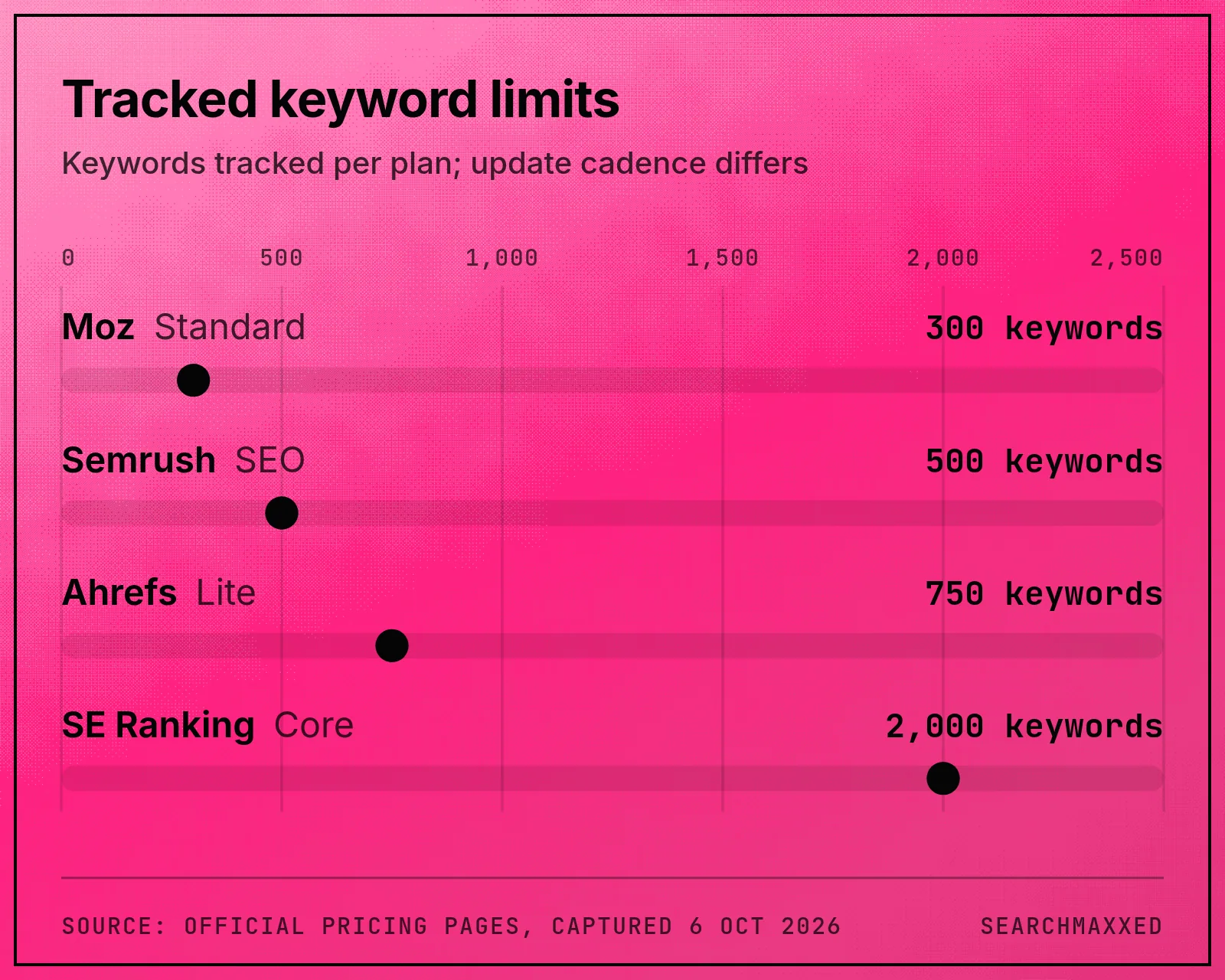
- What it does: The SEO plan combines keyword research, competitor analysis, Position Tracking and Site Audit.[5] It allows five websites and 500 daily tracked keywords.[5]
- Engines tracked: The AI plan icons name Google Search, ChatGPT, Perplexity and Gemini, with further coverage unspecified in the text.[5]
- Starting price: SEO shows $139.95/month, or $117.33/month billed annually.[10] The dollar currency is unspecified.[5]
- Free trial: The AI visibility feature page offers seven days free.[14] The separate free account has one demo project and ten reports daily.[15]
- What it cannot do: The SEO plan's headline text leaves its custom-prompt allowance unclear.[5] Starter specifies 50 daily tracked prompts at $199/month.[5]
- Best for: A team connecting research with a content strategy. I'd trial the same competing sites and topics I intend to work on.
5. SE Ranking: track daily ranks across projects
SE Ranking Core is my pick when daily rank tracking drives the purchase. Core allows 2,000 keywords and 100 prompts to track daily.[4] I'd check how many projects and people need access before judging the headline price.
- What it does: Core combines rank tracking with keyword, competitor and backlink research, plus website and on-page audits.[4]
- Engines tracked: Core says major search engines.[4] The AI Search add-on names AI Overviews, AI Mode, Perplexity and ChatGPT.[11]
- Starting price: Core shows $129/month, or $103.20/month on annual billing, with the dollar currency unspecified.[4]
- Free trial: The 14-day trial needs no credit card.[4] Its starter allowance includes 750 daily keywords and 20 daily AI prompts.[16]
- What it cannot do: Core includes ten projects and one manager seat.[4] The trial's lower limits don't represent the paid allowance.[16]
- Best for: Someone who checks ranks often enough to act on them. I'd set a clear review routine before adding more tracked keywords.
6. Moz Pro: combine SEO with weekly AI checks
Moz Pro Standard is my pick for SEO reporting with a weekly AI monitoring routine. Standard includes 300 tracked keywords and 150 AI prompts.[6] Its AI checks run weekly, so choose it for that cadence.[6]
- What it does: Standard combines keyword tracking and crawling with AI visibility dashboards, prompt suggestions and AI content briefs.[6]
- Engines tracked: Its four AI models are GPT, Gemini, Google AI Mode and Perplexity.[6] Keep that list beside your reporting brief.
- Starting price: Starter shows $49/month for one website, with no currency label beside that offer.[12] Standard costs USD $99/month.[6]
- Free trial: Moz offers a trial through its Medium signup.[17] The trial's duration isn't specified.[17]
- What it cannot do: Standard's included AI tracking is weekly.[6] Confirm whether Starter includes Standard's AI limits.[12]
- Best for: A team happy to review AI answers weekly. I'd choose Standard against those stated limits, rather than treat Starter's lower price as the same offer.
How should you choose SEO software?
Choose SEO software by naming the missing job, the capacity it needs and the person who will act on the findings. At Searchmaxxed, we use the Managed Search Loop to turn search data into the next website or off-page change.
Start with a sentence like: “I need to track our service keywords daily and check our main competitor's pages.” That gives you something to test.
- Bring a real task. Pick a page, a keyword group or a competitor you need to investigate.
- Check the plan limits. Match projects, users, tracked keywords, crawl capacity and AI prompts to that task.
- Check the update frequency. SE Ranking Core tracks keywords daily; Ahrefs' default Rank Tracker updates are weekly.[4][13]
- Test the output. Ask whether you can explain the finding and decide what to change without another subscription.
- Name the operator. Decide who fixes the page, checks the release and reviews the next report.
I'd buy one suite first. Add another only when you can name work the current stack doesn't cover.
Which free SEO tools should a small business start with?
I'd start a small business with Google Search Console, Screaming Frog Free and Ahrefs Free. They cover own-site search data, a limited technical crawl and limited site research.[1][2][13] Use the limits to decide what needs a paid upgrade.
| Free option | Job and limit |
|---|---|
| Google Search Console | Google queries, clicks and index checks |
| Screaming Frog Free | Technical crawl, up to 500 URLs |
| Ahrefs Free | Limited Site Explorer and Site Audit |
| Moz Community account | Limited Keyword Explorer, Link Explorer and MozBar |
| Semrush Free | One demo project; ten reports per day |
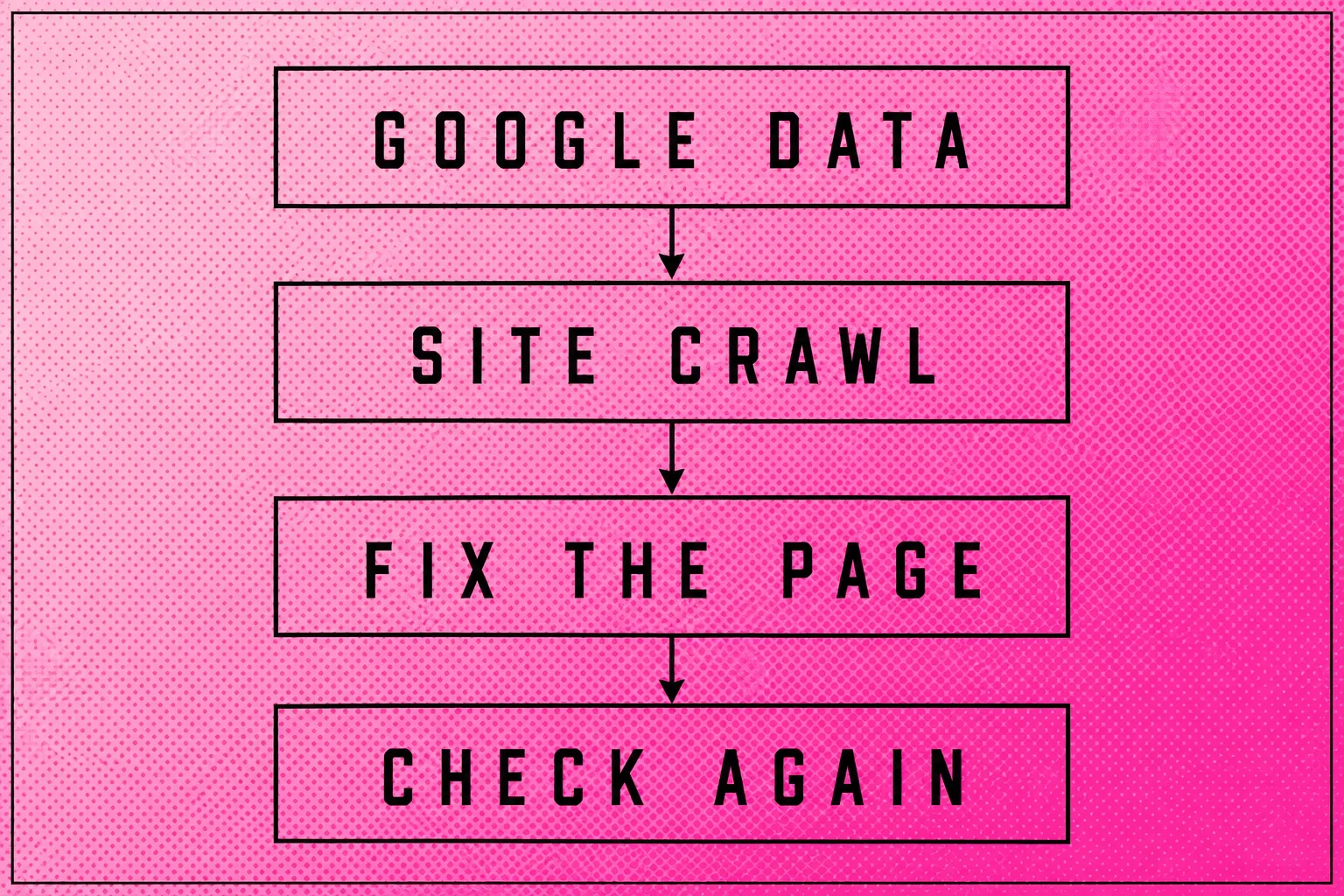
For a small site, I'd follow a short routine. Find a relevant query and its landing page in Search Console. Inspect the page, crawl the site and choose one fault to fix. Then check the live page and repeat the crawl.
Google's URL Inspection provides crawl and index information from its own index.[1] Screaming Frog supplies a separate view of the website's links and page information.[2] Compare both views before deciding what happened.
For local SEO, add the business profile and review work to your plan. Searchmaxxed's Local Search package includes those jobs alongside website changes.
Which SEO tool is best for keyword research and backlinks?
I'd choose Ahrefs for link research and Semrush for keyword research alongside competitor analysis. Ahrefs includes Site Explorer and Keywords Explorer; Semrush's SEO plan includes keyword and competitor research.[3][5] SE Ranking bundles both research jobs with daily rank tracking.[4]
Test the same business question in each option. Pick a service you sell, inspect the competing pages and write down which gap you would address. A report earns its place when you can connect it to work.
Keep plan gates in the comparison. Ahrefs Standard adds broken-backlink reports and Content Explorer beyond Lite.[3] If your planned task needs either, Starter's price won't describe that purchase.
For backlinks, inspect the page that contains the link and why it belongs there. I'd separate finding a possible source from deciding whether to approach it. Our Off-Page Source Layer connects link work with reviews, citations and mentions that support the business's facts.
Which SEO tool should you choose for AI visibility?
Choose Moz Pro for weekly AI checks, or compare SE Ranking and Semrush for daily prompt tracking alongside SEO. Moz Standard tracks 150 prompts weekly; SE Ranking Core includes 100 daily prompts.[6][4] Semrush Starter specifies 50 daily prompts.[5]
Ahrefs Lite includes five tracked AI prompts and 150 checks per month.[3][13] Its prompt-tracking page explains that platform, location and update frequency consume the allowance.[19] A single prompt across several platforms needs more capacity than one prompt on one platform.[19]
| Plan | Published AI allowance | Frequency |
|---|---|---|
| Ahrefs Lite | Five prompts; 150 checks/month | Daily, within check budget |
| Semrush Starter | 50 tracked prompts | Daily |
| SE Ranking Core | 100 tracked prompts | Daily |
| Moz Pro Standard | 150 tracked prompts | Weekly |
Decide which questions you want to track before judging the prompt count. Include your services, your market and the comparisons customers make. Ask the vendor which selected engines and locations fit within the quoted plan.
Ahrefs distinguishes brand mentions from citations to your pages or domain.[9] Keep those observations separate when reviewing answers. Our AEO service works on answers, while GEO work develops pages and external sources for AI search. The AI SEO explanation covers how those jobs fit together.
How much do SEO tools cost?
SEO tools can start free; paid prices depend on the plan and billing period. Ahrefs Starter shows $29/month and Moz Standard shows USD $99/month.[8][6] Screaming Frog's paid licence costs USD $279 per year per user.[2]
| Plan | Published price and billing |
|---|---|
| Ahrefs Starter | $29/month; currency unspecified |
| Ahrefs Lite | $129/month; currency unspecified |
| Semrush SEO | $139.95/month; $117.33/month billed annually; currency unspecified |
| Semrush Starter | $199/month; $165.17/month billed annually; currency unspecified |
| SE Ranking Core | $129/month; $103.20/month annual equivalent; currency unspecified |
| Moz Pro Starter | $49/month; currency unspecified |
| Moz Pro Standard | USD $99/month |
| Screaming Frog paid | USD $279/user/year |
Annual equivalents describe the rate, not necessarily a monthly payment. SE Ranking says annual plans require upfront billing for the discount.[20] Compare the payment term as well as the figure.
Keep software spend separate from the cost of research, writing and implementation. If you're weighing a subscription against hiring help, compare the Australian SEO cost guide. For provider choices, use the Australian agency comparison.
Where does Searchmaxxed fit?
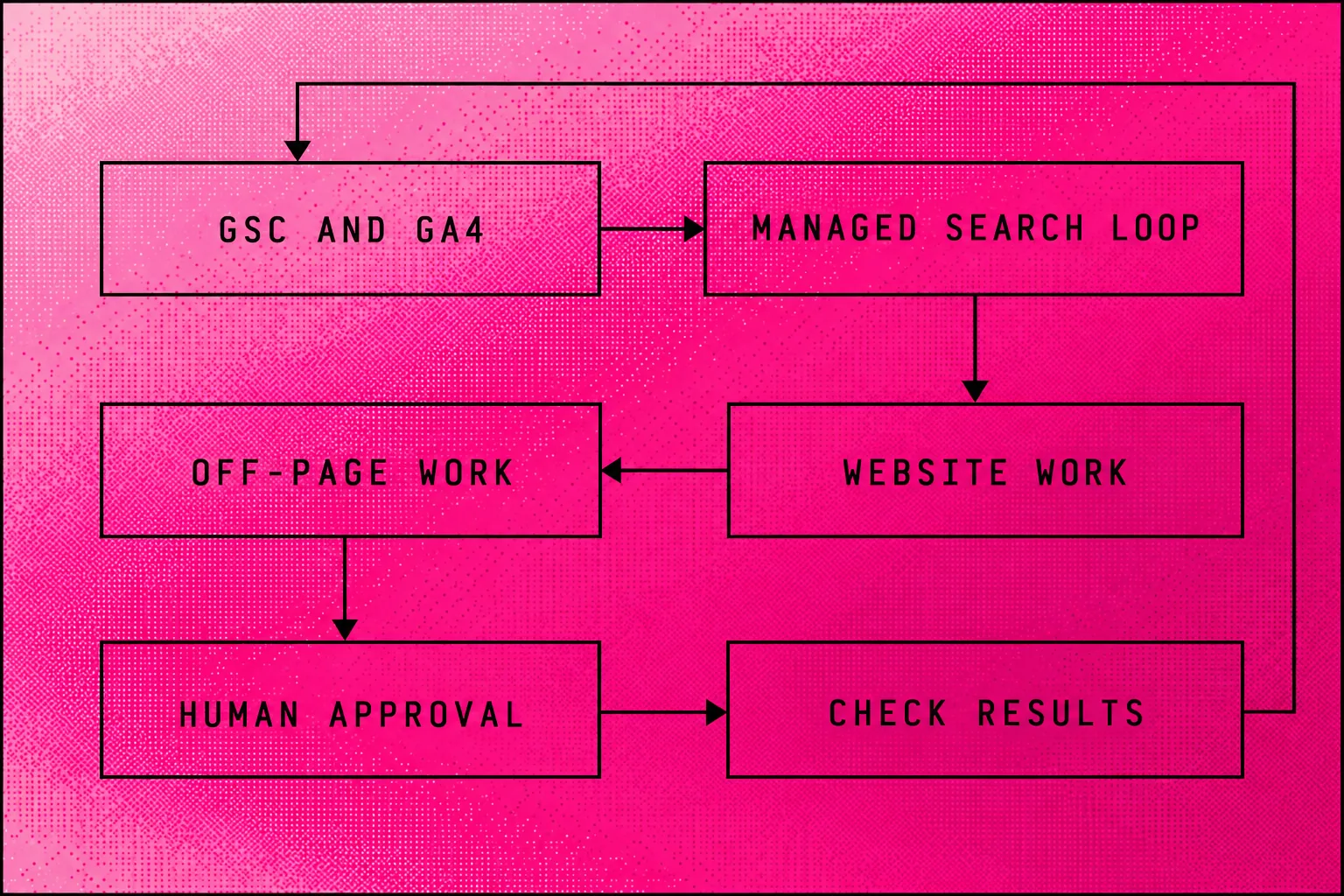
Searchmaxxed fits when you want a team to turn search data into work on your website and other sites. We do agentic SEO: AI agents gather the data, and our Managed Search Loop helps choose the next job.
Our agents connect to your whole Search Console and GA4. Each week, they check competitors' sites, Google results and what AI answers say about you. We compare the findings with your plan, then choose what to build or fix.
The Agentic Website is your site on GitHub and Vercel, which you own. We add pages and fix faults. Internal links connect related pages. We also add schema, which describes page facts in code.
The Off-Page Source Layer covers links, reviews, citations, press and mentions on other sites. A person approves every public change before it goes live. The agents measure what happened, and the Managed Search Loop helps us pick the next job.
I ran those steps by hand at Radiant Roof Repairs. Before Searchmaxxed, I built it from zero to more than $1 million a year in revenue (AUD) using SEO as the only marketing channel. Three high-intent Gold Coast roofing searches reached number one within 90 days. The Radiant case study explains the work.
Our SEO service includes the work across the site and its external sources. Choose a package by its inclusions:
- Local Search: At least eight page releases a month, daily business profile management and a review engine. It includes local links, citation cleanup and local AI tracking.
- Growth System: Thirty page releases a month, technical fixes, schema and internal links. It includes source-layer basics, a qualified link action each month and AI tracking.
- Agentic Search Engineering: Fifty page releases a month and everything in Growth System. It adds comparison and industry pages, press, digital PR and wider link campaigns.
- Custom & Enterprise: Agreed work for multiple markets, dedicated engineering, custom reporting or original research.
Start with an AI SEO Audit if you need the gaps and priorities first. The Agentic Website Full Build covers research, design and the site; Agentic Migration keeps a design worth retaining and moves the site.
Frequently asked questions
What are the 5 best SEO tools?
My five starting picks are Google Search Console, Screaming Frog, Ahrefs, Semrush and SE Ranking. They cover own-site data, crawl checks, research and rank tracking.[1][2][3][5][4] Moz Pro joins my six-tool shortlist for its weekly AI monitoring.[6] Choose the tools your work needs; five subscriptions would be a separate decision.
Is SEO dead now with AI?
What is the most accurate SEO tool?
For your own site's Google performance, start with Google Search Console. Google's URL Inspection gives crawl, index and serving information directly from its index.[1] I wouldn't name an accuracy winner across competing keyword, backlink and AI databases without testing them against the same task.
Can ChatGPT do an SEO audit?
Use ChatGPT as an assistant in an audit, with real site data to inspect. Ahrefs includes API and MCP access, a connection for compatible AI assistants.[3] I'd still collect crawl evidence and Google index information before deciding what to fix. Screaming Frog and Search Console cover those checks.[2][1]
What are SEO tools used for?
Which SEO tool is best for beginners?
Does Google have a free SEO tool?
Can you check backlinks with free SEO tools?
Should I choose Semrush or Ahrefs?
I'd choose Semrush for combined keyword research and daily position tracking, or Ahrefs for link-focused research. Semrush SEO includes 500 daily tracked keywords; Ahrefs Lite includes 750 keywords with weekly default updates.[5][3][13] Ahrefs Standard adds broken-backlink reports and Content Explorer.[3] Match the plan to the work.
Which SEO tools update rankings daily?
Which SEO tool should a local business choose?
For a local business, I'd start with Search Console and add local rank tracking when needed. SE Ranking's Local & Map Rank Tracker lists 1,500 keywords and three locations.[21] Check how those allowances fit your plan and the locations you serve.
Which SEO tool should an ecommerce business choose?
I'd choose the tool by the catalogue task: crawl checks, research or tracking. Screaming Frog's free crawl caps at 500 URLs; its paid crawl depends on memory and storage.[2] Semrush supplies keyword research and competitor analysis.[5] Check crawl capacity before choosing software for a large catalogue.
Do I need a tool or someone to do the SEO work?
Choose software when you have someone to run the checks and make the changes. Choose managed help when you want a team to handle that work. Either way, name who approves each change.
- Google: https://search.google.com/search-console/about
- Screaming Frog: https://www.screamingfrog.co.uk/seo-spider/pricing/
- Ahrefs: https://ahrefs.com/pricing
- SE Ranking: https://seranking.com/subscription.html
- Semrush: https://www.semrush.com/prices/
- Moz: https://moz.com/products/pro/pricing
- StudioHawk: https://studiohawk.com.au/blog/seo-resources-that-actually-matter/
- Ahrefs: https://ahrefs.com/brand-radar
- Semrush: https://www.semrush.com/features/ai-visibility/
- Ahrefs: https://ahrefs.com/ai-prompt-tracking