


Yes, ChatGPT can help with SEO, but its answers need real evidence before you act on them.[1][5]
- Use it for drafts and ideas from your own page copy and keywords.[1][2]
- Check the sources behind anything it finds through search.[4][5]
- For an audit, give it your site checks and search data.
Start with one page and one clear problem.
Yes, ChatGPT can do SEO tasks such as drafting content, suggesting keywords and helping review material you supply.[1][2][3] With Search, it can also find current web information.[4] A full audit needs real site evidence and human checks. At Searchmaxxed, we connect those inputs to agents and review each change before release.
What SEO tasks can ChatGPT do well?
ChatGPT can help with keyword ideas, content outlines, titles and technical drafts.[2][6][7][8] I would give it a small job with clear inputs and a way to check the output.
| SEO job | What to give ChatGPT | What to check yourself |
|---|---|---|
| Keyword ideas | Your offers and customer questions | Actual demand and Google results |
| Titles and descriptions | Page copy and its main question | Accuracy and fit with the page |
| Content planning | Your draft and competitor page text | Missing answers and original detail |
| Technical SEO drafts | Verified facts and current code | Validity and live behaviour |
| Link outreach | A real source and reason to contact it | Relevance and the facts in the message |
For keyword work, ask for possible ways customers describe the same job. Then compare those ideas with actual results before deciding which page to build. ChatGPT can group search intent, but Supple's guide also calls for checking the search results themselves.[10]
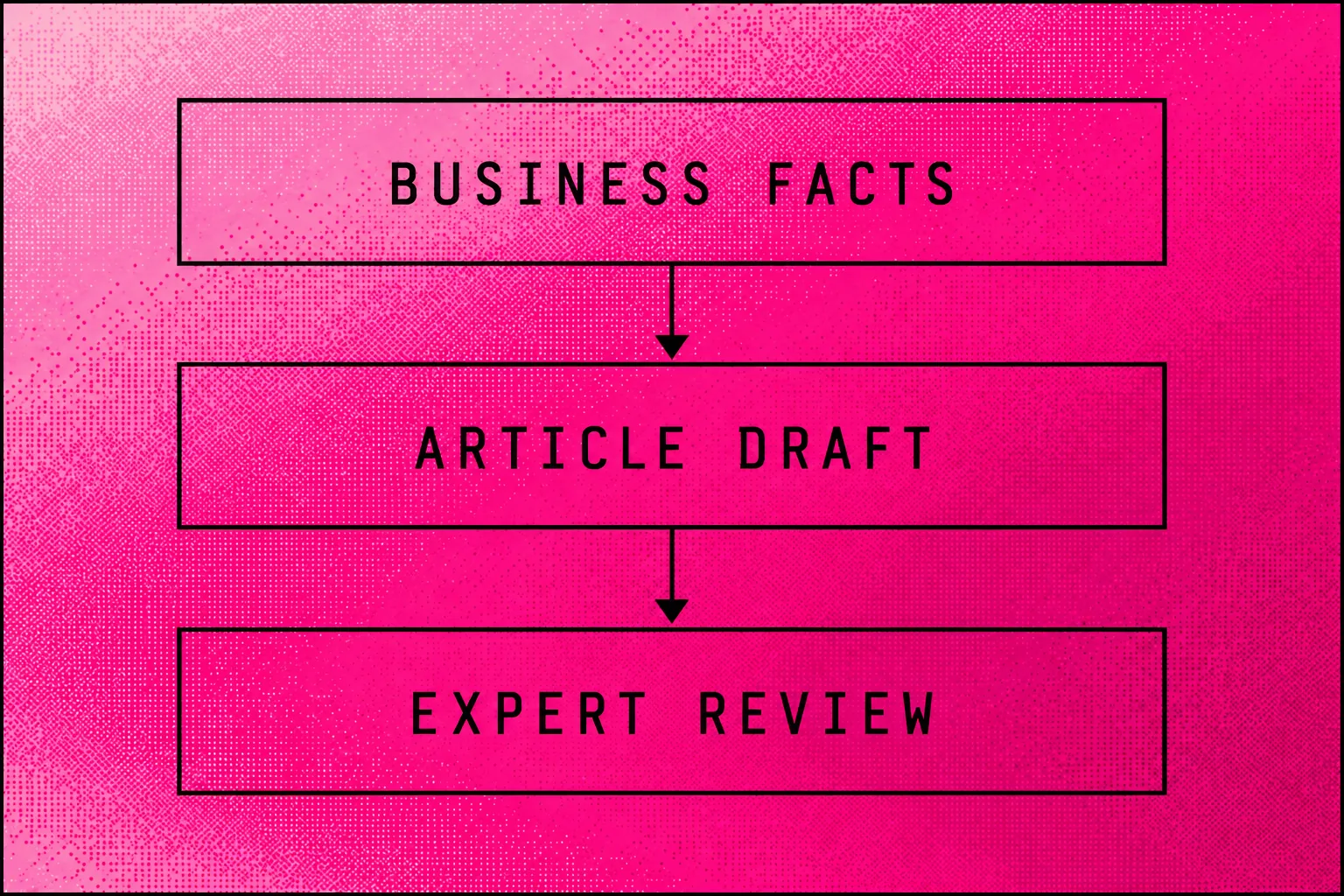
For writing, I would supply the business facts first: what you sell, where you serve customers and the questions you can answer. Ask for a draft that stays within those facts. Review every new claim before publishing.
For code, treat the output as a proposed change. ChatGPT can generate structured data and Search Console regular expressions, which are patterns for filtering text.[8] Test the pattern against known queries. Check that any structured data describes facts visible on the page, as Google requires.[11]
Writing an outreach email and getting a real link are separate jobs. Ask for the message draft only after you have chosen the source and checked the reason to contact it.
Can ChatGPT do SEO without live data?
ChatGPT can suggest SEO tasks without live data, but I would keep those suggestions separate from findings about your website.[2] Search can bring current public information into the conversation.[4] It still needs source checks.[5]
The blanket claim that ChatGPT has no live information goes too far. OpenAI says ChatGPT can search the web and link to relevant sources.[4] OpenAI also documents visits to web pages for user requests.[12]
The question is what it inspected for your request. Before acting, ask for the URLs, source dates and supplied files behind the answer. Keep anything without that support in a separate list of ideas to investigate.
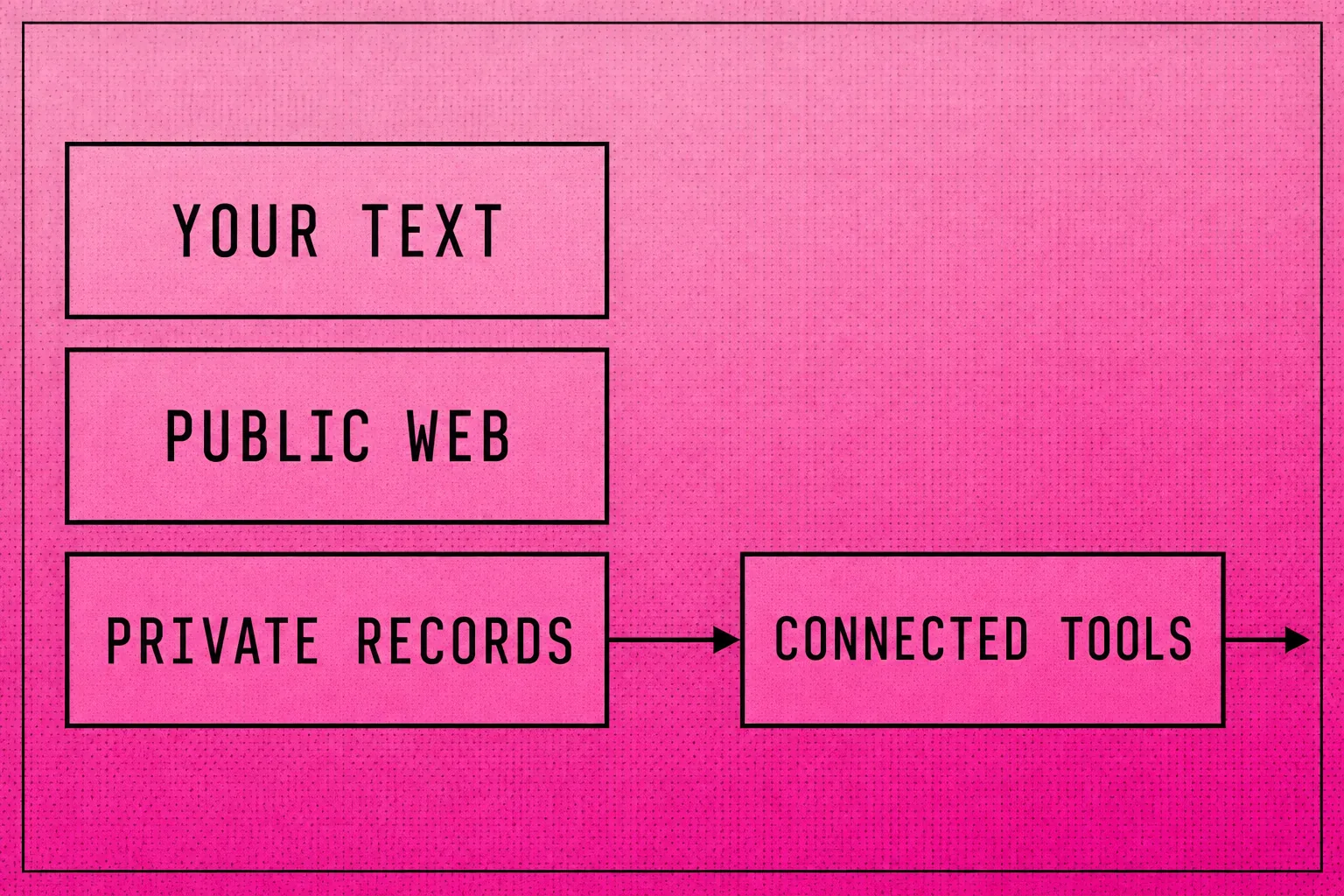
A public search and your business records serve different jobs. In our Managed Search Loop, we bring Search Console queries and pages together with GA4 landing-page activity and sales feedback. We also check live results, competitors and technical faults.
If you haven't supplied or connected those records, ask ChatGPT to state that gap. A tidy table doesn't prove it has your numbers.
For any keyword volume or difficulty score, require the original data source, market and date. If the answer offers a number without those details, set it aside. OpenAI warns that search results and citations can be incomplete, outdated or incorrect.[5]
Made-up numbers can look ready for a report. I would accept an empty cell with a clear next check before a figure nobody can trace.
Can ChatGPT do an SEO audit?
ChatGPT can help review supplied page content, but I would limit its audit findings to the material it can inspect.[3] At Searchmaxxed, we check site evidence and search data before choosing changes.
OpenAI's documentation supports public web search and user-triggered page visits.[4][12] Neither means a chat inspected every URL, technical fault or search query on your site. Ask for the scope before accepting the report.
For a first review, prepare this evidence:
- The page URL, its current text and its main customer question.
- Site checks covering links, redirects, crawl access and page setup.
- Search Console queries and pages for a defined date range.
- GA4 landing-page and enquiry data for the same period.
- Competitor pages and live Google results for the search you want to win.
- The actual business facts, including services and legitimate locations.
That is my recommended starting pack. Add further evidence when a finding needs it.
Ask ChatGPT to separate an observation from a possible cause. For each finding, request the affected URL, supporting record, proposed fix and next test. Keep gaps visible. A claim about a site fault needs a site check; a claim about lost enquiries needs enquiry evidence.
I would also review the proposed order of work. A broken enquiry path may deserve attention before a new article, even if the article is easier to draft. Match each job to the business problem it addresses.
A full SEO service includes choosing the work, making the change and checking the live result. Our AI SEO Audit provides a diagnosis and a plan. Our managed service carries the approved work through implementation and measurement.
How can I use ChatGPT for SEO myself?
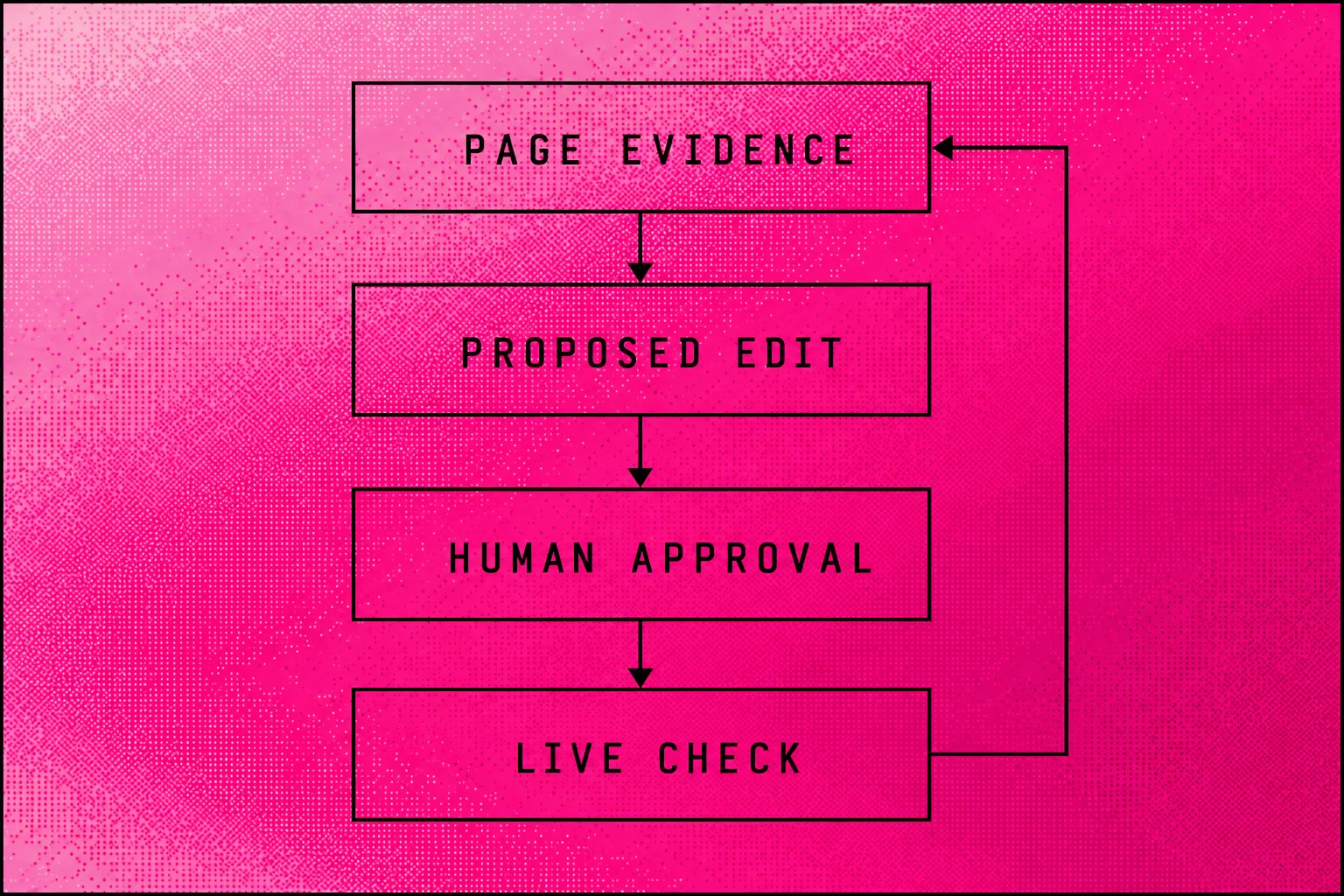
Start with one page and supply its evidence. Ask ChatGPT to review it for a specific problem. Check its claims before approving a change, then test the live page. Use that sequence before attempting a whole-site rewrite.
First, choose the page and the question it should answer. A Gold Coast roofing page could answer whether the business repairs a leaking roof. Treat this as an example, not an instruction to claim a service or location you don't cover.
Next, collect the page text, business facts and search records. Keep the source names and date ranges beside them. Then try this prompt:
> Review the supplied page and SEO records only. > > The goal is qualified enquiries for the service this page offers. > > State which files and URLs you inspected. > > Separate observations, possible causes and missing evidence. > > Give each observation its source row, page passage or checked URL. > > Suggest the next change and explain what problem it addresses. > > Keep all service and location claims within the supplied business facts. > > Omit invented keyword volumes, rankings, revenue and customer examples. > > End with the checks I should run before and after publishing.
Check the proposed findings against the inputs. Open each external citation and confirm that the source supports the claim. OpenAI recommends that source check when accuracy matters.[5]
Finally, review the change before release and check the live page afterwards. Follow the search and enquiry data over matching periods. Keep a record of what you changed so you can judge the next result.
For the roofing example, suppose your records contain relevant searches but the page never answers the repair question. I would check that gap first. Add the answer only if the business can support it. Then check the live page and follow its enquiries. The example needs your real records before it becomes a finding.
Can ChatGPT write SEO content and articles?
Yes, ChatGPT can help draft SEO content and articles.[1] Google asks for original value and warns against automation whose main purpose is manipulating rankings.[13][14]
I would start with what the business knows: service details, product facts, customer questions and approved examples. Ask ChatGPT to organise that material around the question. Then have someone who knows the subject check the whole article.
Google's content guidance asks whether a page adds original information and whether an expert writes or reviews it.[13][15] A clean draft still needs those contributions.
Consider the roofing page again. If the question concerns repairs, I would add the actual repair scope and the conditions that need an inspection. ChatGPT should work from those facts. It should not invent a completed job, customer quote or licence.
For articles about changing products or policies, use current sources and check each claim. ChatGPT Search can retrieve current information, but its citations may still be wrong.[4][5]
Writing for AI answers also requires attention to access. Google's AI Overviews and AI Mode require a supporting page to be indexed and eligible for a snippet.[16] Our AEO work addresses answer engines. Our GEO work covers how generative answers describe and cite the business.
Which AI SEO tools should I use?
Use ChatGPT for drafts, Search Console for Google search data and GA4 for website activity.[1] Give ChatGPT exports from those tools when the task needs your numbers. Check technical changes on the live site before treating the job as complete.
Use this division when you assess a tool or proposed setup:
| Job | Evidence to require |
|---|---|
| Draft and organise | The supplied facts and source material |
| Check public information | URLs, access status and source dates |
| Review search performance | Search Console query and page records |
| Review enquiries | GA4 records and sales feedback |
| Find technical faults | Site checks tied to affected URLs |
| Improve the website | A reviewed change and a live check |
These are my selection criteria, not a ranking of AI models. Ask the provider to show one job moving from source evidence to a checked change.
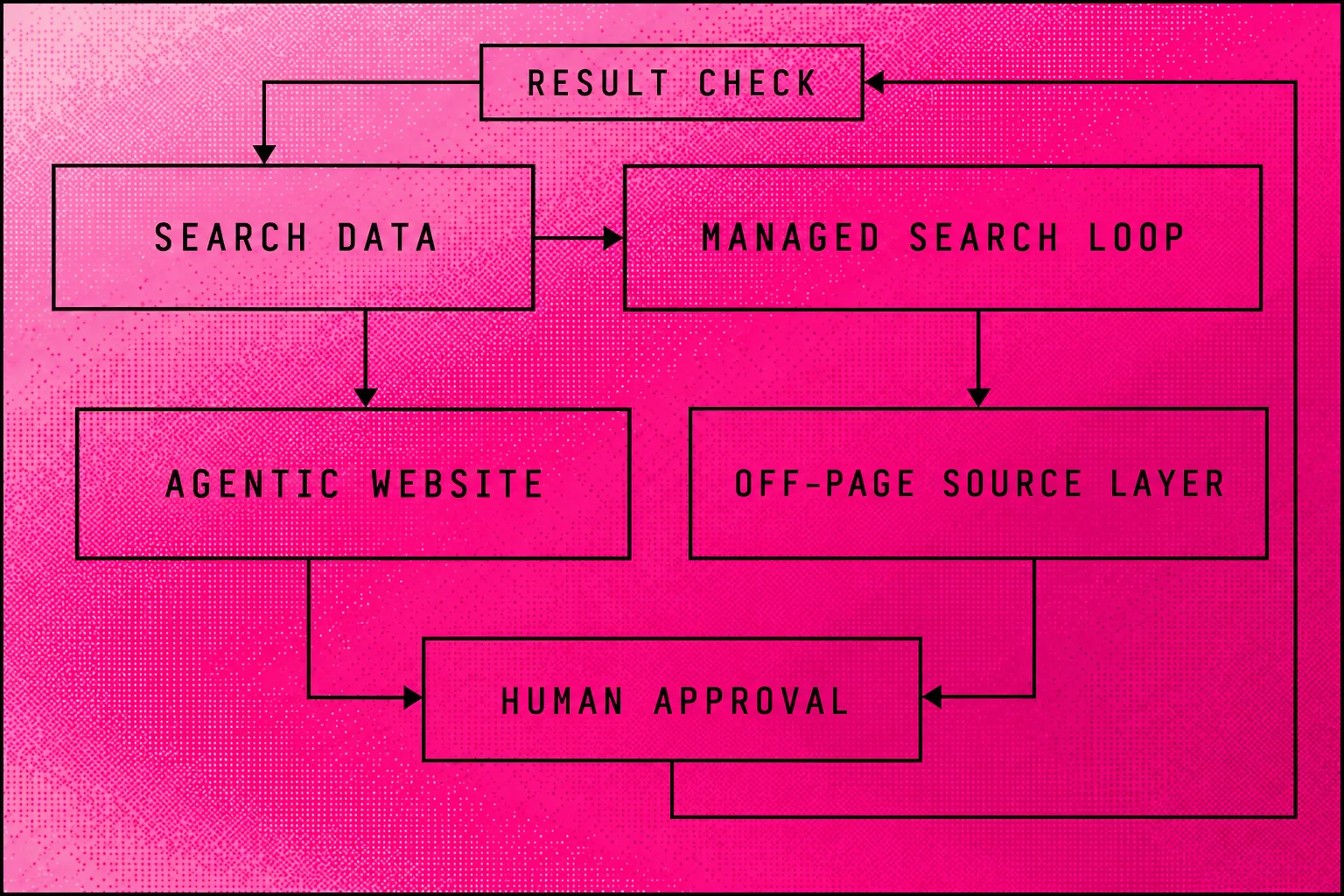
Our Managed Search Loop follows that sequence. Agents read the client's Search Console and GA4, inspect competitors and check search results. We choose work against the plan and approve each public change.
For the roofing example, that could mean deciding whether to repair an existing page or build a missing one. The live evidence must decide the job. The person reviewing it must check the service facts and the proposed edit.
If you are comparing chat assistance with a connected setup, the AI SEO explanation covers how agents support research and site work. Ask which records the setup reads and who approves the release.
Is AI going to replace SEO?
AI hasn't removed the SEO basics: Google still applies them to AI Overviews and AI Mode.[17] ChatGPT can help with SEO tasks, but those tasks still need evidence and review.[1]
Google says the same foundational best practices apply to its AI features as to Search overall.[17] They include crawl access, internal links, page experience and important content in text.[18] Those are website jobs even when an AI tool helps prepare the work.
Google also says there are no extra technical requirements for appearing as a supporting link in AI Overviews or AI Mode.[16] I would begin with the site's existing search problems before buying a special AI fix.
Measure the result at the business level. Google includes AI-feature traffic in Search Console's overall Web reporting.[19] Google Analytics can track conversions and time on the site.[19] Keep those records alongside your sales feedback before deciding whether the work pays.
I would choose between doing SEO yourself and hiring help by who can research, build, check and maintain the changes. Faster drafting covers one part of that decision.
How does SEO for ChatGPT differ from using ChatGPT for SEO?
Using ChatGPT for SEO means asking it to help with search work.[1] SEO for ChatGPT means preparing your public site for discovery in its search answers.[4][20]
For ChatGPT search, OpenAI identifies OAI-SearchBot as the crawler that helps surface websites.[20] It recommends allowing that bot and its published IP ranges.[20] OpenAI states that search placement has no guarantee.[4]
GPTBot has a different role: crawling content that may support model training.[20] OpenAI says the search and training settings are independent.[20] You can allow OAI-SearchBot while disallowing GPTBot.[20]
I would keep those decisions separate in an access review. Check the live rules and hosting access before changing them. Then review whether the public pages state the business facts clearly.
For our clients, we connect those pages to the Off-Page Source Layer. We develop links, reviews, citations, press and mentions around the same real business facts. We then check what the AI answers say about the business.
Where does Searchmaxxed fit?
Searchmaxxed builds agentic SEO for Australian businesses through the Managed Search Loop. Our Queensland team connects agents to your whole Search Console and GA4. We turn the evidence into work that a person reviews before release.
The agents check competitors' sites, Google results and AI answers every week. Our Managed Search Loop compares that data with your plan and helps us choose the next job.
We build pages, technical fixes, structured data and internal links on your Agentic Website. It lives on GitHub and Vercel, and you own it. Our Off-Page Source Layer builds links, reviews, citations, press and mentions on other sites.
A person approves every change before it goes live. We check the released page and measure what happened. The next cycle starts with that evidence.
Before Searchmaxxed, I built Radiant Roof Repairs from zero to more than $1 million a year in revenue. SEO was the only marketing channel. I did the pages, research, competitor checks and updates manually. Our agents now run those steps every week.
Our packages and inclusions give you different scopes:
- Local Search includes local pages, Google Business Profile work, reviews, citation cleanup and local AI-answer tracking. It covers local SEO work.
- Growth System includes page releases, technical fixes, structured data, internal links, landing-page work and source development.
- Agentic Search Engineering adds comparison and industry pages, digital PR, link campaigns and wider AI-answer tracking.
- Custom & Enterprise can include multiple markets, dedicated engineering, custom reporting and original research.
Start with the AI SEO Audit for diagnosis and priorities. The Agentic Website Full Build includes research, design, technical SEO, enquiry paths and measurement. Agentic Migration keeps a design worth keeping and moves the site to an owned setup for ongoing work.
Frequently asked questions
Which AI is best for SEO?
Is SEO dead now with AI?
Is SEO still worth it in 2026?
SEO can be worth it when profit from extra customers exceeds the full cost of the work. Google still recommends SEO fundamentals for its AI features.[17] Track qualified enquiries and won work before deciding whether to keep spending.
Can ChatGPT do an SEO audit?
Can ChatGPT analyse my website from a URL?
It may visit a public page for your request.[12] Ask it to identify the URLs it inspected and any access failures. Treat a page visit as the scope of that check until you have evidence of wider coverage.
Can ChatGPT give accurate keyword search volumes?
Can ChatGPT write SEO articles?
Will Google penalise AI-written content?
Can I use AI to do my SEO without an agency?
Yes, you can use ChatGPT for ideas and drafts and keep the work in-house.[1] Assign someone to collect the evidence and make the changes. Review the output before publishing and test the live page. Compare that workload with hiring an SEO agency.
Does ChatGPT Search work on the free plan?
Yes. OpenAI lists web search on ChatGPT Free as well as its other plans.[21] Searches remain subject to plan usage limits.[21] Separate access to search from the wider cost of SEO work in Australia.
Can I block AI training and still appear in ChatGPT search?
How do I measure SEO work across Google and AI answers?
- HostAdvice: ChatGPT for SEO: The Complete Guide (+ 15 Proven Prompts)
- Supple Digital: ChatGPT for SEO: keyword suggestions and intent grouping
- OpenAI: Searching the web with ChatGPT
- Google Search Central: https://developers.google.com/search/docs/appearance/ai-features
- OpenAI: https://platform.openai.com/docs/bots
- Google Search Central: https://developers.google.com/search/docs/fundamentals/creating-helpful-content