


Choose the SEO agency that can explain its work, show relevant client evidence and put the scope and exit terms in writing. Google says nobody can promise first place in its results.[2]
| Check | What to request |
|---|---|
| Relevant proof | A case and a client reference |
| First work | The affected page and proposed fix |
| Delivery | Who implements each change |
| Reporting | Completed work and qualified enquiries |
| Terms | Total costs, ownership and exit rules |
Before signing, compare the evidence and the work each proposal includes.
To choose an SEO agency in Australia, check client proof and clear methods, then agree the work and contract terms. Google's hiring guidance recommends interviews, references and realistic estimates of the work involved.[1]
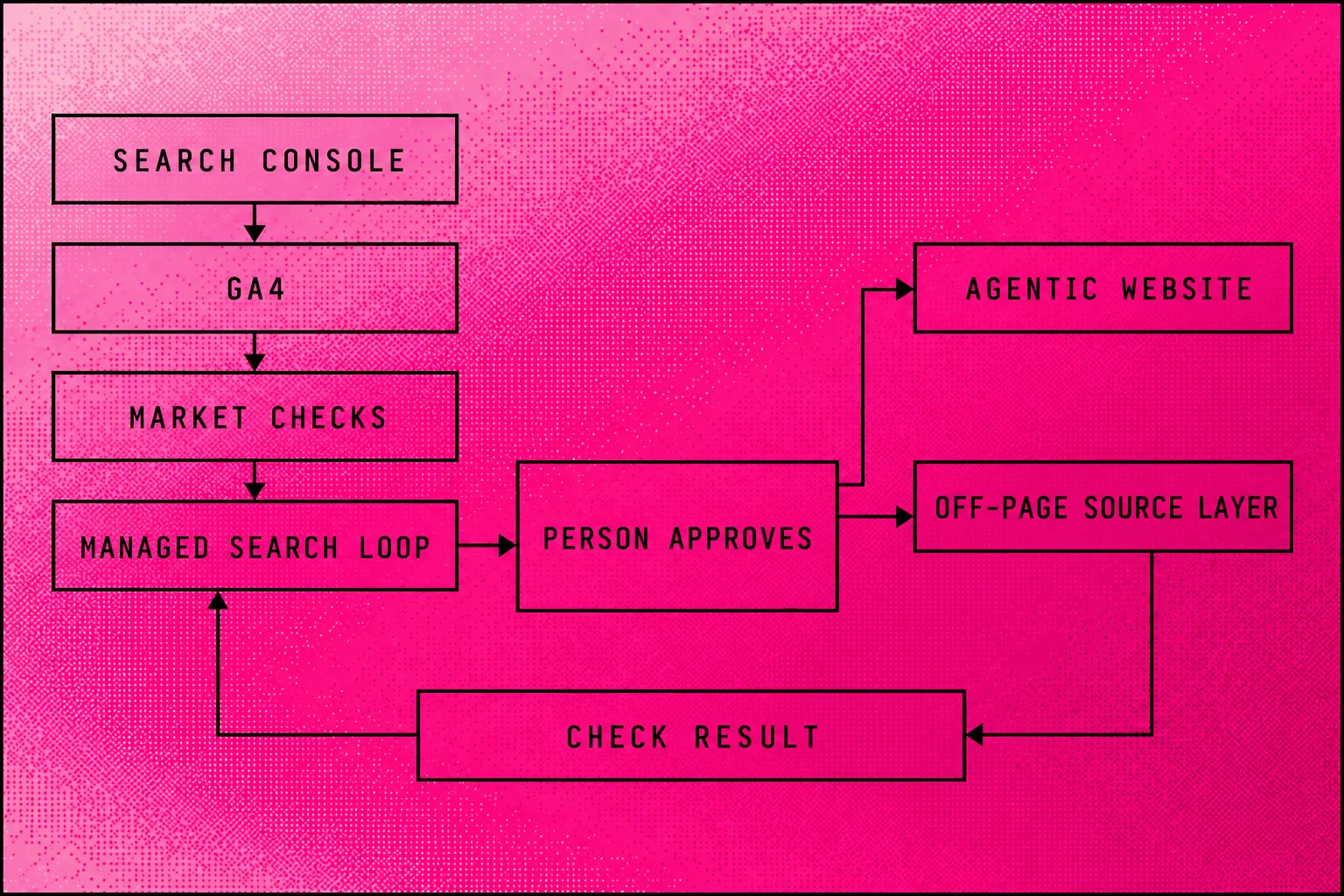
I run Searchmaxxed, so I have a stake in this choice. Apply the same checks to us. Ask us how Search Console and GA4 lead to a page change, who approves it and how we check the result.
How to choose an SEO agency in Australia?
Choose an SEO agency in Australia through five checks, starting with your goal and a shortlist. Request an audit and check references before agreeing written terms. Google recommends asking about industry and country experience when interviewing an SEO.[1]
Write down what a good enquiry looks like. Include your service area, the work you want more of and any products you want to sell. Give each agency the same starting information.
Then ask for its first proposed change and the evidence behind it. Google says an audit should estimate the improvement and the work involved.[1] Request an affected URL, a proposed fix and the reason that fix comes first.
During the audit stage, Google recommends read-only Search Console access.[1] Keep the permission to make changes for a later agreement.
Use my Australian SEO agency shortlist to find candidates, then apply these checks to each one. Include Searchmaxxed in the same comparison, without giving us a free pass.
Which questions should you ask an SEO agency?
Ask an SEO agency who will do the work, what they intend to change and how they will explain progress. Google recommends questions about previous work, expected results and communication.[1] Take the questions below into the call and ask for the supporting material afterwards.
| Question to ask | Evidence to request |
|---|---|
| What would you fix first on our site, and why? | A real URL, the issue and the proposed change |
| Which searches could bring the customers we want? | A query-to-page plan with reasons for each priority |
| Who writes, edits and approves our content? | Names, roles and a finished example |
| Who implements technical changes? | The person responsible and any extra development charge |
| What work do you outsource? | Tasks, suppliers and who reviews their work |
| How do you build links? | Example publishers, payment details and link qualifications |
| How will you measure success? | Data sources and a sample report connecting work to enquiries |
| What can we inspect between reports? | Released URLs and a record of changes |
| What could delay progress? | Site constraints, dependencies and a revised plan |
| What happens if we leave? | Notice terms, fees and the handover list |
Ask each agency to explain its SEO work through the pages and fixes it proposes for your business.
For a nearby customer base, ask what its local SEO work includes beyond your website. For a crawl or indexing problem, ask who will implement the technical SEO fixes.
With content strategy, request a page outline that answers a customer's question. With link building, request the publication plan and the reason each source belongs in it.
A polished answer still needs a document or example behind it. Follow up on any answer that changes when you ask for one.
What proof should an SEO agency show you?
I ask an SEO agency for a relevant client result and an explanation of the work behind it. Ask Searchmaxxed for the same. Google recommends checking previous work and speaking with past clients about service and results.[1]
For each case study, request:
- The business and market involved.
- The starting position and the dates covered.
- The metric and its original data source.
- The pages, fixes or outside work the team completed.
- The agency's role and any other work running at the time.
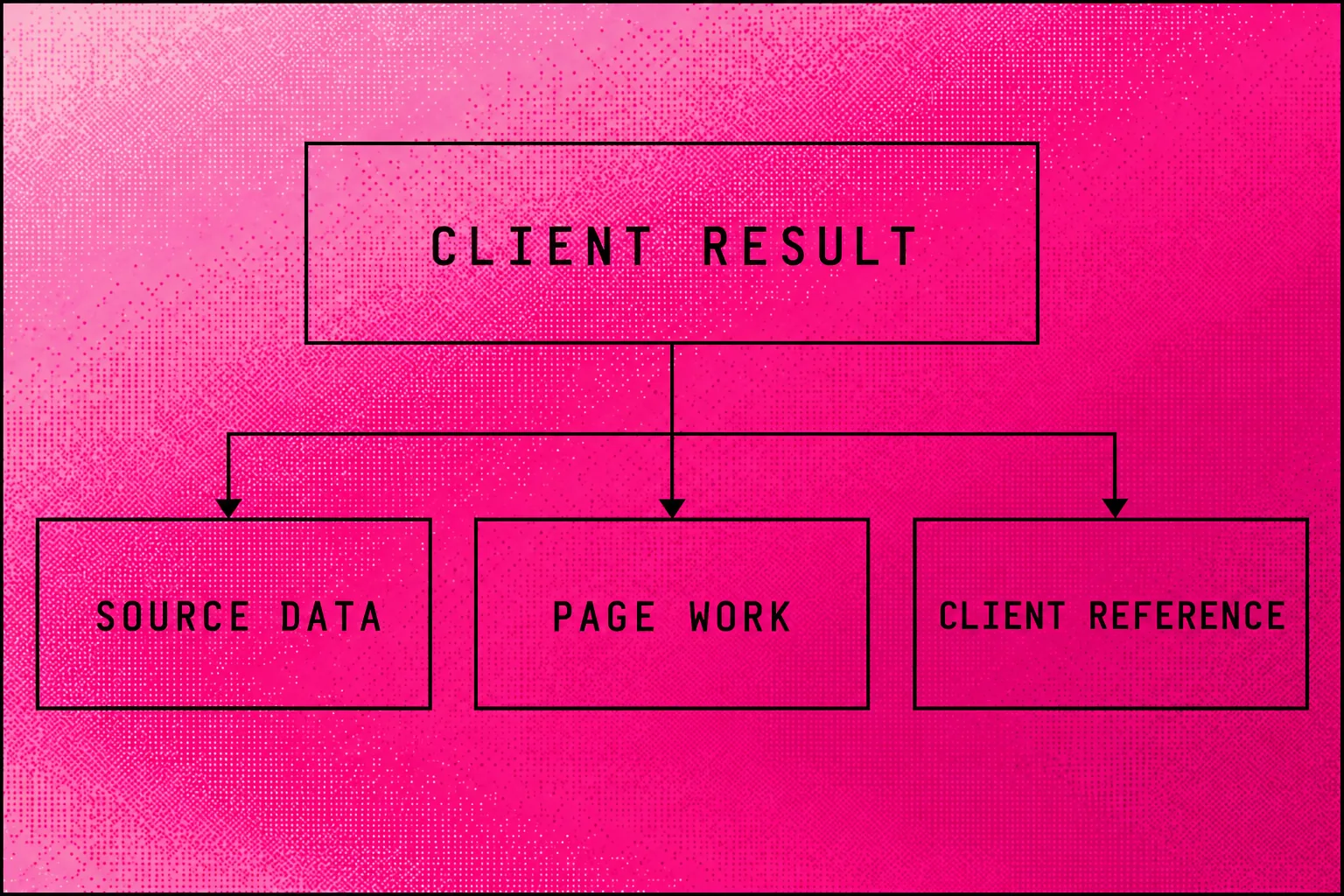
- A client reference, with permission to contact them.
If a case claims revenue, ask how the business linked sales to search. If it claims rankings, ask which queries and locations the evidence covers. Treat a past result as something to investigate, not a promise for your site.
Before Searchmaxxed, I built Radiant Roof Repairs from zero to more than $1 million a year in revenue using SEO as the only marketing channel. I did the pages, research, competitor checks and updates manually. The Radiant Roof Repairs case study describes that work.
The hiring question I would take from that example is specific: who joined the page work to the business result? Ask your prospective agency to walk through that connection in its own case.
Review a finished content sample too. Google asks whether content supplies original information and adds value beyond copying or rewriting other sources.[3] Look for details the business could stand behind, then ask who checks those details before publication.
What should an SEO contract include?
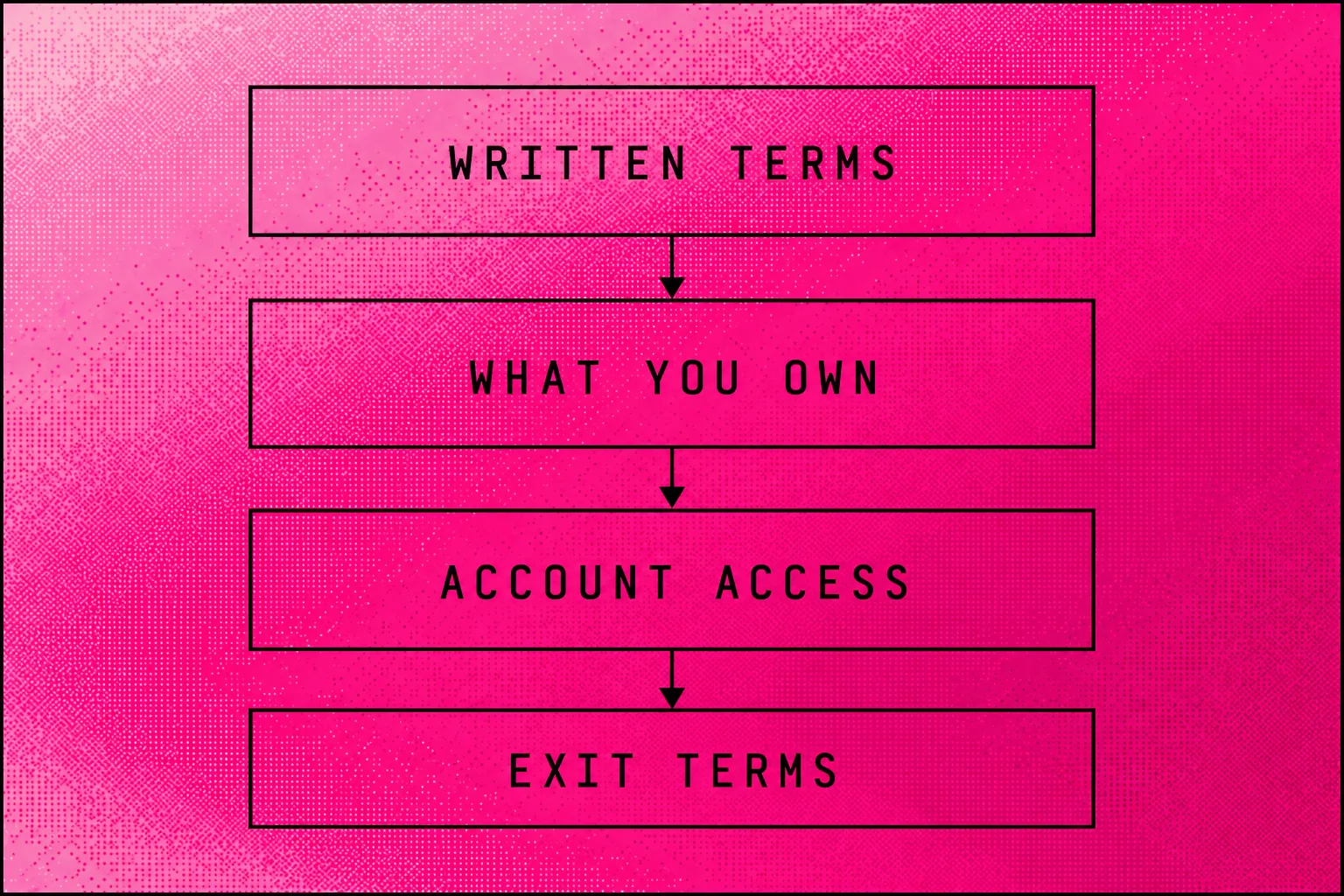
Get the SEO contract's scope, full costs, ownership and exit terms in writing before you sign. I would also request named implementation duties and a change-approval process. Use the checklist below to compare agreements; it sets out questions to resolve, not legal rules.
| Contract field | What to settle before signing |
|---|---|
| Work included | Pages, fixes, research, outside work and reporting |
| Implementation | Who makes each change and who pays for development |
| Approval | Who approves content, links and live changes |
| Costs | Setup, recurring work, tools, hosting and GST treatment |
| Term and renewal | Start date, minimum term and renewal process |
| Cancellation | Notice, exit fees and treatment of unfinished work |
| Ownership | Website, code, content, domain and data |
| Access | Business-held logins and the agency's permissions |
| Handover | Files, exports, change records and access removal |
Ask what you keep if the agency relationship ends. Separate the domain, hosting, source code, content and measurement accounts in that answer. Resolve any difference between the sales call and the agreement before paying.
Read longer commitments against the work and terms you accept. I wouldn't treat the term alone as proof of poor service. For Searchmaxxed, we agree monthly, six-month or twelve-month terms on the call. Our clients own their site, repository, content and data from day one.
Bring unclear or disputed clauses to your legal adviser before signing. Get the actual agreement reviewed, rather than relying on a salesperson's description.
What are SEO agency red flags?
An SEO agency's ranking certainty and hidden methods are reasons to stop the sales process. Google warns about both.[2] Ask for an explanation you can check before giving the agency permission to change your site.
A certain first-place ranking
Google says no one can guarantee a number-one ranking.[2] It also warns about providers claiming a special relationship or priority submission to Google.[2]
Ask for a forecast with its assumptions and the work the agency controls. Separate that forecast from a contractual commitment to deliver agreed work.
Secret methods
Google warns about companies that won't explain what they intend to do.[2] Request the changes, their purpose and the expected effect. A team can keep its internal software private while explaining the work it will perform on your behalf.
Link schemes
Google classifies buying links for ranking purposes, excessive exchanges and automated link creation as link spam.[4] Its policies say violating sites may rank lower or disappear from search results.[5]
Paid advertising and sponsorship links can meet Google's policy when they carry rel="sponsored" or rel="nofollow".[6] Ask about that distinction whenever a proposal includes paid placements.
For each proposed link, request the publisher, the intended audience, any payment and the link qualification. Pause if the agency offers only a link count and refuses to explain the sources.
Mass content without added value
Google's scaled-content policy covers large amounts of unoriginal content created to manipulate rankings and offer little value.[7] It includes generative AI pages without added reader value as an example.[7]
Ask for a finished sample and the business evidence behind it. Then ask who reviews the facts, relevance and final page. Assess the content and its purpose before judging the production tool.
Reports without work you can inspect
I would question a report that gives me no released URLs, change records or next actions. Ask the agency to connect one reported improvement to the work it completed. Compare that answer with your agreed scope.
How should you compare SEO proposals and costs?
Compare SEO proposals by the work included, who implements it and the full cost of the agreed term. Give each agency the same business goal and request the same breakdown. I would choose the scope I can understand and fund through its review period.
For every quote, ask the agency to separate:
- The initial audit or setup.
- Ongoing page and technical work.
- Link, review, listing or press work.
- Hosting, software and development costs.
- GST treatment and any charges when you leave.
Compare an audit-only proposal with another audit-only proposal. Compare managed work after checking whether both teams will implement their recommendations. Ask what your staff must supply and how much approval time the plan needs.
For Australian price context, read how much SEO costs in Australia. Get a written quote for your own scope before deciding.
A single monthly total leaves questions unanswered. If one quote includes writing and publishing while another expects your team to do both, ask each agency to price the same work.
For AI-related work, ask what the agency's AEO service does to help answer engines understand your business. Ask what its GEO work changes for generated answers. Request the tested questions, data sources, proposed changes and review method.
Google recommends checking AEO and GEO advice against its official guidance for generative AI features.[8] Separate fees alone won't settle whether the scope earns its cost; ask what additional work they pay for.
Is my SEO agency legit?
Check an SEO agency through four records: its business identity, client references, proposed methods and completed work. Have the proposal and recent work records ready. Google recommends reference checks and cautions against secretive providers.[1][2]
Ask for the legal business name and ABN that will appear on your agreement and invoices. Match those details across the documents. Ask who you will contact if a payment or service dispute arises.
For any claimed badge or certification, ask for the issuer's record and check the company name.
Speak with a reference about how the team worked. Ask whether it explained changes and met its commitments. Ask how it responded when progress slowed. Keep a good review separate from evidence of the particular skill you need.
Then check a proposed change against the actual page and Google's guidance. Google recommends evaluating third-party tool recommendations before making significant site changes.[1] Request the reasoning if the audit score and the proposed work don't line up.
For a current agency, open its recent work record alongside your agreement. Ask which changes went live, which still need approval and which depend on your team. Resolve missed delivery separately from disappointing search performance.
If the agency explains the work and provides evidence, assess the results against the agreed goal. If it refuses, pause further changes while you review the relationship and your access.
How should an SEO agency report progress?
Ask an SEO agency to connect completed work with search activity and qualified enquiries. At Searchmaxxed, our Managed Search Loop carries that connection from data to release and the next decision. We check live changes and use conversion and sales feedback when reviewing progress.
Request a report that answers these questions:
| Report question | Record to inspect |
|---|---|
| What changed? | Released URLs and a dated work record |
| Why did it change? | The problem and evidence behind the priority |
| Did the change go live? | A check of the live page or affected feature |
| Did the right visitors arrive? | Relevant queries and landing-page activity |
| Did they become customers? | Qualified enquiries, sales and known data gaps |
| What happens next? | The next job and its reason |
Agree how the team will compare periods and explain changes to tracking. Ask it to separate a completed release from evidence that the release helped the business.
Consider a service query that gets attention while the site lacks a page answering that customer's question. Ask the agency to show the gap. It can then propose the page, supporting links and the enquiry path.
After release, request a live-page check and follow-up data. If enquiries still disappoint, ask what the agency will inspect next. This example gives you a work sequence to request without predicting the outcome.
Google recommends asking expected-result, timeframe and measurement questions before hiring.[1] Keep asking them during the engagement. Slow progress calls for an explanation and a next action you can review.
Where does Searchmaxxed fit?
Searchmaxxed does agentic SEO: we build AI agents that help us research, check and prepare search work. They connect to your whole Search Console and GA4. Our Managed Search Loop helps us choose the next job, and a person approves each change before it goes live.
The agents check competitors' sites, Google results and what AI answers say about you every week. We compare that evidence with your plan. We then build a page or fix a fault. Some jobs call for a source outside your website.
Your Agentic Website lives on GitHub and Vercel, and you own it. We build new pages and improve existing ones. We add schema, the structured facts search engines can read, and links between related pages.
The Managed Search Loop connects the evidence to that work. We select the job and prepare the release. We check the live result, then use the new evidence to choose what follows.
Our Off-Page Source Layer builds support on other sites through links, reviews, business listings, press and mentions. We connect those records to your real business, people, services and places. A person checks public changes before release.
I ran these steps by hand at Radiant Roof Repairs. The agents now help us run them every week. Ask us to explain the work for your business before choosing a package.
| Package | What it includes |
|---|---|
| Local Search | Local pages, Google Business Profile management, reviews, listing cleanup and local AI tracking |
| Growth System | Page releases, technical fixes, landing-page improvements and outside-source work |
| Agentic Search Engineering | Growth System plus more pages, digital PR and wider AI-answer tracking |
| Custom & Enterprise | Agreed scope for multiple markets, engineering and reporting |
All managed packages include implementation, weekly releases and a monthly decision memo. We connect and check Search Console and GA4, and you have direct access to the people doing the work. AEO and GEO come with each managed package.
For entry work, the AI SEO Audit finds gaps and sets priorities. The Agentic Website Full Build covers research, site structure, design, technical SEO and measurement. Agentic Migration keeps a design worth keeping while moving the site to an owned repository.
Compare the package inclusions, then ask us which scope fits your site and market.
Frequently asked questions
How to select a digital marketing agency?
Choose for the work you need and request relevant examples, references and a written scope. For the SEO part, Google recommends questions about experience, measurement and communication.[1] Ask who owns each channel and who makes changes when several teams share your website.
How much does it cost to hire someone for SEO?
SEO fees vary with scope and market.[9] Request a quote for the audit, implementation and ongoing work you need. Ask each provider to separate recurring costs from setup, hosting and development. Check GST treatment and exit costs before comparing totals.
Can ChatGPT do an SEO audit?
Use ChatGPT for an initial review of material you supply, then have an SEO check its findings against your site. Google recommends checking third-party tool advice against official guidance before significant changes.[1] Request page evidence and a proposed fix before approving work.
What is the 80/20 rule in SEO?
Treat the 80/20 rule as a prompt to prioritise work, not a promised split of effort and revenue. Ask your agency which page or fault deserves attention first. Have it explain the evidence and cost behind that choice before building a long task list.
Is SEO legitimate?
Should an SEO agency rank its own website?
I would inspect its website, but I wouldn't make one ranking the deciding test. Ask for relevant client work and references. Google recommends those checks when hiring an SEO.[1] Keep your own business model and market at the centre of the comparison.
Does a Google Partner badge prove an agency can do SEO?
What type of links should an SEO agency build?
Which tools should a good SEO agency use?
Ask what each tool checks and how its findings affect the work. Google recommends evaluating tool advice against official guidance.[1] Request a worked example of a finding, a proposed fix and a live check. A tool list alone wouldn't decide my choice.
Do I need an agency in my city?
Prioritise demonstrated experience in your market and clear communication over proximity alone. Google recommends asking about country and city experience.[1] For local work, request examples involving the places you serve and ask how the team will check local results.
Should I hire an agency or do SEO myself?
Google says small local businesses can probably do much of the work themselves and recommends its SEO starter guide.[12] Hire help when you need skills or implementation time you don't have. Ask the provider to define those duties before agreeing a retainer.