


Yes, SEO is worth paying for when the extra customers it brings cover its cost and you can afford to wait.
Check that people search for the work you sell. Work out how many extra sales would cover the full cost. Google says changes can take hours to several months to show in results.[1]
Ask what the provider will ship, then judge it by enquiries, won work and profit.
SEO is worth it in 2026 when the profit from extra customers exceeds the full cost of getting them through search. Before paying, I’d check search demand, profit per sale and how long you can wait. Run a break-even check with your own numbers before signing a contract.
Is SEO worth it for your business?
SEO is worth considering when customers search for what you sell and the contribution from extra sales can cover the work. I’d test the business case against your actual sales records before choosing a provider.
Start with the service or product you want to sell more of. Then write the searches someone might make before buying it. For a roofer, that might mean a roof repair search in the area they serve. Treat those phrases as candidates to investigate.
Check the results yourself. Do they show local providers, product pages, advice or something unrelated to your offer? Ask a prospective provider which searches it would target and why someone making them would buy from you.
Google describes SEO as helping search engines understand content and helping people find a site and decide whether to visit.[2] My spending test adds the next step: can you turn those visits into profitable work?
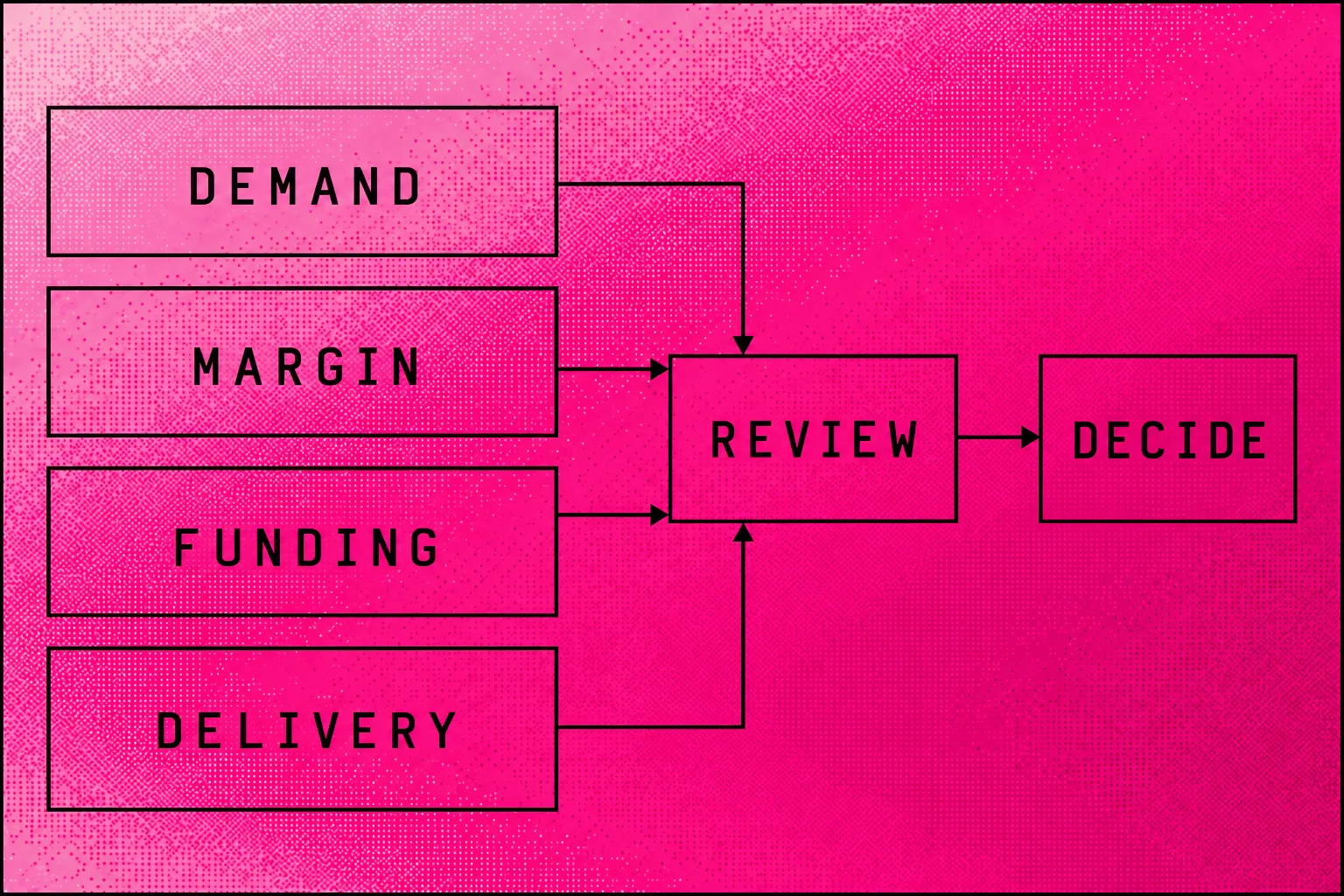
| Check | A reason to proceed | A reason to pause |
|---|---|---|
| Demand | Relevant searches match your offer | You haven't established what customers search |
| Margin | Extra sales leave money for acquisition | Direct delivery costs consume the sale |
| Time | You can fund work before it pays back | You need this month's spend back immediately |
| Capacity | You can serve extra customers | More orders would stretch delivery |
| Implementation | Someone can publish and fix pages | The plan ends at a report |
Use this as a decision checklist, not a score. A cash problem can outweigh an attractive search opportunity.
Our SEO service covers the search work. Before buying any service, settle which offer you want to grow and what an extra customer is worth.
When is SEO not worth the money?
SEO deserves a smaller scope or a delay when you haven't established demand, cannot cover acquisition costs or need immediate cash. I’d address the failing condition before committing to ongoing work.
If customers don't yet know your product category, investigate the problem they describe and the alternatives they compare. Require evidence for those searches before funding a large content plan.
If the website gets enquiries but you rarely win the work, inspect those enquiries and the sales process. Ask whether the visitors wanted your service, could afford it and reached someone who could help.
For low-margin work, run the break-even check using the money left after fulfilment. Revenue alone cannot tell you whether acquisition pays.
If you need leads this month to survive, I wouldn't make a new SEO campaign your rescue plan. Google says search changes can take several months and some produce no noticeable effect.[1] Consider an offer or channel you can test within your cash deadline.
And if nobody can implement the recommendations, buy a smaller job that includes the fix. A diagnosis needs a route to action.
Is SEO worth it for small businesses and local businesses?
SEO can be worth it for a small business when a manageable number of extra customers can cover the cost. I’d judge local SEO against the services, service area and job margins of that business.
For an Australian trade business, start with a service you can deliver profitably inside your real travel area. Check its search results and ask how the proposed work would help someone choose you.
Check each phone call in your review. Note whether it was a suitable job and whether the quote became booked work. Put those notes beside the search report.
I’d separate service enquiries from requests you cannot fulfil. Use the contribution from won work to judge spending, even when the website's traffic looks encouraging.
For a shop or online business, apply the same check to orders. Include fulfilment costs and the capacity to handle more sales.
Our local SEO service brings the website and local search work together. The business case still needs your own sales figures.
How do you calculate SEO ROI and break-even?
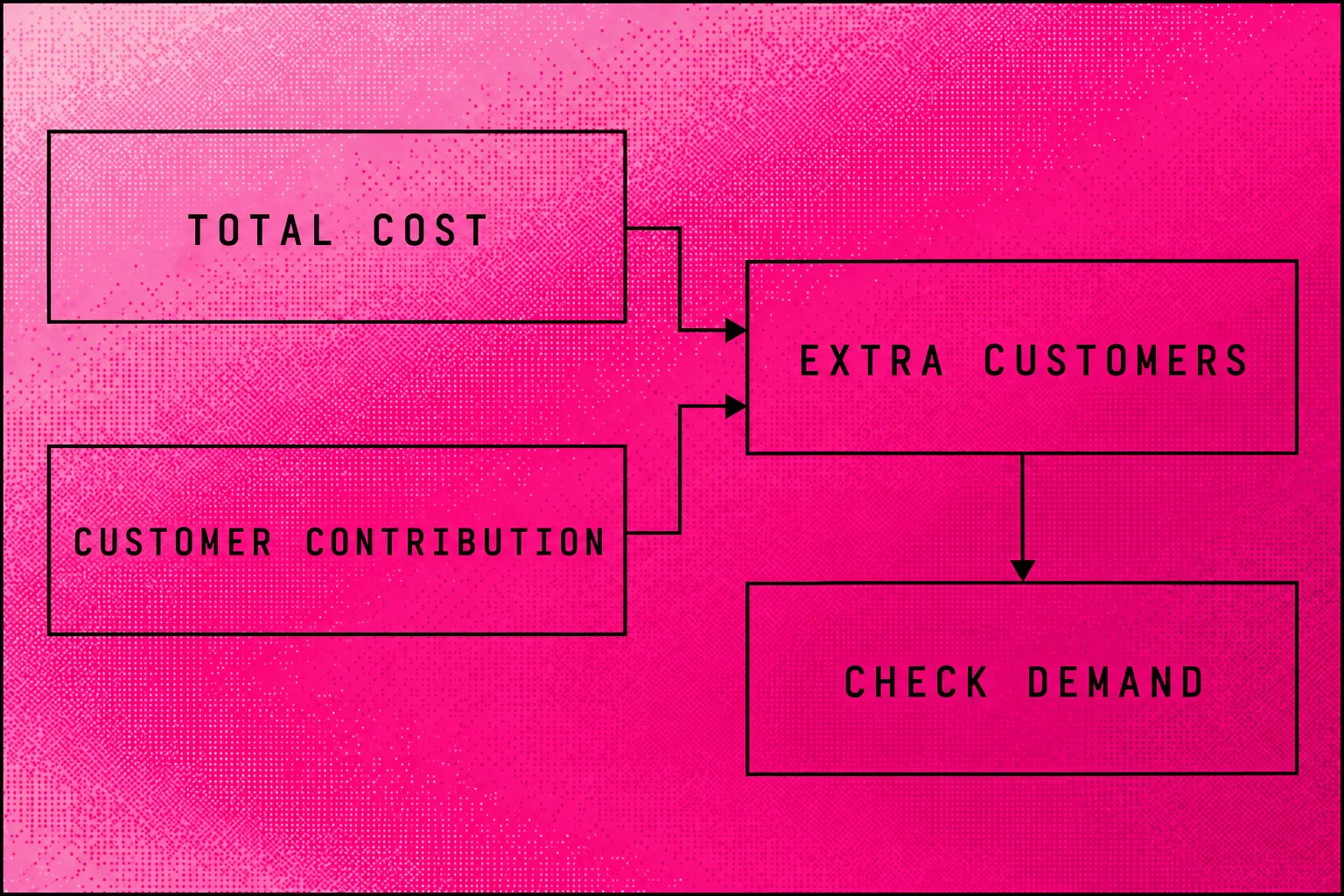
Calculate SEO break-even in three steps: total the cost, find the contribution per extra customer and divide cost by contribution. Use the same period throughout and start with your own sales records.
Total the cost
Include the provider's quote and any separate setup, content, development, tool or implementation costs. Add the time your team will spend on the work.
Use a consistent GST basis when comparing costs and sales. Ask the provider what its quote includes and take your accountant's figures for your side.
For the initial decision, total the spending through the point when you expect to judge payback. Include the spending before results arrive.
Find the contribution per extra customer
Use money left after the direct cost of fulfilling the sale. For a roof repair, subtract the job's materials, labour and other direct delivery costs from its revenue.
For an online order, account for the product and fulfilment costs, refunds and payment costs that apply. Include extra staff or capacity costs if more orders would require them.
Start with a conservative first-sale contribution. Add repeat purchases only when your records support both the repeat rate and the time needed to collect them. If a sale leaves no contribution, it cannot fund acquisition under this check. Fix the economics before using it to justify SEO spending.
Work out the threshold
Extra customers needed to break even = total SEO cost ÷ contribution per extra customer.
Round the result up to the next whole customer. For a hypothetical business, A$6,000 in total SEO costs and A$600 contribution per customer require ten extra customers. At a 25% close rate, that means 40 extra enquiries. If margins vary, calculate a separate threshold for each service or product.
| Your worksheet | What to enter |
|---|---|
| Review period | The period you can fund |
| Total SEO cost | All costs across that period |
| Contribution per customer | Sale value less direct delivery costs |
| Extra customers needed | Cost divided by contribution, rounded up |
| Extra enquiries needed | Customers needed divided by your close rate |
Use a close rate from comparable enquiries, expressed as a decimal. If you lack one, mark the enquiry forecast uncertain and make a smaller commitment.
Then challenge the result. Can the proposed searches plausibly supply that many suitable enquiries? Can your team win and deliver the resulting work?
For a return calculation, use:
SEO return = (extra customer contribution − total SEO cost) ÷ total SEO cost.
A positive result means contribution exceeds cost under this calculation. A negative result means it falls short. With no cost, the ratio has no defined value.
Count extra customers against a credible baseline. Review existing sales, seasonal changes and other marketing before crediting every organic enquiry to the new SEO work.
The formula gives you a hurdle to test. It cannot tell you how many customers a campaign will produce.
How long does SEO take to work?
Google says SEO changes can affect search results within hours or take several months. It recommends allowing a few weeks to assess effects and warns that some changes produce no noticeable impact.[1]
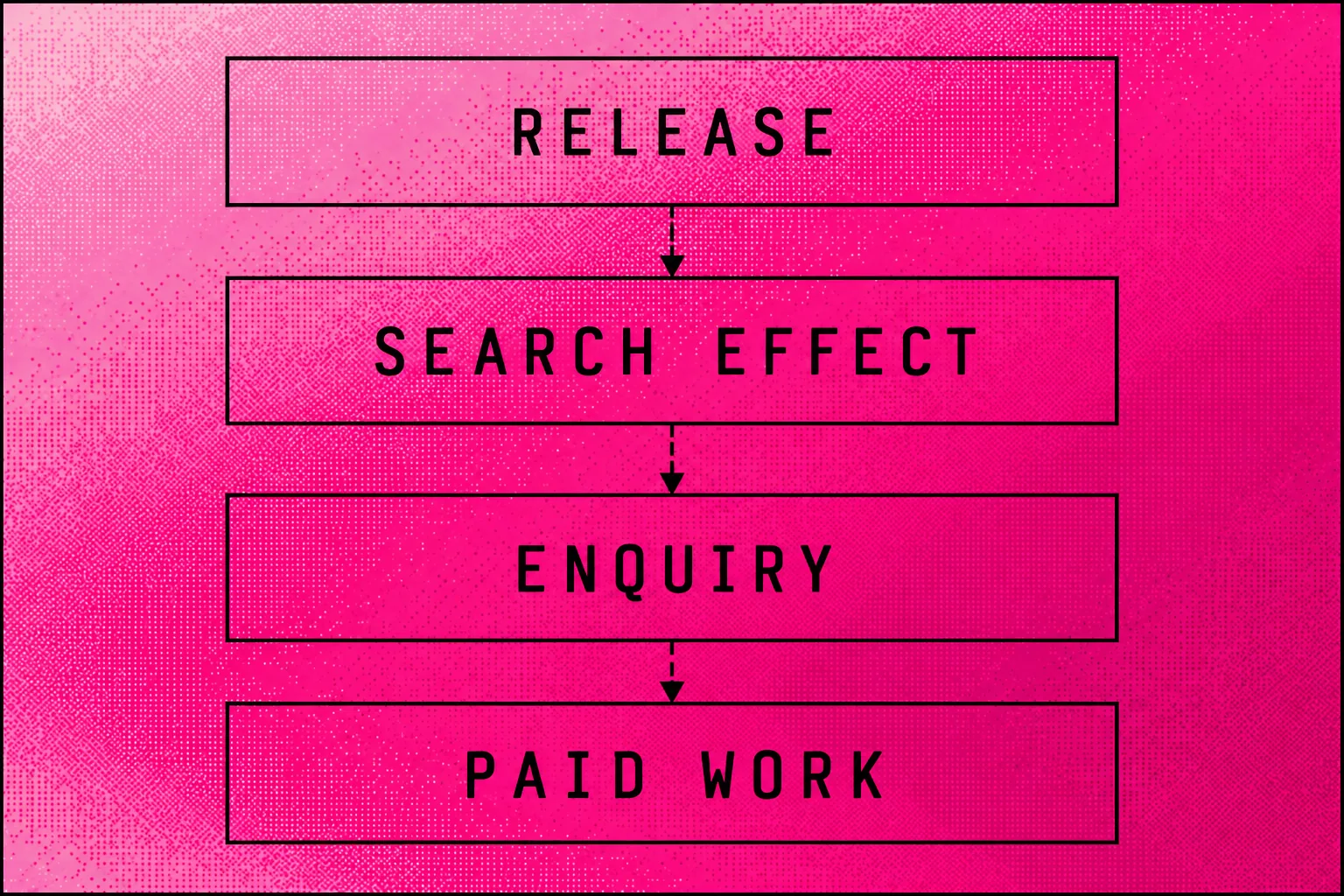
Separate a search change from financial payback. A page reaching the results, a visit becoming an enquiry and a customer paying you are different events.
Ask a provider to distinguish work it controls from outcomes it can only estimate. A publication date can form part of the scope. A promised date for profitable sales deserves scrutiny.
I’d agree on three review points:
- Has the provider shipped and verified the promised work?
- Do the relevant pages bring suitable enquiries or orders?
- Does extra contribution cover the accumulated cost?
Keep the original spending in the calculation when a later month looks better. Covering one month's fee leaves the earlier investment to recover.
Ask for the evidence behind a longer forecast. Continue when the explanation and new results justify the next spend, within the funding limit you set.
Is an SEO agency or consultant worth paying for?
An SEO agency or consultant is worth paying for when its scope addresses a real search problem and the economics support the spend. Choose between advice and implementation according to what your team can do.
I’d choose a consultant when the team needs diagnosis or direction and already has people who can publish pages and make technical changes. Confirm who owns each fix.
I’d consider an agency when the missing capacity includes research, writing, development and ongoing review. Ask which people will do those jobs and what they will ship.
DIY deserves a place in the comparison. Read Google's Starter Guide and assess which tasks you can complete without paid help. It covers discovery, site structure, content and search presentation.[3]
Before signing, ask for answers to these questions:
- Which services or products will you target first?
- What pages and fixes will you deliver?
- Who will implement them, and what costs sit outside the quote?
- How will you connect enquiries to won work?
- What evidence would make you change the plan?
- What are the contract term, notice period and ownership terms?
Ask whether the scope covers technical SEO, content strategy and link building. Tie each job to a problem your site or market presents.
For cost context, compare the Australian SEO cost guide with the actual inclusions in your quote. I’d budget for the full work, not infer value from the retainer alone.
Use the Australian SEO agency shortlist when you need providers to compare. Keep the same questions and break-even check for each proposal.
Is SEO worth it for ecommerce and Shopify?
SEO can be worth it for ecommerce, including Shopify, when the contribution from extra orders covers acquisition and implementation costs. I’d start with a product group whose demand, stock and margins you can verify.
Choose a category you can fulfil and want to grow. Check whether its search results match your products before commissioning more pages.
Use contribution after fulfilment and refunds in the spending check. If orders require discounts or extra staff, include those costs too.
Google's Starter Guide covers descriptive URLs, duplicate content and connecting related pages through links.[4][5] Ask the provider which of those issues affects your shop and how it will fix it.
Keep reporting at a level that explains the sales. Compare the pages attracting customers with the orders and contribution those customers generate.
A platform name alone wouldn't settle my decision. I’d want the offer, the demand and the economics to support the work.
Is SEO dead now with AI?
No. Google's current guidance says SEO can help when it supports people-first content. That establishes a role for SEO, without promising a return for your business.[6]
For spending decisions, I’d check both the search results and the AI answers relevant to your offer. Ask what they say about you and whether the proposed work addresses a real gap.
Google asks content creators to provide original information, clear sourcing and value beyond rewriting other pages.[7] Ask how a provider will use your actual services, products and experience to improve the pages it writes.
Compare the proposed AEO work for answer engines with the GEO work for generated answers. Require clear tasks and measures for each.
An AI mention alone wouldn't pass my return check. I’d keep enquiries and won work beside any report of mentions or citations.
The AI SEO explainer covers the method in more depth. Keep the spending decision tied to customers and cost.
What did SEO do for Radiant Roof Repairs?
I built Radiant Roof Repairs from zero to more than $1 million a year in revenue using SEO as the only marketing channel. Three high-intent Gold Coast roofing searches reached number one within 90 days.
I did the pages, research, competitor checks and updates manually.
I now run Searchmaxxed, where agents help run those steps each week and a person approves every change before it goes live.
The Radiant Roof Repairs case study explains how I chose searches and built pages for that roofing business.
Annual revenue doesn't reveal the contribution left after delivering the work. I wouldn't turn Radiant's result into an ROI forecast for another company.
Where does Searchmaxxed fit?
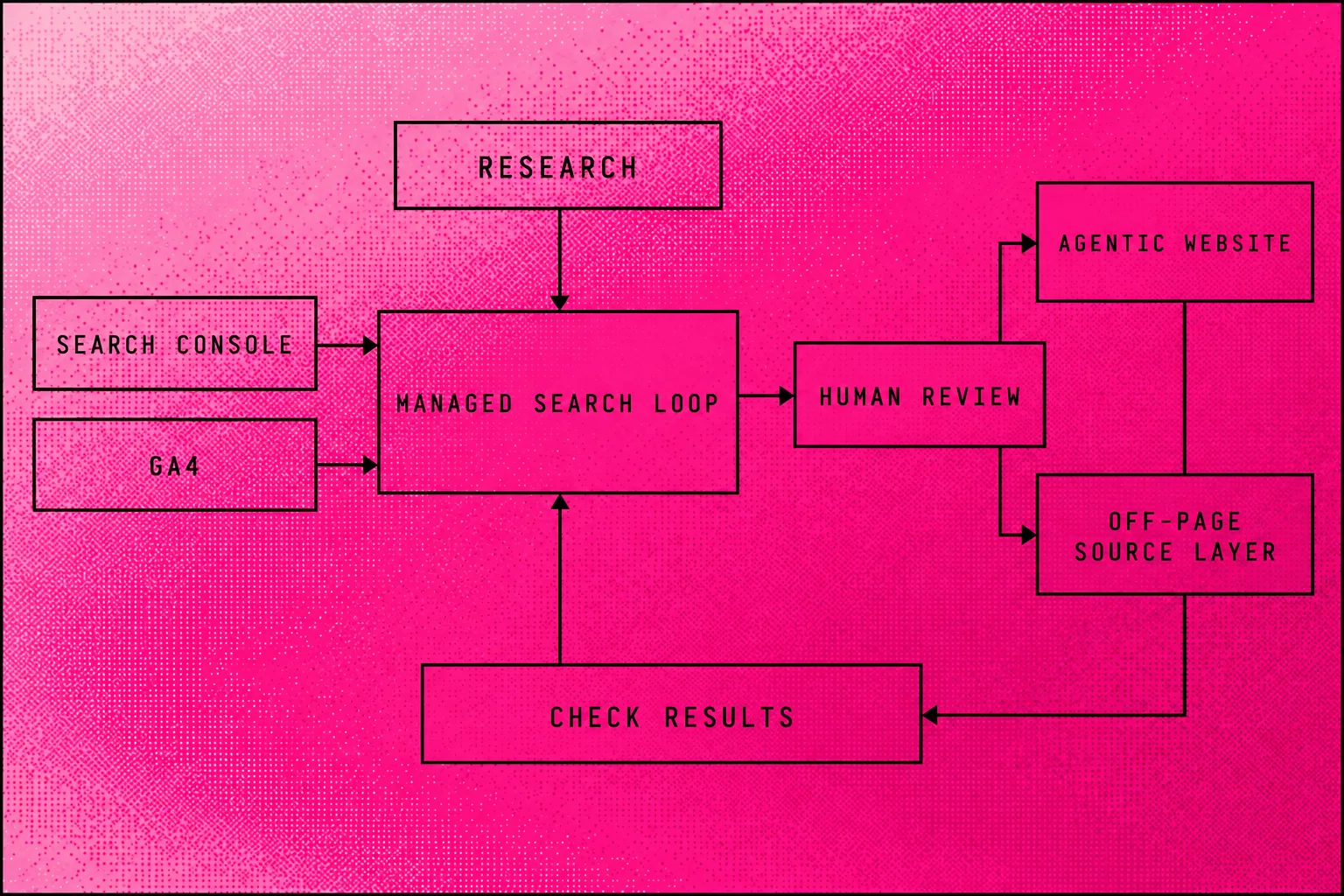
Searchmaxxed fits when you want a team to run the research, build the pages and check what changes. Our Managed Search Loop uses the evidence to choose the next job, with a person approving every public change.
We do agentic SEO: AI agents help with the research and work. They plug into your whole Search Console and GA4, so we can check search and website data.
Each week, the agents scrape competitors' sites, read Google results and check what AI answers say about you. We compare that evidence with your plan.
Our Managed Search Loop helps us find the problem and choose the next job. That might mean a missing service page or a fault stopping Google from seeing your content.
We build new pages and fixes on your Agentic Website. It lives on GitHub and Vercel, and you own it.
We also add structured data: code that describes the page's facts. Internal links connect related pages. The Off-Page Source Layer covers work beyond your site: links, reviews, citations, press and mentions.
A person checks every change before it goes live. The agents then measure what changed, and we use the result to choose the next job.
Our packages set the work we run:
- Local Search includes service and location pages, Google Business Profile management, reviews, local links, citation cleanup and local search tracking.
- Growth System includes new pages and rebuilds, technical fixes, schema, internal links, landing-page work and outside sources. It includes AI visibility tracking.
- Agentic Search Engineering adds comparison and industry pages, press work, ongoing digital PR and qualified link campaigns. It tracks the major AI answer engines.
- Custom & Enterprise can cover multiple markets, dedicated engineering, custom reporting and original research.
Entry options include the Agentic Website Full Build, Agentic Migration and AI SEO Audit. The build covers research, design and pages. Migration keeps a design worth keeping. The audit identifies search gaps and ranks the fixes.
Bring your site, your goals and what an extra customer contributes. Let's talk pricing.
Frequently asked questions
Is SEO dead now with AI?
No. Google still describes SEO as helpful when it supports people-first content.[6] For your business, test whether the work brings extra customers whose contribution covers its cost.
Is it worth paying for SEO?
Yes, when the work addresses a real opportunity and the extra contribution can exceed the full cost. Ask who implements the changes and agree how you will assess payback before signing.
What is the 80/20 rule in SEO?
Treat it as a prompt to prioritise work, not a promised split of effort and results. I’d start with the fault or missing page closest to a sale and test what the fix changes.
Will SEO exist in 5 years?
Five-year forecasts can't settle today's spending decision. Google's current guidance gives SEO a role in helping people find and understand websites.[2] Base today's spend on demand you can investigate and costs you can fund.
Can I do SEO myself?
Yes, start with Google's Starter Guide and work through the tasks your team can implement. Google covers discovery, helpful content and site organisation.[3] Budget your time and get help where a technical task exceeds your skills.
Is local SEO worth it?
Yes, when extra local jobs leave enough contribution to cover the full cost. Track suitable calls and booked work for each service area.
Is SEO worth it on Shopify?
It can be, if your products have demand and enough contribution after fulfilment to cover the work. Run the calculation for a product group you can keep in stock. Ask for specific changes before buying ongoing help.
Is an SEO audit worth it?
An audit is worth considering when it identifies a fault you can fix and gives someone the job of fixing it. Google recommends checking resource access and using Search Console's URL Inspection Tool to see how it views a page.[8]
Are SEO backlinks worth it?
Relevant links can help Google discover pages: Google says it primarily finds pages through links from pages it already crawled.[5] Before funding link work, ask which page needs support and what the proposed source adds.
Are SEO tools such as Moz worth paying for?
I’d pay for a tool when its output changes a decision your team can act on. Ask what job it will support and who will do the resulting work. Include the subscription in the full spending check.
Are Yoast SEO and All in One SEO worth it?
Choose a paid plugin only after comparing the current features with a specific job your site needs. Check your existing setup for overlap. I wouldn't judge either product without its current scope and price beside that job.
Are SEO courses and certifications worth it?
I’d choose learning that helps you complete work on your own site. Google's Starter Guide gives you a starting point for SEO tasks.[3] Ask a course provider what you will practise; judge a certificate separately from the skills you need.
Is SEO worth it for a brand-new website?
It can be, when you can establish demand and fund the work before it pays back. Google says following its essentials can improve eligibility, but it gives no certainty that it will index a particular site.[9]
How will I know whether SEO pays back?
Keep a monthly worksheet of SEO spending, qualified enquiries, won jobs and contribution after delivery costs. Compare extra contribution with the full cost over the same period. Include earlier spending the campaign has yet to recover.