


Choose Google Ads for near-term traffic, SEO for a longer-term search channel, or both when your budget supports each.[1]
| Your situation | My pick |
|---|---|
| Need enquiries this month | Google Ads |
| Want pages that keep bringing customers | SEO |
| Can fund both without starving either | Both |
SEO still costs time and work, even without a charge for each organic click.[1] Set a customer-cost target before you split the budget.
SEO vs Google Ads comes down to timing: choose ads for faster traffic and SEO for pages that can keep attracting customers.[1] Run both when you can fund immediate traffic and ongoing website work without starving either.[2] For an Australian business, I'd start with the deadline for your next customers and the cost you can afford to acquire them.
SEO vs Google Ads: what are you paying for?
SEO pays for website and search work; Google Ads pays for advertising traffic.[1] I put Searchmaxxed first for ongoing SEO work, and I run it. This is my comparison, not an independent ranking of agencies.
| Option | Best for | Cost model | Time to impact |
|---|---|---|---|
| SEO | Ongoing searches for your services | Website work; no organic click charge | Changes can take hours to months |
| Google Ads | A launch or time-sensitive offer | Paid clicks, plus campaign work | Faster traffic once campaigns run |
| Both | Paid traffic while SEO develops | Fund each channel's work | Paid traffic first; organic work continues |
SEO means search engine optimisation: helping search engines understand your content and helping people decide whether to visit your website.[5] Google Ads is Google's online advertising program.[6] For this comparison, I mean Google Search ads, rather than every ad format Google offers.
PPC means pay-per-click, an advertising model where you pay when someone clicks an ad.[7] Google Ads is one platform for PPC; SEO works on organic results.[8][5] An organic click carries no advertising charge, but producing and maintaining the page takes work.[1]
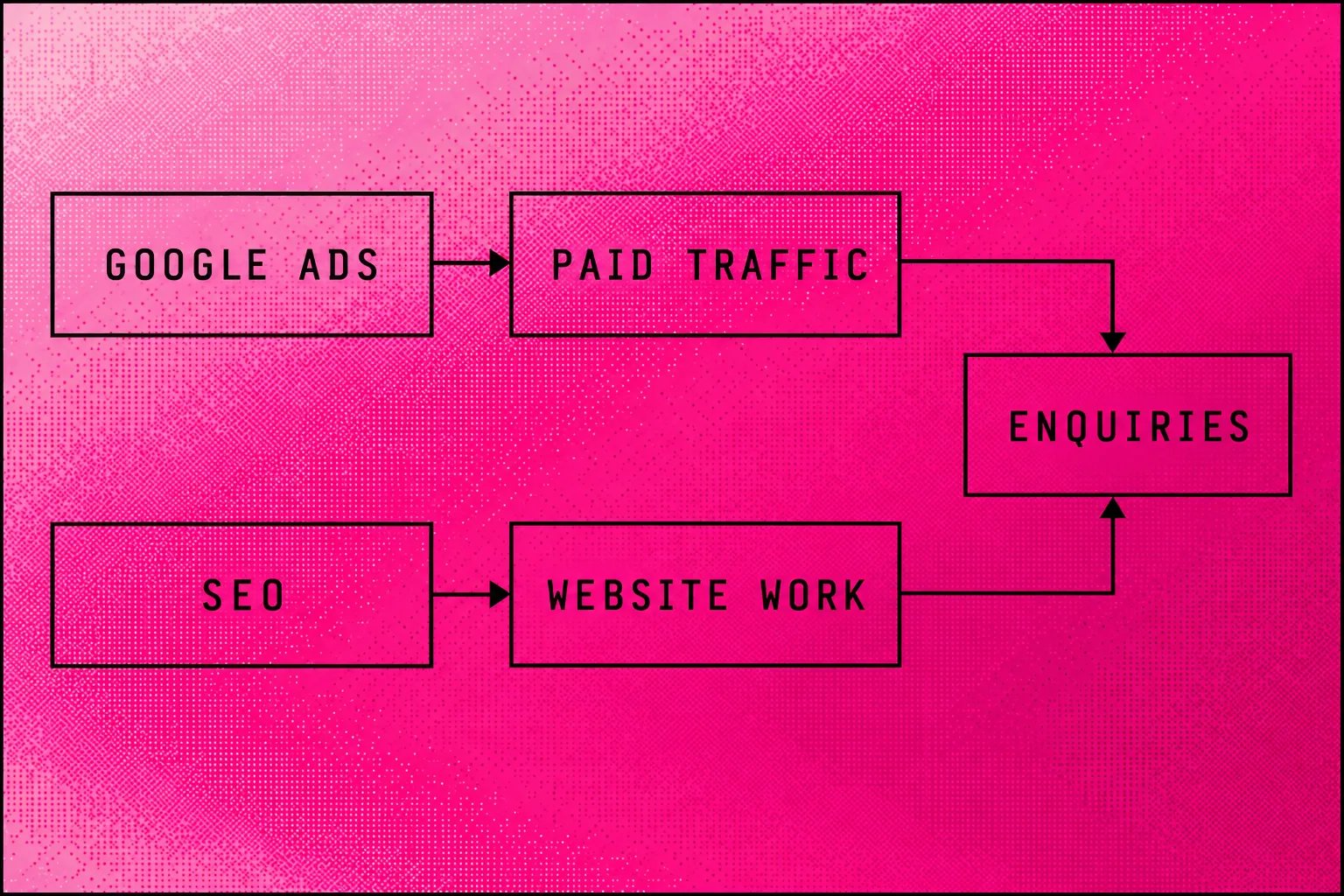
Is SEO or Google Ads cheaper in Australia?
In Australia, SEO can avoid ongoing click charges, while Google Ads requires a continuing advertising budget.[1] Neither is automatically cheaper for your business. I'd compare the full cost of winning customers, including the work around each channel.
What do Australian agencies publish for SEO?
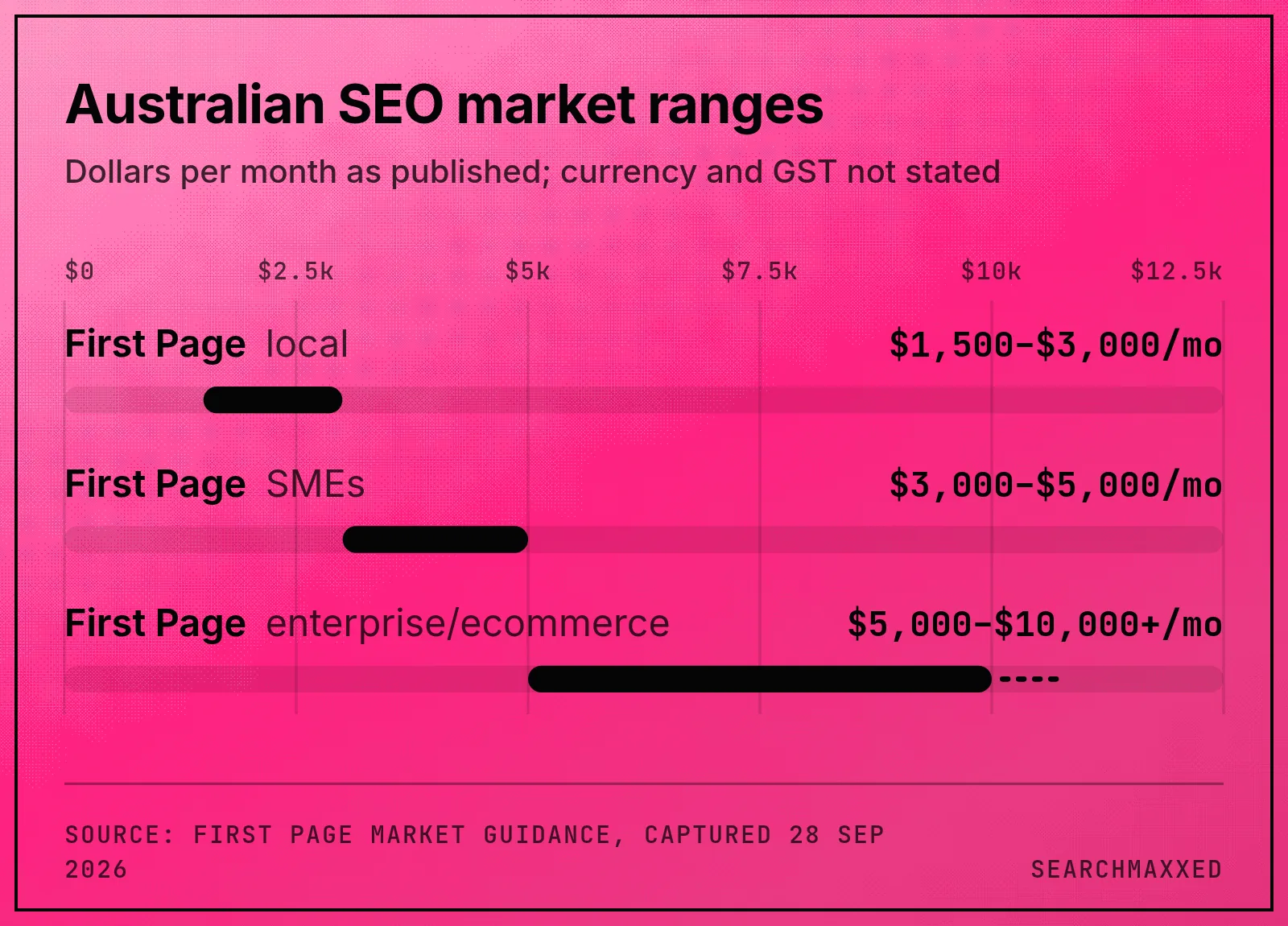
First Page publishes these Australian market estimates, not fixed prices for its own packages.[9] Prosperity Media gives a starting budget for its entry local SEO campaign.[10] Keep those two kinds of evidence separate when you compare a quote.
| Publisher and scope | Published monthly amount | GST | Source capture |
|---|---|---|---|
| First Page: local businesses | $1,500-$3,000 | Not stated | 28 September 2026 |
| First Page: SMEs | $3,000-$5,000 | Not stated | 28 September 2026 |
| First Page: enterprise or ecommerce | $5,000-$10,000+ | Not stated | 28 September 2026 |
| Prosperity Media: entry local SEO | Starts at around $2,000 | + GST | 28 September 2026 |
These are Australian agencies' published figures, though the pages don't name the currency. First Page's figures are market guidance, not a national average or a quote for your website.[9] Ask each provider to confirm currency and GST.
First Page says competition, website size, geographic targeting and content requirements affect pricing.[9] Ask which pages the quote covers, who writes them and who makes the technical changes. Check whether the same fee includes external links and ongoing measurement.
Our Australian SEO cost comparison goes further into scope and price evidence. Use the Australian SEO agency shortlist when you're ready to compare providers.
What does a paid search click cost?
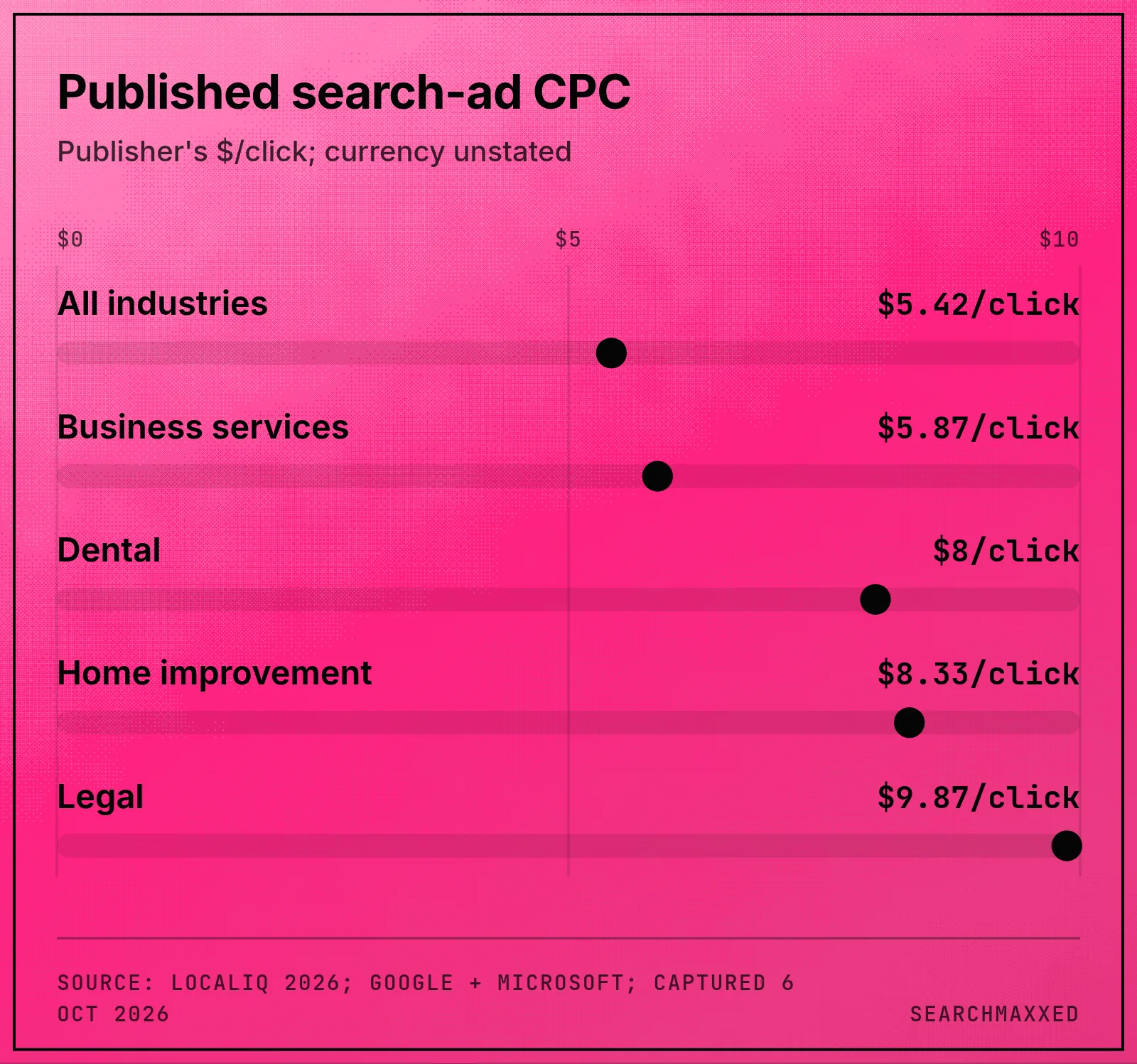
LocaliQ's $5.42 average CPC is a mixed-platform benchmark, not an Australian Google Ads estimate.[11] CPC means cost per click.[12] The dataset combines Google Ads and Microsoft Ads.[11]
| LocaliQ category | CPC, publisher's $ units |
|---|---|
| All industries | $5.42 |
| Business services | $5.87 |
| Dentists and dental services | $8.00 |
| Home and home improvement | $8.33 |
| Attorneys and legal services | $9.87 |
Source: LocaliQ's 2026 report, updated 1 June 2026; checked 6 October 2026.[13]
LocaliQ leaves the currency and sample geography unstated.[11] Ask for an Australian estimate using your service, target area and proposed keywords. Confirm it's in Australian dollars before setting the budget.
LocaliQ warns that cheaper clicks can fail to convert.[14] Track which enquiries become customers before increasing spend.[15] Set a cost-per-customer target using your own margin.
Keep media spend separate from management and landing-page work. I'd compare an SEO quote with the whole paid-search budget, not one click price. Monthly service fees and CPC describe different things.[9][12]
How long do SEO and Google Ads take to work?
Google Ads can bring traffic sooner than SEO, but traffic and profitable customers are different milestones.[4][15] Google says website changes can affect search within hours or take several months.[3]
Google recommends waiting a few weeks to assess whether SEO changes helped.[3] It also says some changes produce no noticeable impact.[3] A page going live, appearing in search and earning a customer deserve separate checks.
For a short promotion or new service, I'd test Search ads first. Their faster traffic and targeting suit that job.[4] Keep the offer clear and check whether enquiries turn into customers before increasing spend.
LocaliQ cautions that a new account, low-volume keywords or a small budget can limit early advertising results.[16] An ad appearing in search therefore gives you an earlier chance to test the offer, not a fixed deadline for profit.
If you need customers this month to stay open, I'd avoid an SEO-only plan. Searchmaxxed's ongoing SEO work fits a business that can fund page changes while it assesses their effect.
What happens when you stop paying?
Google Ads loses its paid placement when you stop the campaign, while existing SEO rankings can continue after you pause new work.[1] The pages remain, but their future traffic depends on how they perform in search.[5]
Codefixer distinguishes ongoing ad costs from organic traffic that can continue without an active advertising campaign.[1] Google still recommends maintaining website content and updating it when needed.[17]
I'd treat SEO as work you can keep: service explanations, comparison pages and technical repairs. The SEO spend should leave you with something you can inspect and maintain. Ask who owns the website, content and data before signing.
A completed page gives you something to improve next month. A paid campaign can give you faster evidence about an offer.[2] Neither justifies paying indefinitely without reviewing the customers it brings.
Which gives you more control?
Google Ads gives you direct control over campaign budgets and geographic targeting; SEO gives you control over website changes, not Google's ranking decision.[4][5] Choose ads when timing or location needs a firm campaign boundary.
Lance Montana describes the ability to target specific locations and adjust the advertising budget as performance changes.[4] Those controls help when you want to promote one service in one area.[4]
SEO puts the work into your website's content and technical access.[18][19] Google says no technique automatically ranks a site first.[5] You can approve a page or repair; you can't buy its organic position.
When comparing proposals, separate these jobs:
- Technical SEO: check whether search engines can access and understand your pages.[18]
- Content strategy: decide which questions your pages should answer and what needs updating.[19][17]
- Link building: develop relevant external links that can help search engines discover your pages.[20]
At Searchmaxxed, you own the site, repository, content and data from day one. Our agents help with research and production. A person approves every public change. For paid search, I'd also require direct access to the advertising account and its records.
When should you run SEO and Google Ads together?
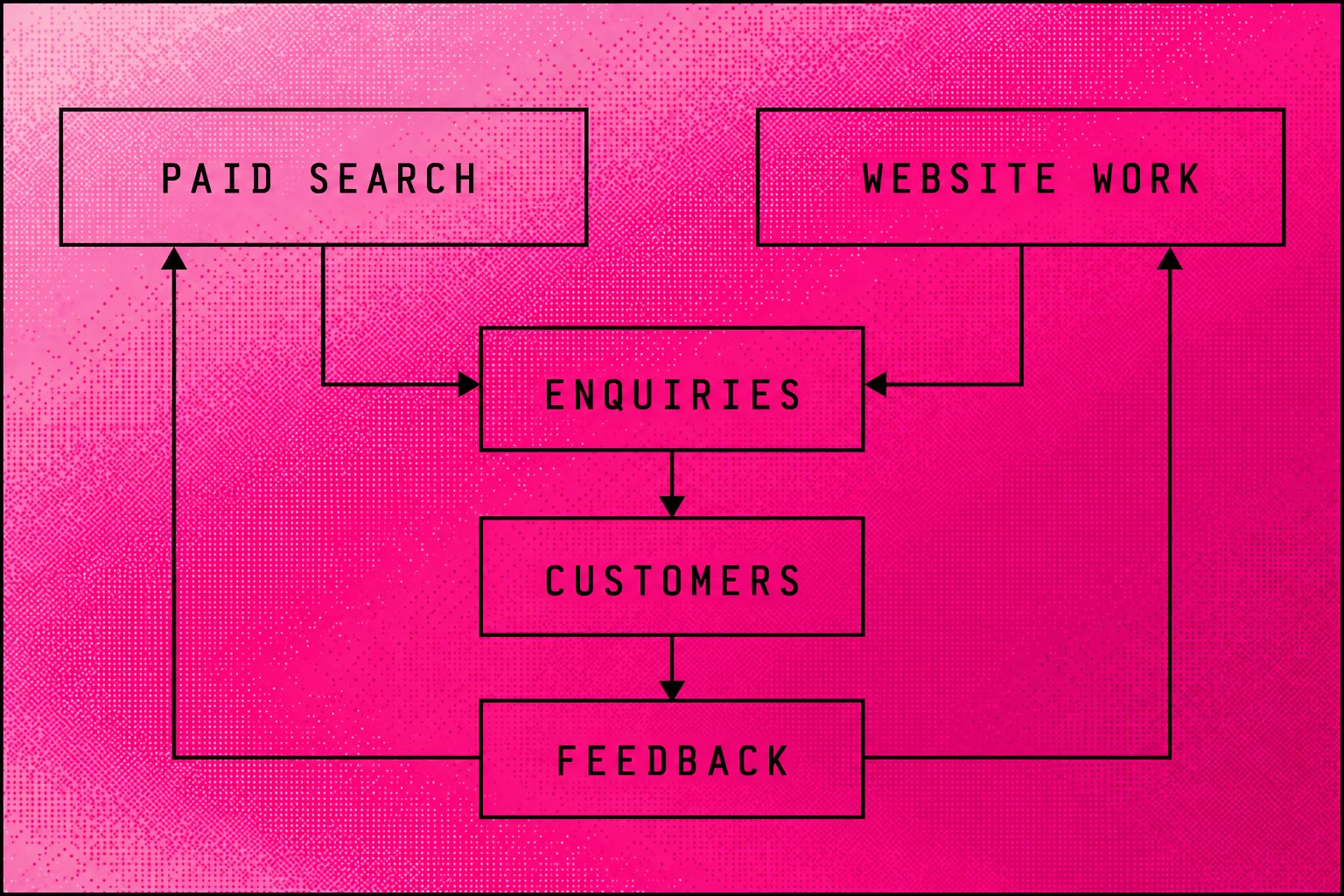
I'd run SEO and Google Ads together when each has a distinct job: paid traffic now and ongoing website work. At Searchmaxxed, I want enquiry evidence to guide our next SEO page. Paid keyword tests can help choose those priorities.[2]
For example, consider an Australian home-service business adding a new service. I'd run a focused paid campaign while improving that service's page for organic search.
Flexi Boost describes testing commercial keywords through ads and using enquiry evidence to choose SEO priorities.[2] Apply the idea with your own Australian campaign data. Keep the paid and organic results separate so you can see which channel brought each enquiry.
I'd use this order:
- Choose the service and enquiry you want to test.
- Check that the landing page explains the service and offers a working contact path.
- Run the paid test while improving the relevant organic page.
- Review which enquiries became customers before choosing the next spend.
Paid advertising doesn't directly improve organic rankings.[21] The connection is the evidence you learn and the website work you do with it.
If your budget only supports one channel, give it a clear test. I'd rather fund one service properly than split the money until neither has enough work to judge.
How should you compare enquiries and customer costs?
Compare SEO and Google Ads by recording spend, qualified enquiries and customers won through each channel. LocaliQ recommends following leads through to customers when assessing advertising performance.[15] Set up the contact tracking and sales record before judging the channels.
For paid search, record media spend alongside management and page work. For SEO, record the service fee and any separate implementation costs. Compare matched periods and identify the work each period includes.
Then calculate:
- Cost per qualified enquiry: I divide total channel cost by qualified enquiries. Casa Media's published CPA formula divides PPC ad spend by conversions.[22]
- Cost per customer: total channel cost divided by customers won.[22]
Define a qualified enquiry before counting it. For a service business, I'd check that the person wants a service you sell in an area you serve. Keep spam and unrelated requests separate.
A business can accept a higher lead cost when those leads produce enough customer value.[23] CPC alone misses the enquiries that go nowhere and the customers who buy again.[14][23]
Keep each channel's customer totals beside its full cost. Note which sales you can't trace to a channel. Review those gaps before moving the budget.
Where does Searchmaxxed fit?
Searchmaxxed fits the SEO side: we build and improve your Agentic Website through the Managed Search Loop and Off-Page Source Layer. We do agentic SEO, which means AI agents help us research, build and check the work. A person approves every public change.
Our agents connect to your whole Search Console and GA4. Search Console shows how people find you on Google; GA4 helps us check what happens on your website. Each week, the agents read competitor sites, Google results and AI answers about your business.
We check that evidence against your plan. The Agentic Website holds your new pages, fixes, schema and internal links. Schema means structured facts that search engines can read. The site lives on GitHub and Vercel, and you own it.
The Off-Page Source Layer covers links, reviews, business listings, press and mentions on other websites. After a person approves a change, we release it and check the live result. The next round starts with what happened.
Before Searchmaxxed, I built Radiant Roof Repairs from zero to more than $1 million a year in revenue using SEO as the only marketing channel. I did the pages, research, competitor checks and updates manually. The Radiant Roof Repairs case study explains that founder work. It gives me a reason to back SEO, not a deadline for your business.
Our SEO service includes the page and technical work. The managed packages differ in the amount of page work and external-source work:
- Local Search includes service and local pages, Google Business Profile management, real reviews, local links and business-listing cleanup.
- Growth System includes new pages or substantial rebuilds, landing-page improvements, technical work, schema, internal links and source-layer basics.
- Agentic Search Engineering adds comparison and industry pages, press releases, digital PR, link campaigns and AI answer tracking.
- Custom & Enterprise can cover multiple markets, dedicated engineering, custom reporting and original research.
For the starting point, the Agentic Website Full Build covers research, design, technical SEO and measurement. Agentic Migration keeps a design worth keeping and moves it to an owned site that supports ongoing search work. The AI SEO Audit sets out the gaps, fixes and plan.
Frequently asked questions
Is Google Ads worth it?
Yes, when the customers it brings justify the full campaign cost. LocaliQ advises tracking which advertising leads turn into customers.[15] I'd include media, management and landing-page costs before deciding to increase spend.
Can a beginner do SEO?
Is SEO still worth it in 2026?
Yes, if your customers search for what you sell and you can fund the work long enough to assess it. Google describes SEO as improving your presence in search.[5] I built Radiant Roof Repairs to more than $1 million a year using SEO as the only marketing channel.
Is Google Ads considered SEO?
SEO vs PPC: is PPC better than SEO?
PPC is better for faster traffic; SEO suits a longer-term organic channel.[1] I'd choose according to urgency and customer cost. Use both when you can give each enough work and measurement to judge it.
Is SEO free or paid?
Is Google Ads SEO or SEM?
Is PPC harder than SEO?
Is PPC cheaper than SEO?
Google Ads or SEO can be the cheaper choice; your customer costs decide. PPC charges for clicks, while SEO pays for work intended to bring organic traffic.[1] Compare total customer cost, not an advertising CPC against a monthly SEO fee.
Does Google Ads improve SEO rankings?
What do I own after paying for SEO?
Ask the provider to put website, content and data ownership in the agreement. Keep access to the accounts and files needed to continue the work. Agree the handover before signing.
Can a local business use both SEO and Google Ads?
Yes. Paid search can test local demand while SEO develops your organic presence.[2] Track paid enquiries separately from calls through your business profile. Compare booked jobs and margin before splitting next month's budget. Our local SEO guide covers the profile side.
Does SEO include work for AI answers?
Ask whether the SEO scope covers AI answers as well as Google results. AEO covers answer-engine work, and GEO covers generative AI search. The AI SEO explanation describes how those jobs connect with website and outside-source work.
- Codefixer: https://www.codefixer.com/blog/seo-vs-google-ads-where-to-invest/
- Flexi Boost: https://flexiboost.ie/blog/google-ads-vs-seo
- Google Search Central: https://developers.google.com/search/docs/fundamentals/seo-starter-guide
- Lance Montana: https://lancemontana.com.au/seo-vs-google-ads-whats-the-best-strategy-for-your-business/
- Google Ads Help: https://support.google.com/google-ads/answer/6146252
- Casa Media: https://casamedia.com/paid-media/difference-sem-seo-ppc-and-google-ads/
- First Page: https://firstpage.com.au/seo/
- Prosperity Media: https://prosperitymedia.com.au/seo-agency/
- LocaliQ: https://www.localiq.com/blog/search-advertising-benchmarks/