


Choose SEO for ongoing organic search work, paid SEM for faster traffic tests, or both when you can fund each properly.[4] SEO funds work on your site; paid search adds an advertising budget.[5] Neither promises sales.[1][6]
| Your priority | Start with |
|---|---|
| Improve organic search over time | SEO |
| Test demand or promote a launch | Paid SEM |
| Test now and improve organic reach | Both |
Set a budget for each channel and check that enquiry tracking works. Review qualified enquiries and customers before deciding where the next dollar goes.
SEO improves your organic search results; SEM often means paid search advertising.[1][2] SEM also has a broader meaning that includes SEO.[3] Choose SEO for ongoing growth or paid search for faster traffic. Use both when you can fund each.[4]
SEO vs SEM: what is the difference?
SEO improves your website's organic search presence; paid SEM buys search advertising.[1][2] The broader definition of SEM includes both organic and paid search.[3] For this comparison, SEM means paid search, so the budget choices stay clear.
| Option | Best for | Cost model | Speed |
|---|---|---|---|
| SEO | Ongoing organic search work | People, content and tools | Changes take hours to months |
| SEM, meaning paid search | Traffic tests and launches | Ad spend plus campaign work | Faster access to search traffic |
SEO work and timing: Google Search Central and Shopify.[1][7][5] Paid-search costs and use cases: Shopify.[2][4]
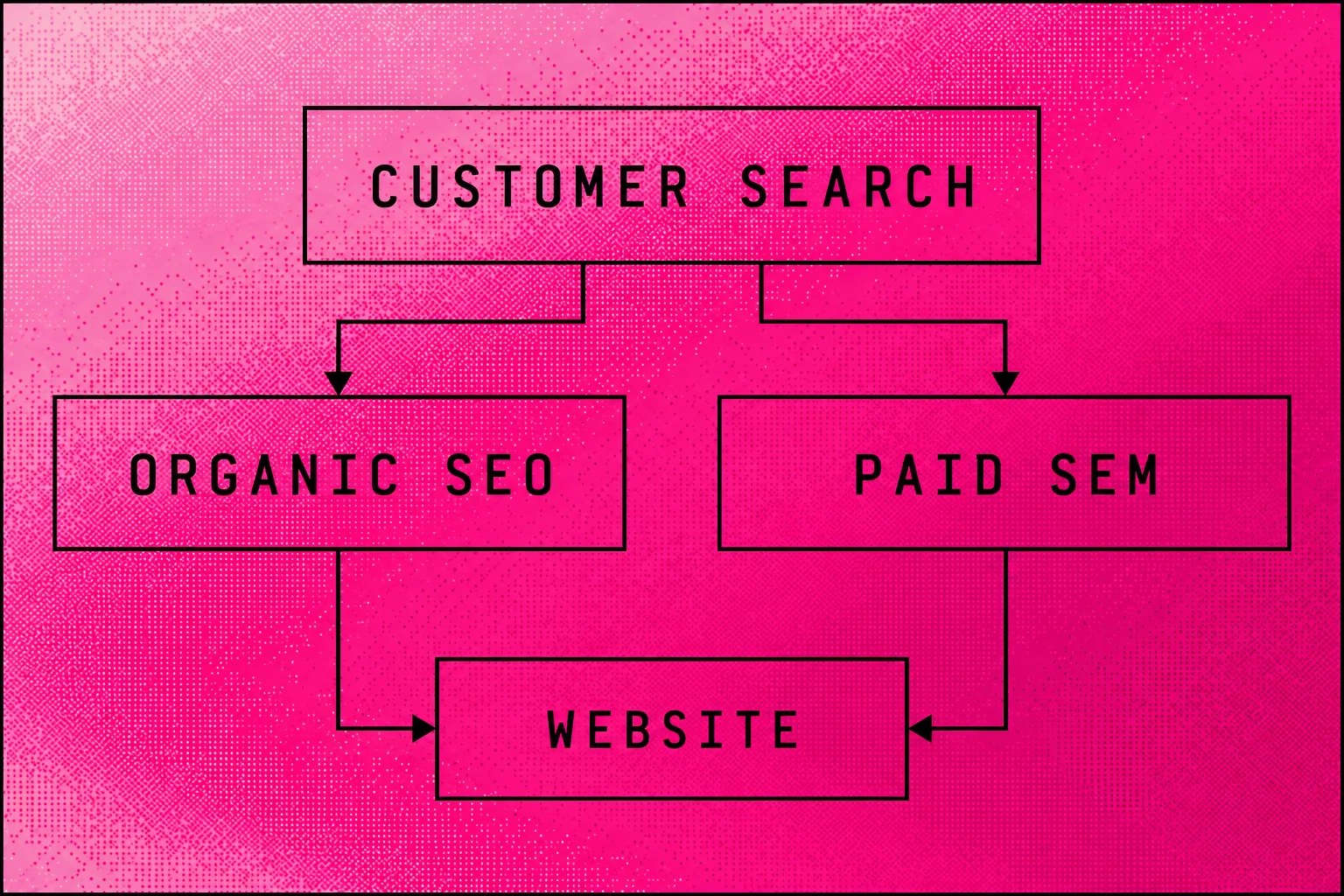
Imagine a customer searching for a service you sell. SEO means improving a page so it can appear in the organic results.[1] Paid SEM means bidding to show an ad for a relevant search.[2] Both can send someone to your website, but each requires a different budget and set of tasks.[5]
At Searchmaxxed, we work on the organic side through the Agentic Website, Managed Search Loop and Off-Page Source Layer. I compare that work with advertising on its own terms, including paid search's strength when timing matters.
What does SEO do?
SEO helps search engines understand your content and helps people find your site and decide whether to visit.[1] Google gives no promise that a particular site will enter its index or rank first.[1] Searchmaxxed handles the page changes and checks their effect through the Managed Search Loop.
The work covers several parts of the website and its links:
- Help Google access the page and the resources it needs to understand it.[8]
- Write clear content that answers the customer's question and keep it current.[9]
- Give pages clear titles and descriptions that explain what someone will find.[9]
- Link related pages so people and search engines can discover them.[10]
For a service business, I'd start with the services people can buy. An article can explain a problem; a service page should explain the work and offer a clear enquiry path. Treat that as a planning choice, not a reason to publish endless blog posts.
Our SEO service brings that work together. Technical SEO handles access and site faults, while content strategy chooses which questions each page must answer. Our link-building work forms part of the external support around those pages. For a business serving nearby customers, local SEO adds work on its business profile, reviews and local records.
What is SEM, and is Google Ads part of it?
SEM means search engine marketing, and people often use it to mean paid search advertising.[3] Google Ads is Google's online advertising product; its search ads fit that paid-search meaning.[11][2] At Searchmaxxed, I keep that advertising choice separate from the organic work we build and maintain.
Paid search involves choosing relevant keywords and setting a budget.[2] Google runs auctions that consider bids and ad quality when deciding which search ads appear and where.[2] Paying more doesn't create an assured first-place result.[2][6]
PPC means pay per click: under that model, the advertiser pays when someone clicks the ad.[2] Buying a click gives you a visitor, not a promised customer.[6]
For example, imagine advertising a service during a short promotion. I'd match the ad to a page explaining that service and give visitors one clear action. The campaign test should answer whether those visitors become customers, not whether the ad attracts attention.
How much do SEO and SEM cost?
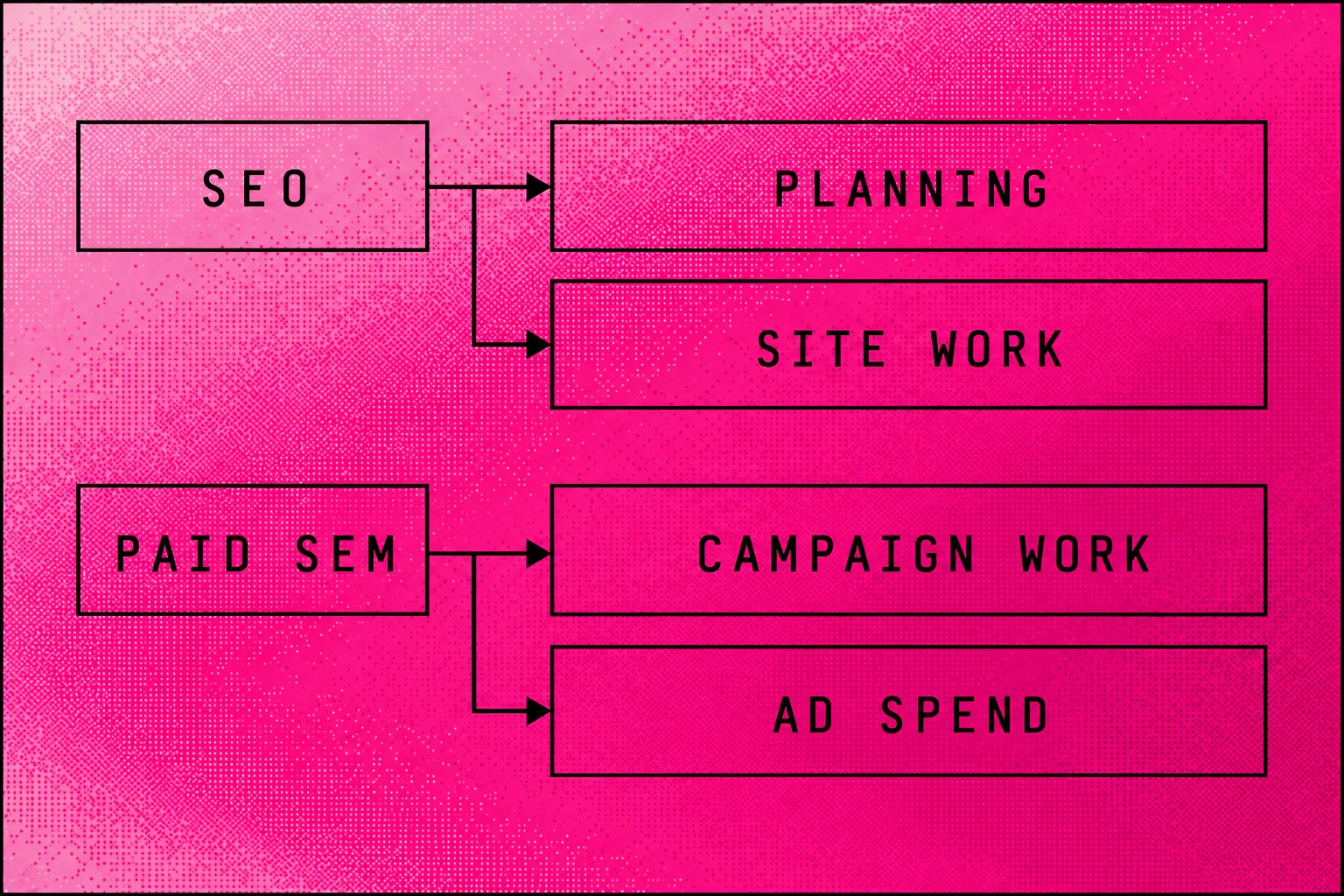
SEO costs cover the people, content and tools behind organic search work; paid SEM needs an ad budget alongside campaign work.[5] The size of either budget depends on your goals and resources.[5][4] Ask for separate totals for ad spend, campaign management and website work.
SEO clicks carry no direct search-engine charge, but someone still has to research, write and improve the website.[5] Doing it yourself changes who supplies that time; it doesn't remove the work.
For paid search, separate the money reaching the ad platform from the work that prepares and manages the campaign. Ask who will choose the keywords, manage bids, write the ads and improve the landing page. Ask for both parts in the scope so you know what the quote funds.
I'd divide a proposal into these buckets:
| SEO budget | Paid-search budget |
|---|---|
| Research and planning | Campaign setup and management |
| Page writing and site fixes | Ads and landing-page work |
| Tools and external-source work | Advertising spend |
These are comparison categories, not a published price schedule. Ask the provider:
- Which pages or campaigns will you work on?
- Who writes the copy and makes website changes?
- Which tools or other costs sit outside the quote?
- How will you connect the work to enquiries and sales?
- Does the quote include GST?
For Australian SEO budgets, compare the scope in our SEO cost guide. I wouldn't pick the cheaper channel from its label alone. Compare the total work and spending against the customers it produces.
Is SEM more immediate than SEO?
Paid SEM can bring search traffic sooner than SEO, but faster traffic doesn't promise faster sales.[4][6] Google says website changes can take hours or several months to affect search results.[7] At Searchmaxxed, the Managed Search Loop keeps the changes and later measurements connected.
Google recommends waiting a few weeks before judging whether a website change helped its search performance.[7] That describes the effect of a change, not a fixed wait for a new business to make money. A provider quoting one deadline for every website should explain how it applies to yours.
Paid search gives you a way to test traffic sooner.[4] I would still ask what happens after the click. Check the service description, enquiry form and follow-up process before treating the campaign as a sales engine.
If you need leads this month to keep the business open, I wouldn't make SEO your emergency plan. Keep the immediate traffic problem separate from the work needed to improve organic search.
Which is better for your business: SEO or SEM?
At Searchmaxxed, I recommend SEO for ongoing organic search work and SEM for a time-sensitive traffic test.[4] Use both when you can fund the work and judge each channel's contribution.[5][4] Your deadline and budget should shape the choice.
Choose paid search first when you're testing a new offer or running a short promotion. Those uses match paid search's faster access to traffic.[4] Set a spending limit and a clear customer action before starting.
Choose SEO when you can keep improving the site and allow time to assess the changes. Google's guidance treats SEO as continuing work with variable effects.[1][7] I would fund the page work before committing to a large content calendar.
Before Searchmaxxed, I built Radiant Roof Repairs from zero to more than $1 million a year in revenue using SEO as the only marketing channel. I did the pages, research, competitor checks and updates manually. The Radiant Roof Repairs case study describes that history. It gives me a reason to take organic search seriously, not a return I can promise your business.
For a small business, I would rather fund one channel properly than divide a limited budget by habit. If you're comparing providers, use my Australian SEO agency shortlist alongside a written scope of the work you need.
How do SEO and SEM work together?
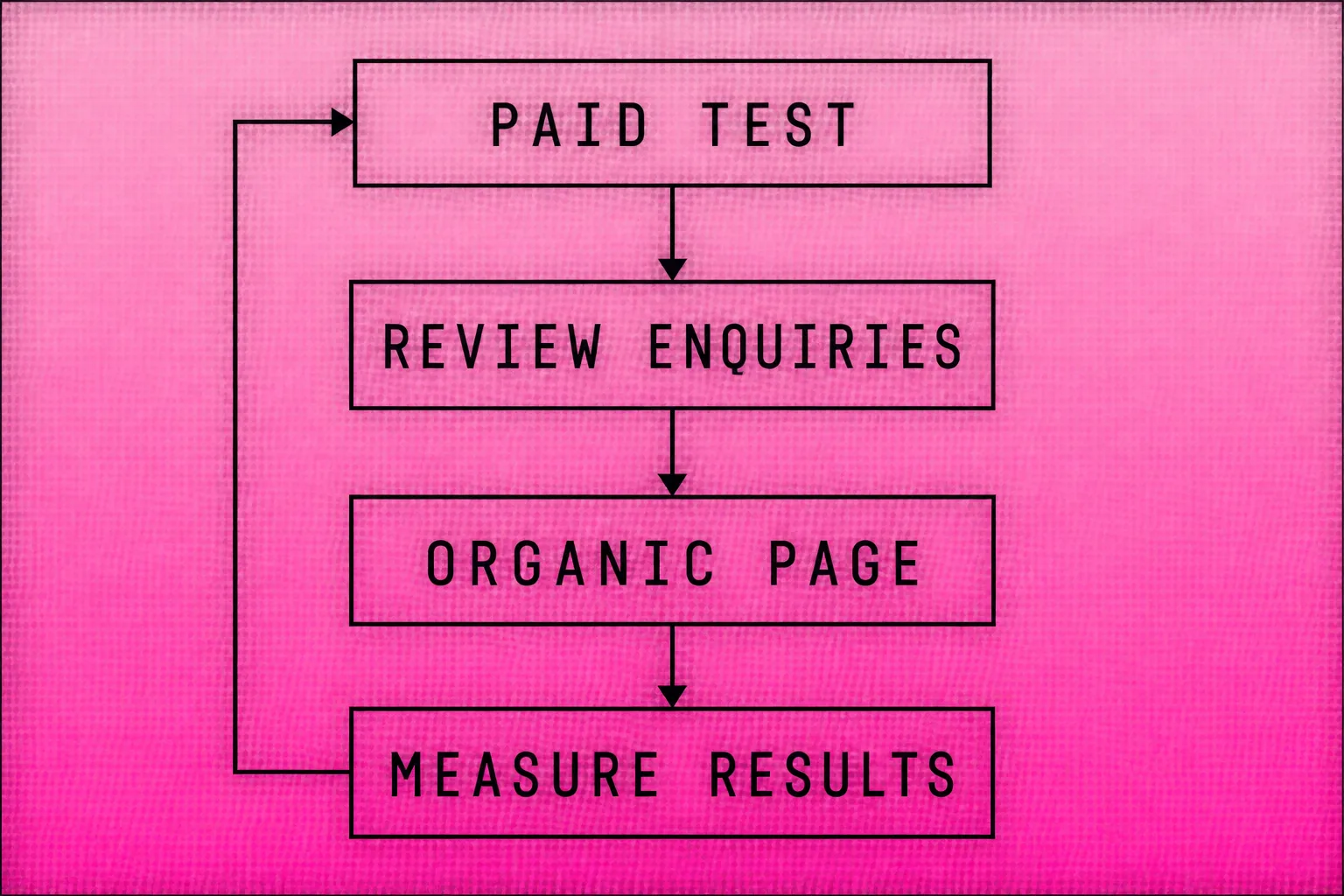
Use paid-search tests to help choose organic page work.[4][6] Check which enquiries became customers before changing the page. The four steps below keep those decisions separate.
Imagine a roofing business deciding which services to promote. This is a proposed workflow, separate from my Radiant history:
- Pick one service and a clear action, such as a quote request. Match the ad and page to that service.
- Review the campaign's keywords and customer actions. Ask whether the enquiries concern work the business can sell.
- Use that evidence to decide which organic service page deserves work. Build the answer, relevant links and enquiry path.
- Track paid and organic results after the page change. Decide whether to keep the ad spend, change the page or test another service.
Shopify recommends testing SEO and SEM together and reviewing their performance with analytics.[4] Relevant keywords matter in both channels.[6] My recommendation is to make the business action the shared test, so a busy traffic chart doesn't decide the budget for you.
I'd keep ad spend and organic work separate in the report. Then look at the combined search cost beside the customers and sales you can trace. A paid search test can inform a page decision, but it can't tell you what that page will rank for.
Where does Searchmaxxed fit?
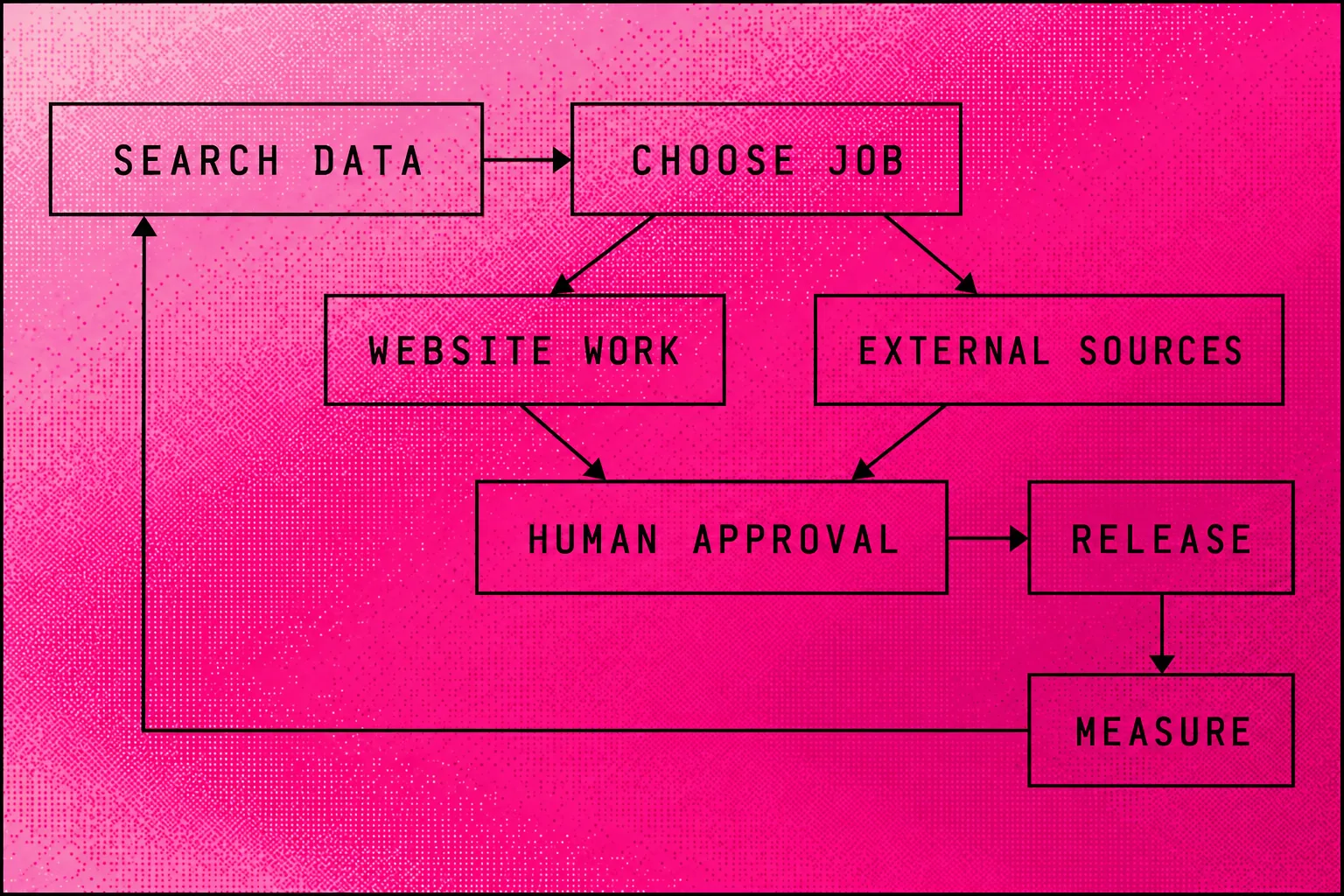
Searchmaxxed does agentic SEO: we build AI agents that help us research and improve your site. The Managed Search Loop connects that evidence to the next job. We work on organic search and AI answers; a person approves every public change.
Our agents plug into your whole Search Console and GA4 to read search and website behaviour. They scrape competitor sites, read Google results and check what AI answers say about you each week. The loop checks that data against your plan and helps us choose the next job.
We make the on-page changes on your Agentic Website: new pages, fixes, schema and internal links. Schema means structured page data. The site lives on GitHub and Vercel, and you own the site, repository, content and data.
Our Off-Page Source Layer covers links, reviews, citations, press and mentions on other sites. A citation is an external record of your business. A person checks each public change before it goes live. The agents then measure what happened, and the Managed Search Loop helps us pick the next job.
That work also includes AEO and GEO, our work on how answer engines find and describe your business. The AI SEO explanation goes further into the method.
Our packages set the amount of work and the external-source scope:
| Package | Includes |
|---|---|
| Local Search | Local pages, business profile work, reviews, citations and local tracking |
| Growth System | Page releases, technical fixes, landing-page work, links and AI tracking |
| Agentic Search Engineering | Growth System work plus comparison pages, press and wider link campaigns |
| Custom & Enterprise | Scope for multiple markets, engineering, reporting and first-party research |
The Agentic Website Full Build covers research, site structure, design, technical SEO and measurement. Agentic Migration keeps a design worth keeping and moves the site to an owned repository and infrastructure. The AI SEO Audit sets out the search gaps, fixes and plan.
Tell us which customers you want, what your site does now and when you need progress. Let's talk pricing.
Frequently asked questions
What is the main difference between SEM and SEO?
Is Google Ads SEO or SEM?
Is SEO dead now with AI?
SEO still has a job: helping Google understand your content and helping people find your site.[1] Check AI answers as well, but keep that separate from a claim that AI has ended organic search.
What are the four types of SEO?
A practical grouping is on-page, off-page, technical and local SEO.[8][9][10] On-page covers page content; off-page covers external links and records.[9][10] Technical work helps search engines access pages.[8] Local SEO adds business profiles, reviews and local tracking. Treat these as scope categories when comparing proposals.
Is SEO or SEM paid?
Is SEM more immediate than SEO?
Which is better for a small business, SEO or SEM?
I'd choose paid SEM for an urgent offer test and SEO for continuing organic search work. Your goals, budget and time frame should decide the mix.[4] Fund the work you can sustain and measure before adding another channel.
Can you use SEO and SEM together?
Yes, you can test paid and organic search together and use analytics to compare their performance.[4] I'd use the results to choose page work and ad spending separately, then review the combined business return.
Does SEM guarantee immediate results?
Are keywords important for both SEO and SEM?
Yes, relevant keywords matter for both organic pages and paid search campaigns.[6] I'd start with the services you sell and the questions customers ask, then choose the page or campaign that can answer them.
What do I own with a Searchmaxxed Agentic Website?
You own the website, repository, content and data from day one. The Agentic Website lives on GitHub and Vercel. We connect it to search and website data so we can build, check and measure later changes.