


Local SEO helps your business appear when someone nearby searches for what you sell.[1]
- Google weighs relevance, distance and prominence.[1] Better pages and reviews can't remove the distance between you and a customer.[1]
- Published Australian local packages include $800 and $1,200 monthly examples, with different inclusions and GST terms.[3][4]
- Start with accurate business details, a verified profile and pages that explain your services.[1][5][6]
Check your profile's details and the page for your main service first. Record calls and enquiries so you can judge what the changes achieve.
Local SEO is search engine optimisation that helps nearby customers find your business on Google Maps and Search.[1][2] It covers your business profile, local pages, reviews and details on other sites.[2] At Searchmaxxed, we run those jobs through the Agentic Website, Managed Search Loop and Off-Page Source Layer.
What is local SEO in digital marketing?
Local SEO is the part of search marketing that helps customers find businesses serving their area.[2] It combines Google Business Profile work with website pages, reviews and business details on other sites.[2] Google allows a profile for businesses that receive customers at a physical location or travel to them.[5]
A search such as “roof repairs Gold Coast” names the place. A search such as “roof repairs near me” leaves Google to work out the searcher's location. Google uses what it knows about that location when the customer doesn't share it.[1]
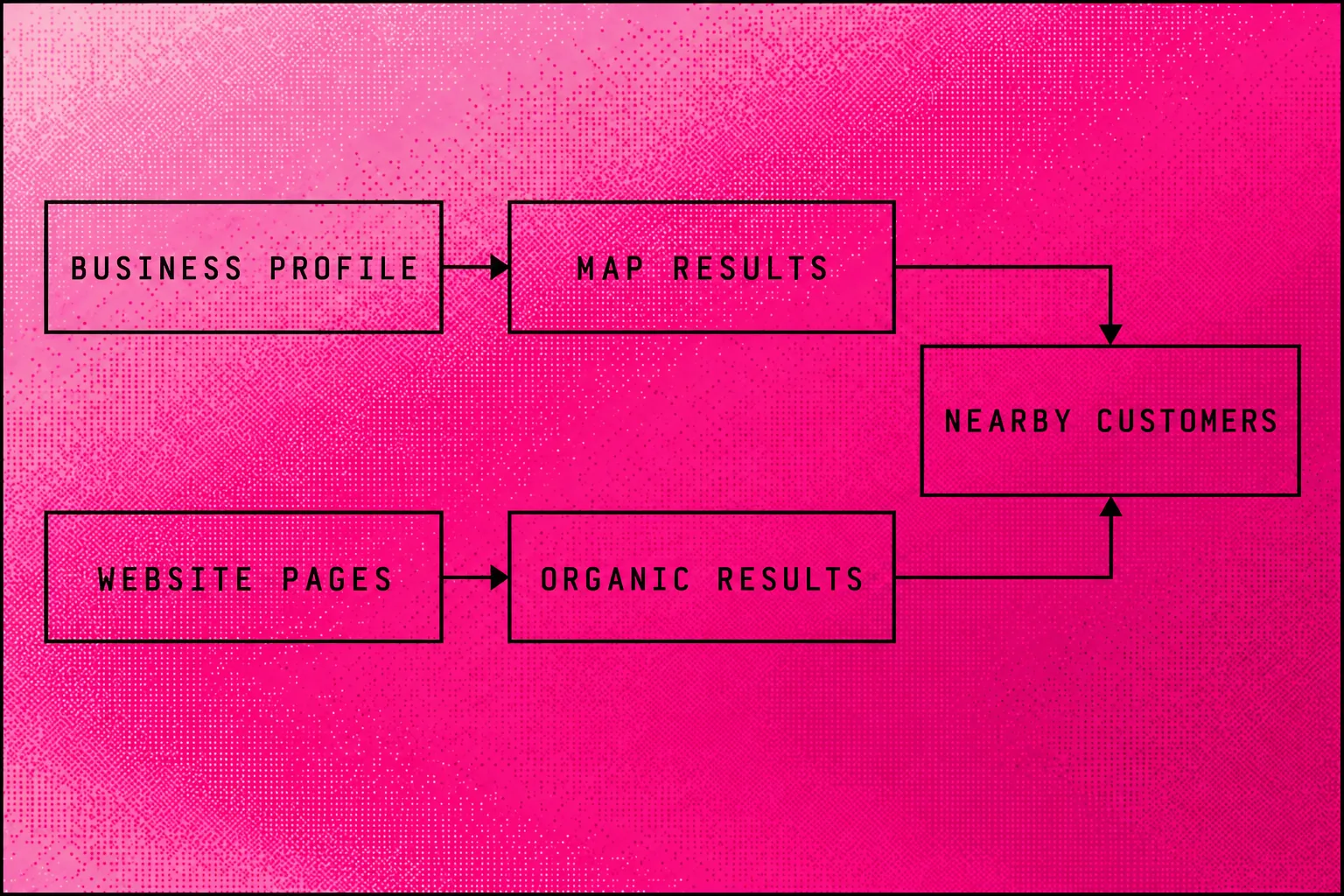
Local search also includes ordinary website results.[2] The map pack contains business listings alongside a map; organic results link to web pages.[2] Your profile and website therefore have different jobs within the same search.[2]
For a proposed roofing page, I'd explain the repairs you offer, the places you serve and how someone requests a quote. I'd keep the profile's phone number and customer-facing hours current. Google calls for accurate contact details and hours.[7][1]
Our local SEO service covers those website and profile jobs together.
How does local SEO work in Google Maps and the map pack?
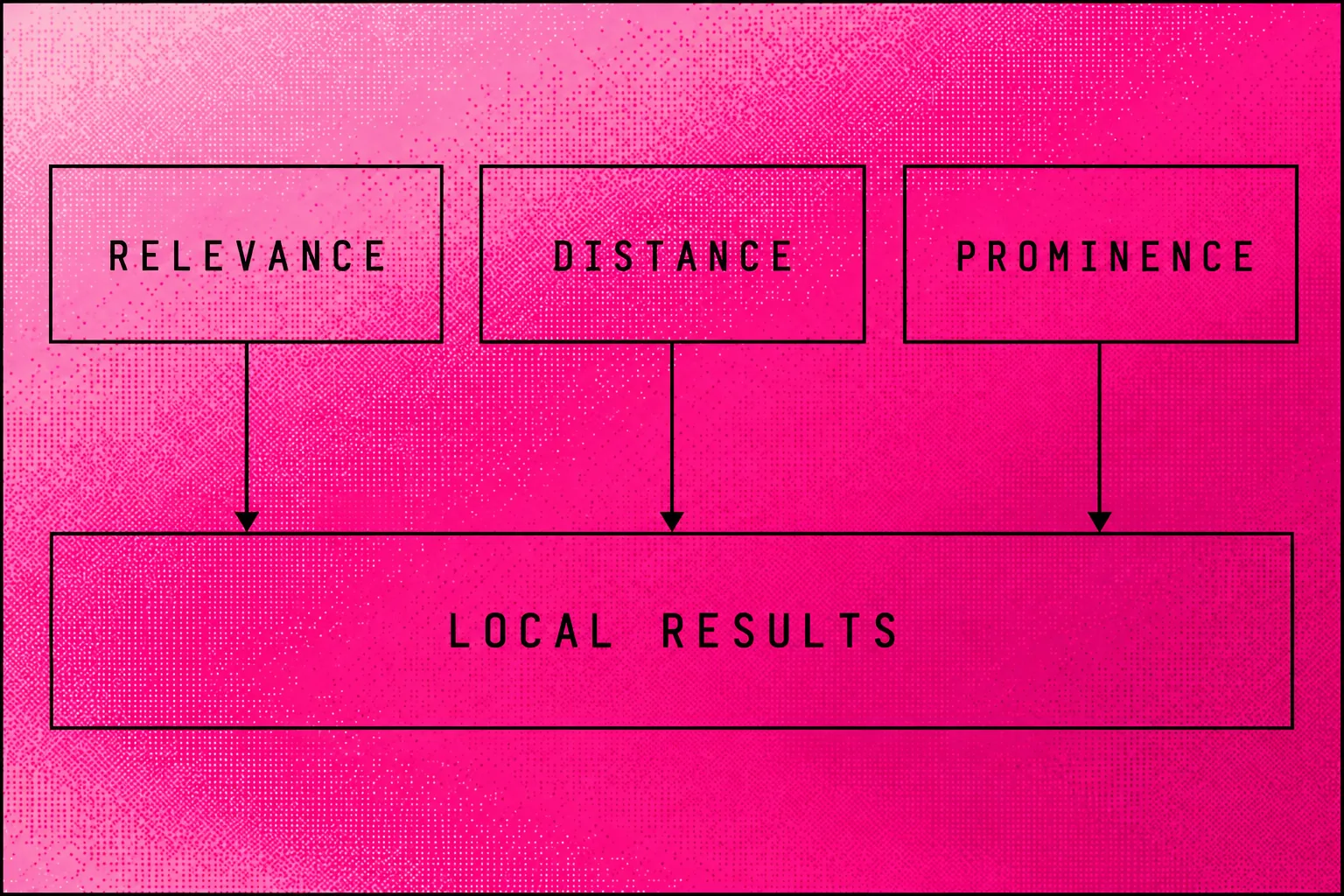
Google matches local businesses using relevance, distance and prominence.[1] Relevance means how well the business matches the search.[1] Distance means how far it sits from the customer.[1] Prominence means how well-known the business is, including its reviews and links from other websites.[1]
| Factor | What it means | Work to focus on |
|---|---|---|
| Relevance | Match between profile and search | Correct categories and full business details. |
| Distance | Business location relative to customer | Accurate address or service area. |
| Prominence | How well-known the business is | Genuine reviews and links from other sites. |
The distance factor means nearby customers can see different results for the same search.[1] I would compare your business from several places you serve before judging its map ranking.
Google says there's no way to request or pay for a better local ranking.[1] An agency fee pays for work on your business's search presence.[3][4] It doesn't buy a position from Google.[1]
For Searchmaxxed, the Managed Search Loop connects those observations with the next job. A missing service page belongs on the Agentic Website. Incorrect directory details belong in the Off-Page Source Layer.
What should you change on your Google Business Profile?
Start Google Business Profile SEO by verifying the business and correcting its details.[1] Google says complete, accurate information makes a business more likely to appear in local results.[1] Check the real name, category, address or service area, contact details and hours before adding further content.[1][5]
Use the name customers know from your real-world business.[9] Google prohibits unnecessary information in the name and says it can lead to suspension.[9] Adding every service and suburb to the name creates a policy risk.[9]
Choose the most specific category that describes your core business.[8] Google asks for as few categories as necessary, rather than categories that act as extra keywords.[8] Check that the website and phone number represent the actual business location.[7]
Your address depends on how you serve customers:
- A customer-facing location needs a precise address and permanent business signage.[7]
- Hide your address if customers don't visit your business location.[7]
- A rented mailing address where you don't operate doesn't qualify for a profile.[7]
Keep regular and holiday hours current.[1] Add real photos that show what you offer, and answer customer reviews. Google recommends both.[1]
I would finish this check before spending time on a posting schedule. A polished photo won't correct a wrong phone number.
How do reviews, citations and local links help?
Reviews and links help Google judge how well-known a business is.[1] More reviews and positive ratings can help local ranking.[1] Citations are mentions of your business details on other sites, often including its name, address and phone number.[2] Keep the facts accurate across those records.[2]
Reviews
Ask customers for a review after they have experienced your service. Make the request easy to follow and let them describe the experience themselves. I'd give the same invitation to customers without filtering them by an expected rating.
Reply to reviews with an answer that fits the customer's message. Google says positive reviews and helpful replies can help a business stand out.[1]
A review reply needs someone who understands the job. Searchmaxxed's review work sits within the Off-Page Source Layer, with a person approving public changes.
Citations
Check the directories that already mention your business before adding more. Look for old phone numbers, former names and details left behind after a move. Citations can appear in business directories or in articles and other web pages.[10]
NAP means name, address and phone number.[2] I would correct conflicting business facts first. A directory entry should describe the business you run now.
Our Off-Page Source Layer aligns those external records with the real business and the website. Service-area profile rules still apply; a directory campaign doesn't justify a false office address.[7]
Local links
A backlink is a link from another website to yours.[11] Google includes websites linking to a business in its explanation of local prominence.[1]
I'd look for links connected to work you already do: a genuine supplier relationship, a local association or an event you support. Our link-building work develops that external support and checks what went live.
What should local SEO location pages include?
Local SEO location pages should explain the service you provide in each real area you serve. I'd include service details, truthful local proof and a clear enquiry path. Google recommends original, current content and links that help people and search engines find related pages.[12]
For a proposed Gold Coast roof-repair page, I'd include:
- The kinds of roof repairs you take on.
- Where you travel and how customers arrange an inspection.
- Photos and case details from work you can substantiate.
- Answers to questions about the repair process.
- A working call button or quote form.
- Links to the related roofing services.
The local details have to earn their place. A real completed job gives you something to explain; replacing one suburb name with another doesn't.
Google asks writers to create original content rather than rehash other pages.[12] Our content strategy gives each page a distinct customer question to answer.
The page also needs to work for Google's crawler, the software that reads websites.[6] Hidden or inaccessible resources can stop Google understanding a page.[6] Our technical SEO work covers that access and the site's foundation.
Structured data is code that states facts in a format search engines can read.[10] For business details, I'd use LocalBusiness markup to state the address, phone number and hours.[13] Valid markup can make a page eligible for some special search features.[14] I would match the markup to the business details visible on the page, then verify it.
Searchmaxxed builds these pages, fixes and internal links on your Agentic Website. You own the website, content and repository.
Can you do local SEO yourself?
Yes, you can start local SEO yourself by correcting your Google Business Profile, requesting reviews and improving your website's local pages.[15] Google's own guidance explains the profile details and website basics to work on.[1][6] I'd use this five-step work order if you control the profile and website.
- Check the profile's eligibility and verify the business. Correct its name, category, hours and contact details.[1][5]
- Pick a service and location your business genuinely covers. Check the businesses and pages Google returns for that search.
- Improve the page that answers that customer's question. Make the service and enquiry route clear.
- Ask customers for reviews and correct the external records that mention your business.
- Record your changes. Compare search traffic and enquiries before deciding the next job.
For example, imagine you run a plumbing business on the Gold Coast. Your proposed first job could be a blocked-drain page with a working quote form. Next, check that your profile describes the actual business and links to the right website. Then request reviews after completed jobs.
I would keep that example small enough to finish. A new page, a corrected profile and a record of enquiries give you something concrete to assess.
Searchmaxxed's Managed Search Loop runs the same evidence-to-change cycle as a managed service. Our agents support the research and measurement; a person approves the work.
How much does local SEO cost in Australia?
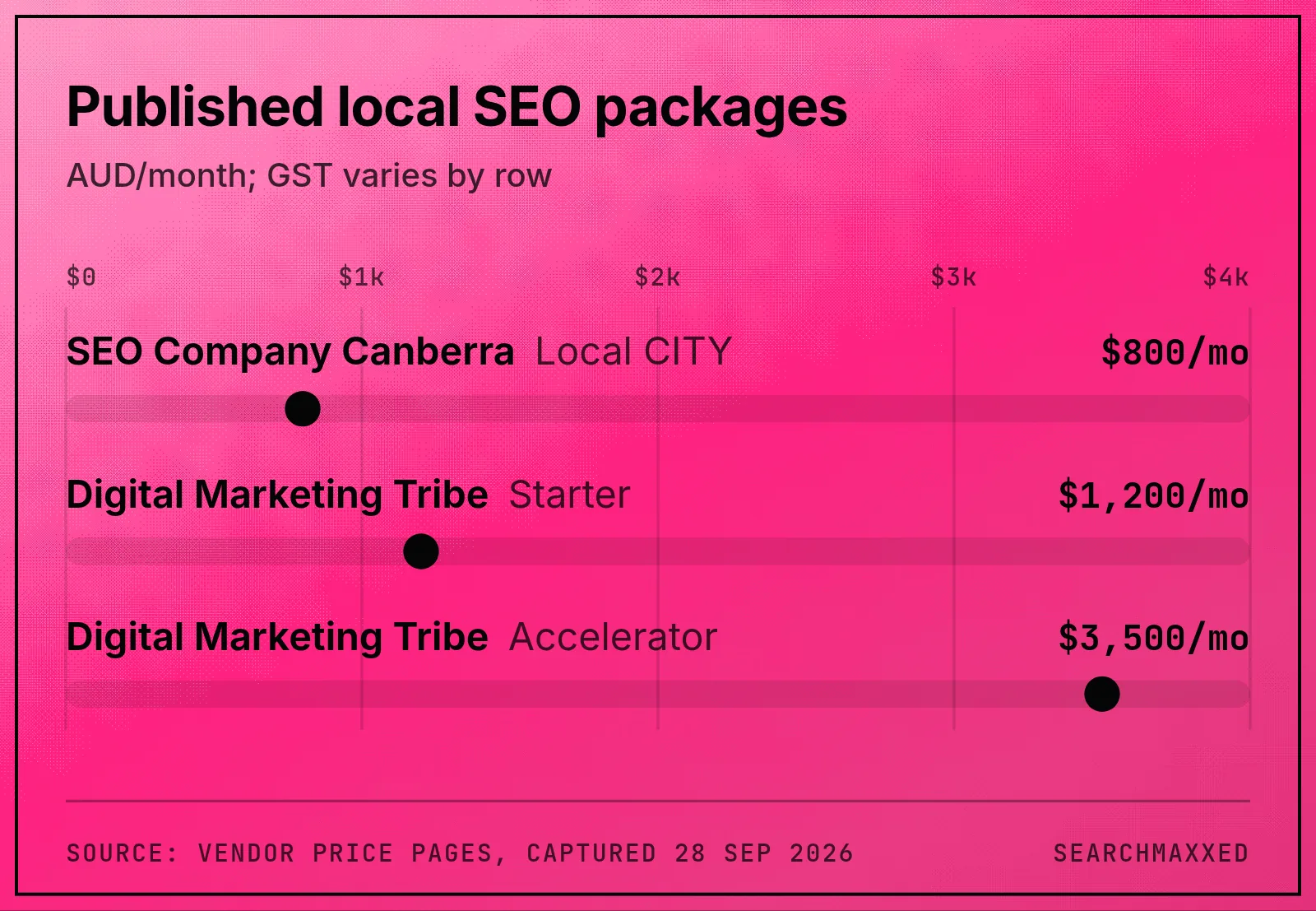
Published examples include SEO Company Canberra's $800 Local CITY plan and Digital Marketing Tribe's $1,200 Starter plan, both monthly.[3][4] They have different scopes. Digital Marketing Tribe also publishes a $3,500 monthly competitive tier aimed at high-competition and multi-location businesses.[4]
| Price context | Detail |
|---|---|
| Currency | Australian dollars |
| Vendor capture date | 28 September 2026 |
| Comparison | Published fees; different work scopes |
| Provider and package | Monthly fee | GST |
|---|---|---|
| SEO Company Canberra: Local CITY | $800 | GST not stated. |
| Digital Marketing Tribe: Starter, Local SEO | $1,200 | Plus GST. |
| Digital Marketing Tribe: Accelerator, Competitive SEO | $3,500 | Plus GST. |
SEO Company Canberra's Local CITY plan targets 13-15 keywords.[3] It includes website analysis, onsite work and citations.[3] Ranking reports and Google Maps work are part of it too.[3]
Digital Marketing Tribe's Starter targets one suburb or service area.[4] It includes profile optimisation, up to 10 target keywords and on-page work on up to five pages.[4] Local citations and a monthly ranking and traffic report also form part of the package.[4]
Its Accelerator tier includes the lower tiers' work plus 50+ target keywords, three monthly blog posts and multi-location or ecommerce SEO.[4] That wider scope makes it a different purchase from the entry local packages.
These examples establish actual offers, not an Australian market average. I would compare the work before comparing the monthly total.
What should a local SEO quote include?
Ask the provider to spell out these jobs:
- Who manages the profile and corrects listing problems?
- Who requests and answers reviews?
- Which pages will they write or improve?
- Does the fee cover implementing changes, or only recommendations?
- What link and citation work will they do?
- What evidence will connect the work to enquiries?
- Are setup charges, software and GST part of the quote?
- What happens when you end the service?
The Australian SEO cost breakdown covers the wider pricing question. My Australian SEO agency shortlist helps with the provider choice.
Is local SEO worth it, and how do you measure it?
Local SEO is worth paying for when the customer work it brings supports the cost. At Searchmaxxed, we track qualified enquiries and sales feedback alongside search data. I'd assess your service margins and booked jobs before deciding how much work to commission.
Before Searchmaxxed, I built Radiant Roof Repairs from zero to more than $1 million a year in revenue using SEO as the only marketing channel. Three high-intent Gold Coast roofing searches reached number one within 90 days. I did the pages, research, competitor checks and updates manually.
The Radiant Roof Repairs case study explains that historical work. My lesson for a local business is to connect the profile and pages with the jobs customers book.
Google Search Console helps you monitor your website's performance in Google Search.[14] Google Analytics helps track website visits and whether visitors take actions such as purchases or bookings.[10]
I'd keep separate records for:
- Map rankings from consistent places you serve.
- Searches and clicks reaching your website.
- Calls and forms that become qualified enquiries.
- Enquiries that become booked work.
Google's distance factor makes the location of a map check part of the measurement.[1] Keep that location consistent when comparing results. A single search from your desk doesn't tell you what customers across your service area see.
Searchmaxxed connects Search Console and GA4, Google's website analytics tool, with change records and sales feedback. The Managed Search Loop uses that evidence to choose the next release.
What will local SEO look like in 2026?
Local SEO in 2026 still needs the profile, reviews and website work Google describes.[1][6] At Searchmaxxed, we also check what AI answers say about a business. We track those answers separately from its Google Maps ranking.
Google's current local-ranking guidance names relevance, distance and prominence.[1] I'd keep those jobs in place while checking whether AI answers describe your services and locations correctly.
AEO means answer engine optimisation, and GEO means generative engine optimisation. Ask whether the work checks your business facts and the sources behind AI answers.
Where does Searchmaxxed fit?
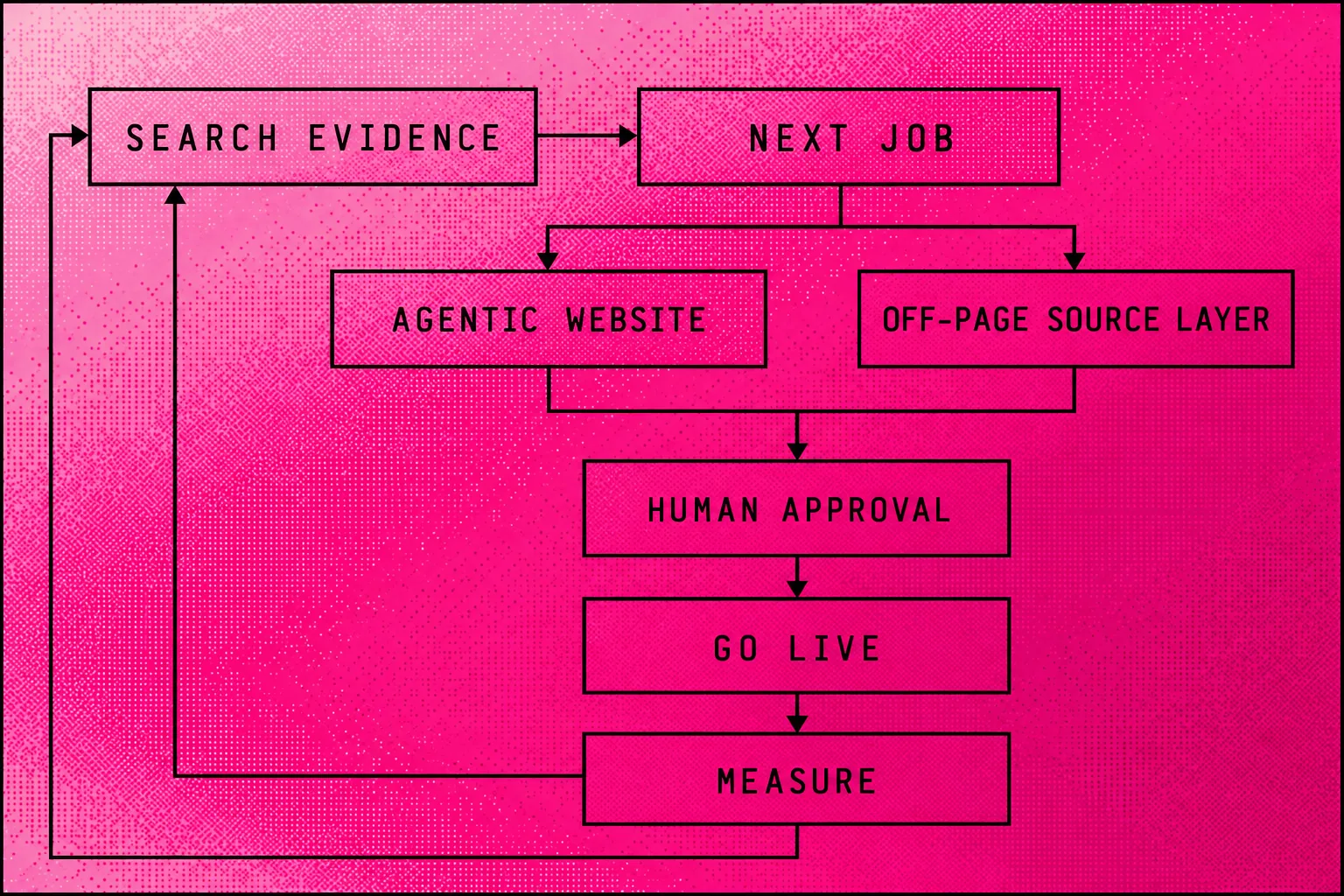
Searchmaxxed's Managed Search Loop turns local SEO evidence into the next job. We do agentic SEO, using AI agents that connect to your whole Search Console and GA4. They read Google results, scrape competitor sites and check AI answers each week.
We build the pages and fixes on your Agentic Website, which you own. It lives on GitHub and Vercel. We improve the copy, code, structured data and links between pages.
Our Off-Page Source Layer develops the records beyond your site: reviews, citations, links, press and mentions. A person approves each change before it goes live. The agents then measure the result, and we choose the next job.
Across our client book, our work has generated more than $10 million in revenue through search for our clients. That's my cumulative figure across clients.
Our packages and inclusions set out the scope:
- Local Search covers local page releases, daily profile management, review work, qualified local links and citation cleanup. It also includes local press and local AI-answer tracking. A monthly geo-grid scan checks map rankings across your service area.
- Growth System adds more page work, landing-page improvements, technical fixes, structured data and internal links. It includes source-layer basics, a qualified link action, Reddit engagement and AI tracking.
- Agentic Search Engineering extends the Growth System with comparison and industry pages, ongoing PR and link campaigns, and wider AI-answer tracking.
Local Search starts through an Agentic Migration or the Agentic Website Full Build. We agree the scope after looking at your website, market and goals.
Frequently asked questions
Is local SEO free?
What is the difference between SEO and local SEO?
What is the 80/20 rule in SEO?
What are four types of SEO?
I split the work into on-page SEO, technical SEO, off-page SEO and local SEO. On-page work covers content; technical work covers site access; off-page work covers external links and records. Local SEO brings those jobs together for a real place. Google's guides describe the underlying page, link and local-profile work.[1][6][12]
How long does local SEO take?
Do you need a website for local SEO?
You can start with Google Business Profile, but a website gives you space for service details and an enquiry path.[15] At Searchmaxxed, the Agentic Website carries those pages and connects them with measurement. Keep profile and website information aligned.
How many Google reviews do you need?
Can you rank for near me searches across a whole city?
Can you create a Google Business Profile for every suburb?
What is the best local SEO tool?
I'd start with Google's tools and add software for a specific job. Business Profile manages your business information; Search Console monitors website search performance.[1][14] Google Analytics helps connect visits with website actions.[10] Choose another tool only when you know which question it must answer.
What is the average local SEO cost in Australia?
Is local SEO profitable?
Local SEO is profitable when the profit from extra booked work exceeds its full cost. Compare the gross profit from those jobs with provider fees and your staff's time. Keep existing customers separate when judging what search adds.
What is local SEO for doctors?
Local SEO helps people find a medical practice serving their area.[1] Google's practitioner rules allow dedicated profiles for public-facing practitioners whom customers can contact at the verified location during stated hours.[16] A practitioner should avoid separate profiles for every specialisation.[16]
What is local SEO for lawyers?
Local SEO helps people find a law firm or lawyer serving a particular area.[1] I'd make the practice areas, real office details and enquiry route clear. Google treats lawyers as individual practitioners and sets conditions for separate profiles.[16] Multiple public-facing practitioners can have profiles alongside the organisation's location profile.[16]
- Google Business Profile Help: https://support.google.com/business/answer/7091
- Starkmedia: https://www.starkmedia.com/blog/local-seo/
- SEO Company Canberra: https://www.seocompanycanberra.com.au/price-plan
- Digital Marketing Tribe: https://digitalmarketingtribe.com.au/pricing/
- Google Business Profile Help: https://support.google.com/business/answer/3038177
- Google Search Central: https://developers.google.com/search/docs/fundamentals/seo-starter-guide
- White Peak Digital: https://www.whitepeakdigital.com/blog/what-is-local-seo/
- LSM: https://www.lsm.works/blogs/what-is-local-seo-and-how-do-you-do-it
- Search Atlas: https://searchatlas.com/blog/local-seo/
- Perth Digital Edge: https://perthdigitaledge.com.au/blog/how-to-do-local-seo-for-beginners/