


SEO helps people find your website through unpaid search results.[1][2]
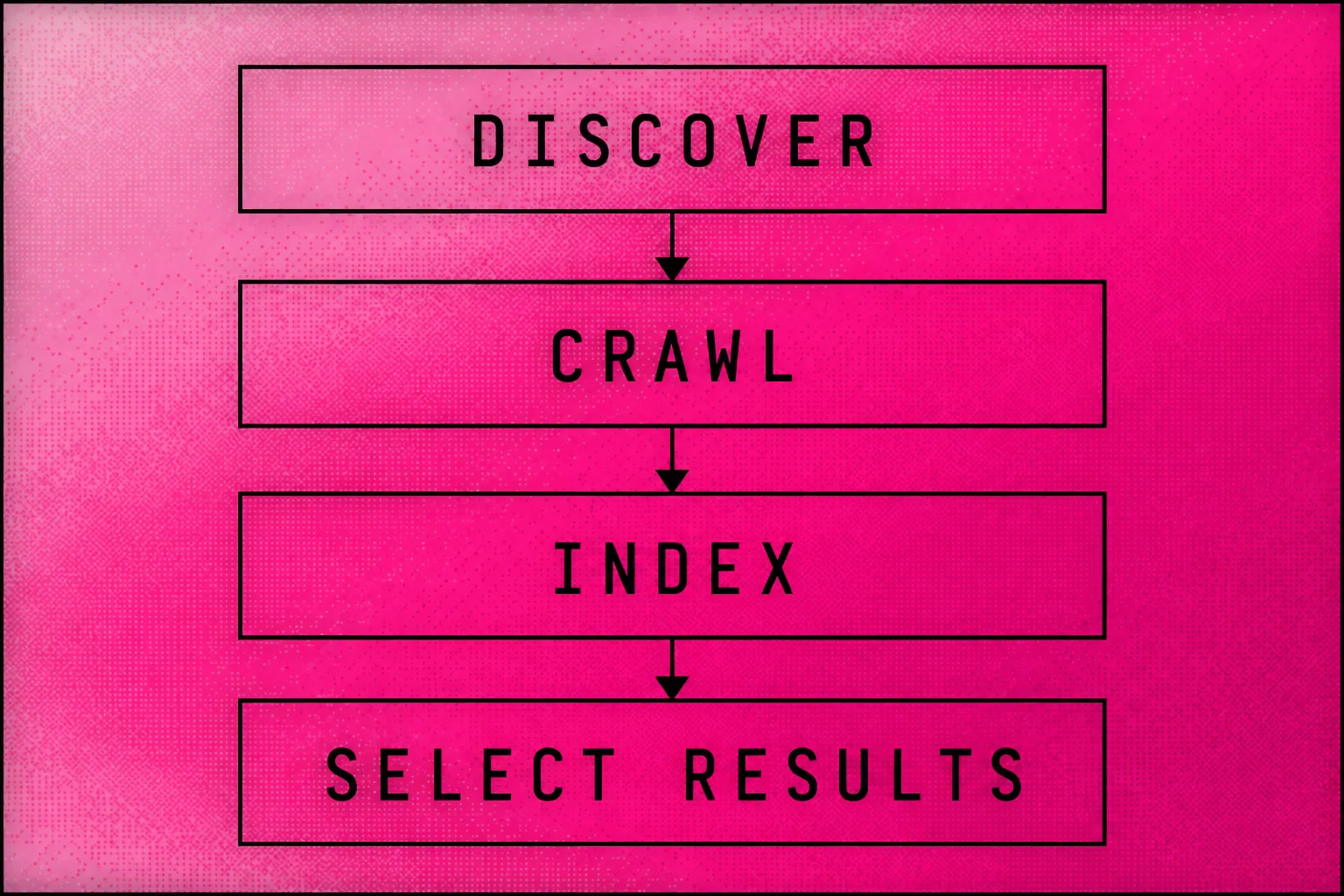
- Google must discover, crawl and index a page before it can select that page for a search.[4]
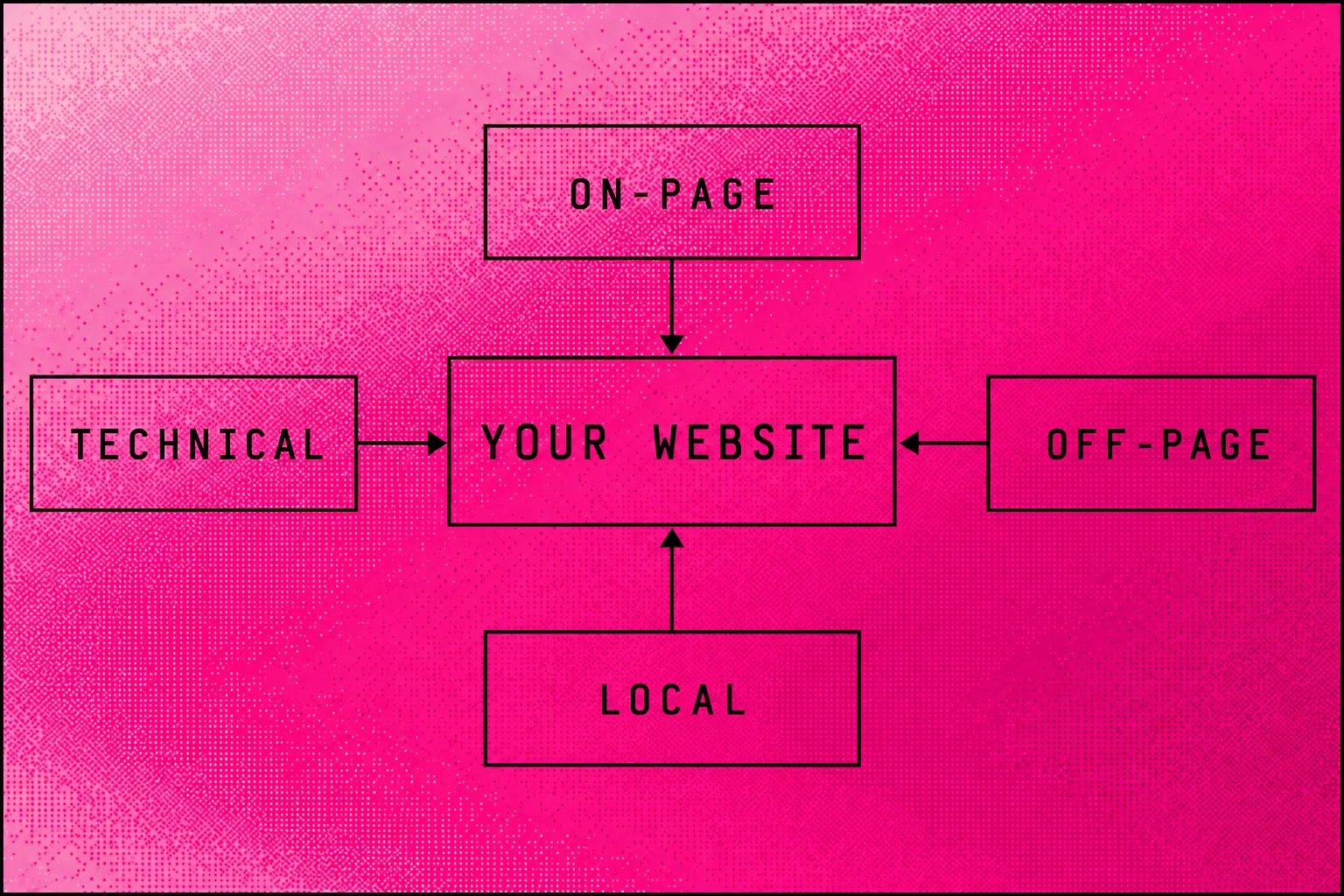
- Plan the work around on-page, off-page and technical SEO; include local SEO when you serve local customers.[1][2]
- Google's AI answers use the same SEO foundations; eligibility still doesn't promise inclusion.[3][4]
Start with a page that answers a customer's search. Check Google's access to it, then track visits and customer actions.[1][3]
SEO means search engine optimisation: work that helps people find your website through unpaid search results.[1][2] Content, technical changes and links help search engines understand your pages.[1] In 2026, those foundations also support Google's AI Overviews and AI Mode.[3]
What is SEO and how does it work?
SEO helps Google understand your pages and helps people decide whether to visit them.[1] Google discovers pages and crawls their contents. It stores information in its index.[4] When someone searches, Google selects relevant results from that index.[4]
“Organic” means the unpaid search results.[2] You can pay someone to improve your website, but Google doesn't accept payment for a higher organic rank.[4]
I separate what Google does from what you do. Google processes pages; your SEO work helps it find and understand them.[1][4]
How does Google find and crawl a page?
Google discovers pages through links from known pages and through sitemaps, which list pages to crawl.[4] Googlebot may then visit a page and fetch its contents, though discovery doesn't guarantee a crawl.[4]
Google also runs JavaScript to see content that depends on that code.[4] A login requirement, server fault or robots.txt block can prevent access.[4]
For your own site, check an important page with Search Console's URL Inspection tool.[1] Seeing the page in your browser doesn't prove Google sees the same content.[1]
What does indexing mean?
Indexing means Google analyses a page and may store information about it in its search database.[4] Google also groups similar pages and chooses a canonical page: the version that may appear in results.[4]
Google can crawl a page without indexing it.[4] Low-quality content, an indexing block or a difficult site design can prevent indexing.[4]
How does Google rank and show pages?
Google ranks matching pages using many factors to select relevant, high-quality results.[4] The searcher's location, language and device can affect those results.[4]
Links also contribute to Google's ranking systems through PageRank, but Google uses other signals too.[1] Google seeks helpful, reliable content and a good page experience.[5]
The results format depends on the question.[4] A repair-shop search can produce local results; a product search might include images.[4] Indexing makes a page a candidate, but Google still decides whether to show it for a particular query.[4]
What are the four types of SEO?
For planning, divide SEO into on-page, off-page, technical and local work.[1][2] On-page concerns your content; off-page concerns external support; technical concerns access and usability; local concerns finding customers in your service area.[1][2]
Treat these as work categories. Local SEO still needs good pages, a sound website and support beyond the site.[1][2]
| Type | Main job | Example task |
|---|---|---|
| On-page | Explain the subject on your pages | Describe a product and answer common questions. |
| Off-page | Develop links and external support | Share original work that another site can reference. |
| Technical | Help engines access and understand pages | Check indexing controls and duplicate URLs. |
| Local | Help nearby customers find the business | Keep the Business Profile current and request real reviews. |
What is on-page SEO?
On-page SEO improves the content and signals within your pages.[2] That includes the main text, titles, headings, images and internal links.[1]
Write the answer someone came for. Give a service page details about the work, a product page details about the product, and each a clear title.[1]
Google can create a result's title from your title tag and other headings.[1] It usually creates the description underneath from page text, sometimes using your meta description.[1] You influence those elements; Google chooses what appears.[1]
A content strategy starts with deciding which customer questions deserve their own pages. Our SEO service includes building and improving those pages.
What is off-page SEO?
Off-page SEO covers work outside your website, including links from other sites.[2] A backlink is a link from another website to yours.[1] Links help Google discover pages and contribute to its ranking systems.[1]
Promote something people have a reason to reference: original findings, a clear explanation or a resource they can use.[1][5] Keep the subject and business relationship real.
Our link-building work sits alongside reviews, business listings, press and mentions in the Off-Page Source Layer. I would assess the source and its purpose before celebrating a larger link count.
What is technical SEO?
Technical SEO addresses the website setup that helps search engines crawl and index pages.[2] It also includes work on speed, mobile use and security.[2]
Check whether Google can reach the page and see its main content.[1] Check indexing rules and which address represents duplicate versions.[4] A noindex rule tells Google to exclude a page from its index.[4]
A sitemap helps discovery; Google still decides whether to crawl, index or show each page.[4] Our technical SEO service covers that foundation alongside rendering and performance work.
What is local SEO?
Local SEO helps a business reach people searching for services or products in a particular area.[2] It combines website work with business-profile information and reviews.[2]
Keep your Google Business Profile information current.[3] Describe the services and places your business serves in language customers recognise.[1][2] Ask real customers for reviews.[2]
For a shop, I'd begin with its actual location, opening details and products. For a service business, I'd begin with the work it does and where it can do it.
Our local SEO service covers pages, profile management, reviews and local source work.
What is an example of SEO?
An SEO example is improving a product page so it answers a relevant search and Google can understand it.[1] Suppose you run an Australian coffee-machine shop and want to help someone searching for a machine for a small kitchen.
I'd start with the customer's decision: will this machine fit, and will it make the coffee they want?
- Give the page a clear title about the machine and its purpose.
- Add its real dimensions, features and photographs.
- Explain the tradeoffs, including bench space and cleaning.
- Link to the page from the relevant product category.
- Check the page with URL Inspection, then check what visitors do next.
Google recommends clear titles, original content, relevant links and images beside related text.[1] Search Console helps inspect the page, while analytics can track customer actions.[1][3]
For this proposed shop task, I'd check whether a customer can compare the machine and decide whether it fits. I'd also check that Google can find and process the page.[1]
How to do SEO for beginners?
Begin SEO with one customer question, one relevant page and a way to check the result. Start with Google's guidance and Search Console.[1] I recommend five checks, with access to your website and permission to change its content.
- Choose the search. Write down the words a customer would use and inspect the results. Google recommends anticipating your readers' search terms.[1]
- Choose the page. Review your existing pages and update one where needed. Connect related pages with internal links.[1]
- Answer the question. Add real details, clear headings and supporting pictures. Keep the content original and current.[1]
- Check access. Inspect the address in Search Console. Confirm Google can see the main content and that indexing controls match your intent.[1][4]
- Measure and review. Monitor search performance and customer actions. Record what you changed before deciding on the next job.[1][3]
Keep the first task small enough to finish. I'd rather inspect one improved service page than leave ten planned posts in a document.
Keyword repetition has limits: stuffing words into copy breaches Google's spam policies.[1] Google also says it has no preferred article word count.[5] Explain the subject fully, then stop.
How is SEO different from Google Ads, SEA and SEM?
SEO works on unpaid search results; Google Ads buys advertising placements.[4][6] Paying for advertising doesn't buy a higher organic rank.[4] Choose the work by the customers you want to reach and what you can deliver.
| Question | SEO | Google Ads |
|---|---|---|
| What does the work change? | Pages, site setup and external links. | Ads and the paid campaign. |
| Do you pay Google for organic placement? | No. | Advertising payment buys ads, not organic rank. |
| What should you inspect? | The pages and their search performance. | Campaign scope and customer actions. |
SEO takes work even though the result placement is unpaid.[1] Budget for the content, technical changes and ongoing checks, whether you do them yourself or hire help.
SEA means search engine advertising. SEM means search engine marketing; providers may use it for paid search alone or for paid and organic search together. Ask the proposal to separate website optimisation from advertising and name who handles each job.
For a budget discussion, compare the scope in Australian SEO cost guidance. If you're hiring help, use the Australian SEO agency shortlist to frame your questions.
Does SEO still work with AI answers in 2026?
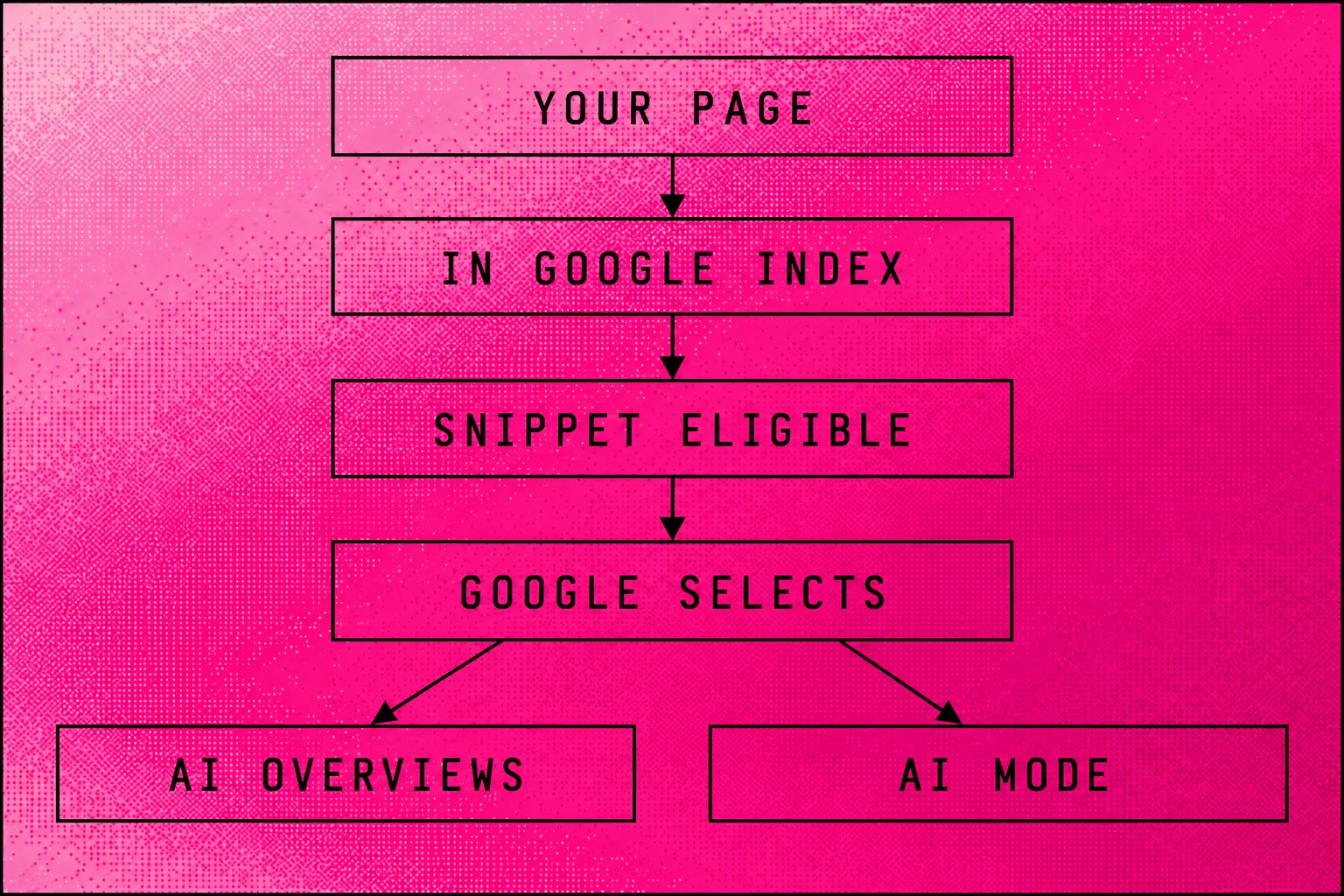
Yes: Google says the same SEO foundations apply to AI Overviews and AI Mode.[3] A supporting page must appear in Google's index and qualify for a search snippet.[3] Google requires no extra technical setup for those AI features.[3]
Google's AI systems may run several related searches to develop an answer.[3] I'd answer the supporting questions as well as the headline question.
Keep important information in text and make it easy to find through internal links.[3] If you add structured data, the coded facts must match what visitors can see.[3] Google says specific optimisation for AI Overviews and AI Mode isn't required.[3]
These rules describe Google; ChatGPT, Gemini and Perplexity run their own systems. I would check each service's answers and sources before deciding what to change.
At Searchmaxxed, AEO and GEO are included in our managed programs. Our agents check what AI answers say about your business each week. Our AI SEO explanation covers how agents support research, changes and follow-up checks.
How do you tell whether SEO is working?
I judge SEO by whether relevant searches lead to customer actions. Check search performance in Search Console, then visits and conversions in GA4.[1][3] At Searchmaxxed, we connect those observations with a record of the changes we ship.
Start with the page you changed. Has Google indexed it? Does it appear for the searches you intended? What happens after someone visits?[1][4][3]
I'd read those stages separately. A page Google can't index needs a different job from a page that attracts visits but no enquiries.
Google says changes can affect results within hours or take several months.[1] It recommends waiting a few weeks to assess whether work helped.[1] Some changes have no noticeable effect.[1]
Search Console includes Google's AI-feature traffic in the overall Web performance report.[3] Those totals alone don't tell you which separate AI system recommended your business.
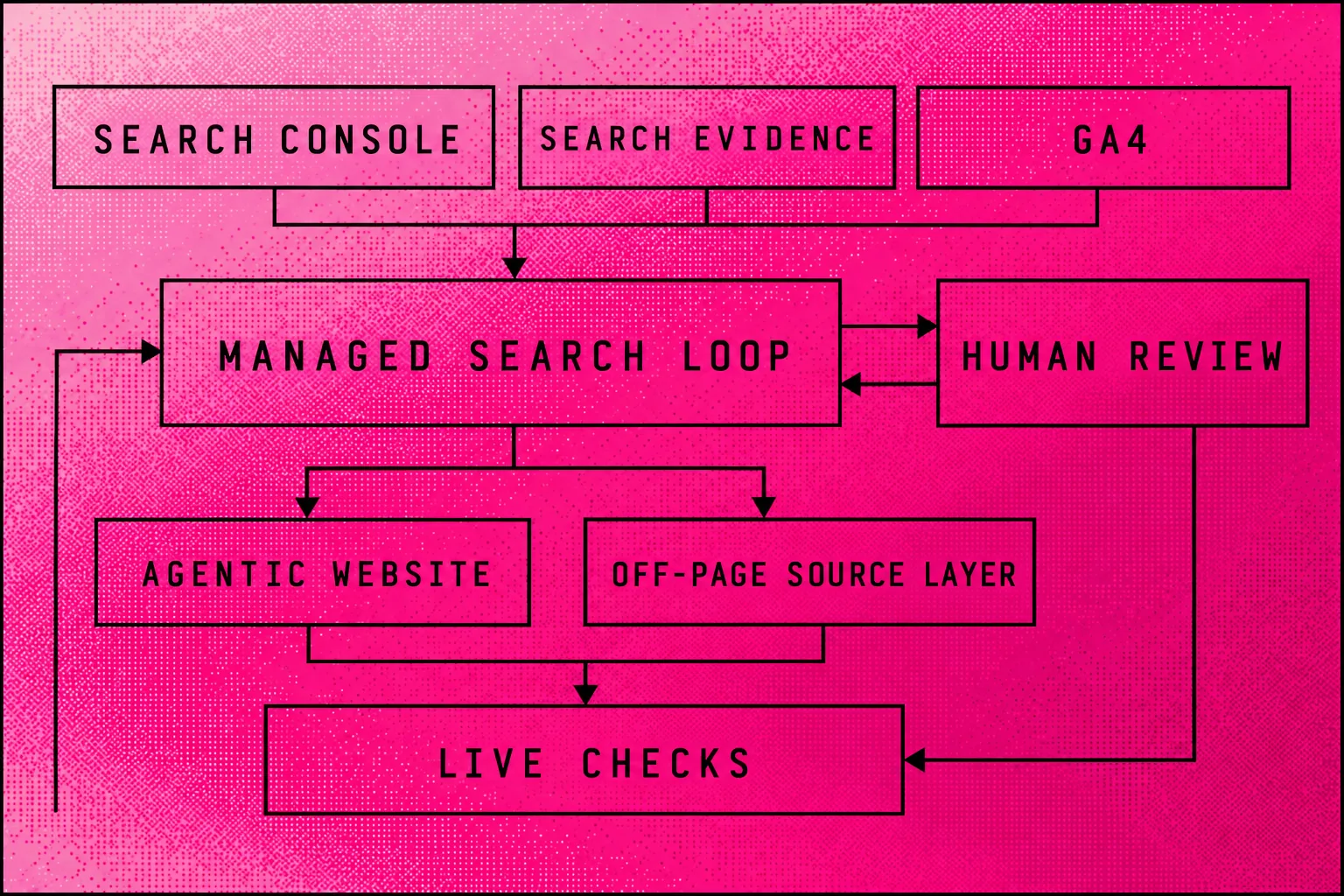
Our Managed Search Loop brings search data, page behaviour, sales feedback and observed AI answers together before we choose the next change.
Where does Searchmaxxed fit?
Searchmaxxed does agentic SEO: we build AI agents that help us research, fix and measure search work. Our Managed Search Loop uses that evidence to choose the next job. People review each change before it goes live.
We connect the agents to your Search Console and GA4. Each week, they read Google results, inspect competitor sites and check what AI answers say about you.
The Managed Search Loop checks those findings against your plan. We choose a job and build the change. A person reviews it before release. We check the live result and use the findings in the next round.
We make page changes on your Agentic Website: new pages, technical fixes, structured data and internal links. The site lives on GitHub and Vercel. You own the site, repository, content and data.
We build external support through the Off-Page Source Layer: links, reviews, business listings, press and mentions on other sites.
Before Searchmaxxed, I built Radiant Roof Repairs from zero to more than $1 million a year in revenue. SEO was the only marketing channel. Three high-intent Gold Coast roofing searches reached number one within 90 days. I did the pages, research, competitor checks and updates manually.
You can read that work in the Radiant Roof Repairs case study. The agents now help us run those steps each week.
Our packages set the amount and kind of work:
- Local Search includes local service pages, daily Business Profile management, reviews, local links, listing cleanup and local AI tracking.
- Growth System includes new or rebuilt pages, technical work, structured data, internal links, source work and AI tracking.
- Agentic Search Engineering adds comparison and industry pages, press releases, ongoing digital PR, link campaigns and broader AI-answer tracking.
- Custom & Enterprise can cover several markets, dedicated engineering, custom reporting and original research.
The Agentic Website Full Build covers market research, site structure, design, technical SEO, customer paths and measurement. Agentic Migration keeps a design worth keeping and moves the site into your owned repository. The AI SEO Audit diagnoses the search gaps and puts the fixes in order.
Frequently asked questions
Can you do SEO by yourself?
Yes. Google's starter guide explains changes a website owner can make, including titles, content, links and images.[1] Start with work you understand; get technical help when you can't check the consequences of a change.
Can I learn SEO for free?
Yes. You can read Google's SEO Starter Guide without buying a course.[1] Work through it with a page you control so each idea becomes a task you can inspect.
What does SEO mean in marketing?
SEO means search engine optimisation: helping people find and choose your website through search.[1] In a marketing plan, I'd connect the searches you target to the products or services you sell.
Why do some guides describe three types of SEO instead of four?
What are the three Cs of SEO, and should I use four Cs or five pillars?
What is an SEO keyword example?
“Coffee machine for a small kitchen” is an example of a target phrase for our proposed shop task. Google recommends considering the words your audience might search, including differences between beginners and experienced users.[1] Choose language that matches the product and the question.
What is an SEO-friendly meta description?
What is an SEO ranking?
What is an SEO tool used for?
What is an SEO service or agency?
An SEO service handles agreed work to improve a site's search presence.[1] Ask whether it includes research, writing, technical fixes and publishing, or only advice. Confirm who checks the live changes.
What is an SEO audit?
An SEO audit examines search gaps and site problems, then recommends work to address them. Ask for the affected pages, the evidence behind each finding and the order of fixes. Confirm whether someone will implement the recommendations.
What should an SEO report include?
How long does SEO take to show results?
Is SEO different for healthcare and dental websites?
Health-related SEO needs particular care with trustworthy information. Google gives more weight to strong trust-related signals for subjects that can affect health or safety.[5] Use accurate facts and clear sourcing; SEO doesn't replace a qualified person's review of health claims.
Who owns the website, and can agents publish changes on their own?
You own the Agentic Website, repository, content and data from day one. Our agents assist research and production within the Managed Search Loop. A person approves every public change before it goes live.
- Google Search Central: Search Engine Optimization (SEO) Starter Guide
- MarketingLab: What is SEO and Why Is It Important for Businesses?
- Google Search Central: AI features and your website
- Google Search Central: In-depth guide to how Google Search works
- Google Search Central: Creating helpful, reliable, people-first content
- AU Digital: What is SEO and What are Google Ads?