


The 80/20 rule means a small share of your pages or tasks, roughly 20%, can produce most of your results.[1]
- Find your leading pages and query themes in Search Console.[1]
- Check business value before giving the busiest page more time.
- Fix a clear access or content problem before polishing unrelated pages.
Choose one valuable page with a clear problem. Make the change and review its search performance alongside enquiries.
The 80/20 rule in SEO says that roughly 80% of your results come from about 20% of your pages, queries or fixes.[1] Treat it as a rule of thumb, then measure your own site's split.[1] Start with Search Console, then check which visits become enquiries or sales before choosing the next job.
How does the Pareto principle apply to SEO?
The Pareto principle in SEO describes uneven results: a small share of pages or query groups can carry most traffic and business outcomes.[1] The familiar 80/20 shorthand means roughly 80% of outcomes from 20% of inputs.[2] Test the pattern on your site before allocating work around it.
Keep three questions separate:
| Question | What to inspect |
|---|---|
| Which pages attract search visits? | Page clicks in Search Console. |
| Which searches matter to the business? | Query intent alongside enquiries and sales. |
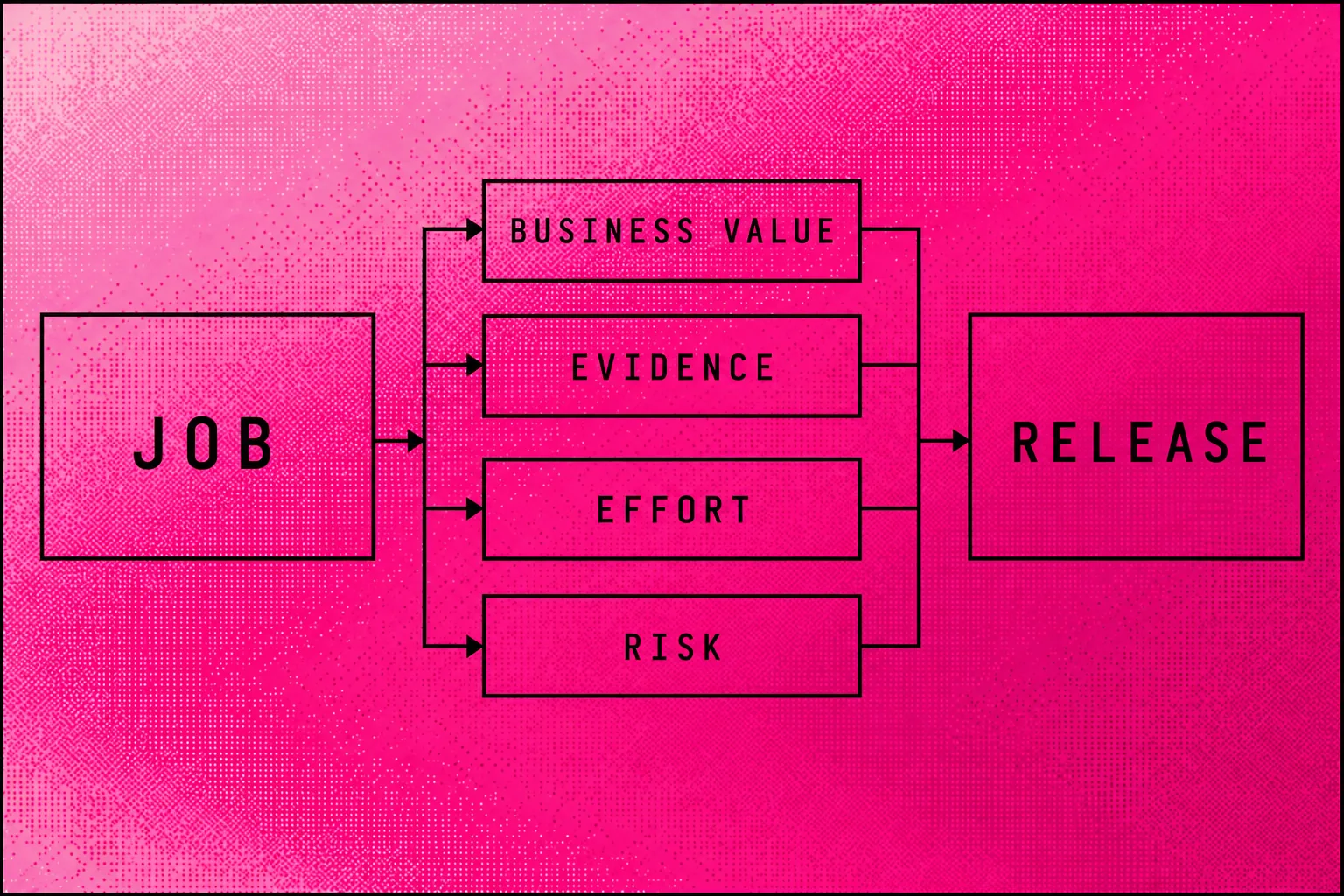
| Which change deserves the next release? | Value, evidence, effort and risk. |
A popular page and a valuable page can deserve different treatment. I would protect an article that attracts the right audience. I'd also investigate a service page with fewer visits when sales records connect those visits to paid work.
An uneven traffic split alone doesn't tell you which edit caused it. Treat the split as a starting point for investigation. Record the change you choose and the outcome you expect to check.
How do you find your highest-value pages in Search Console?
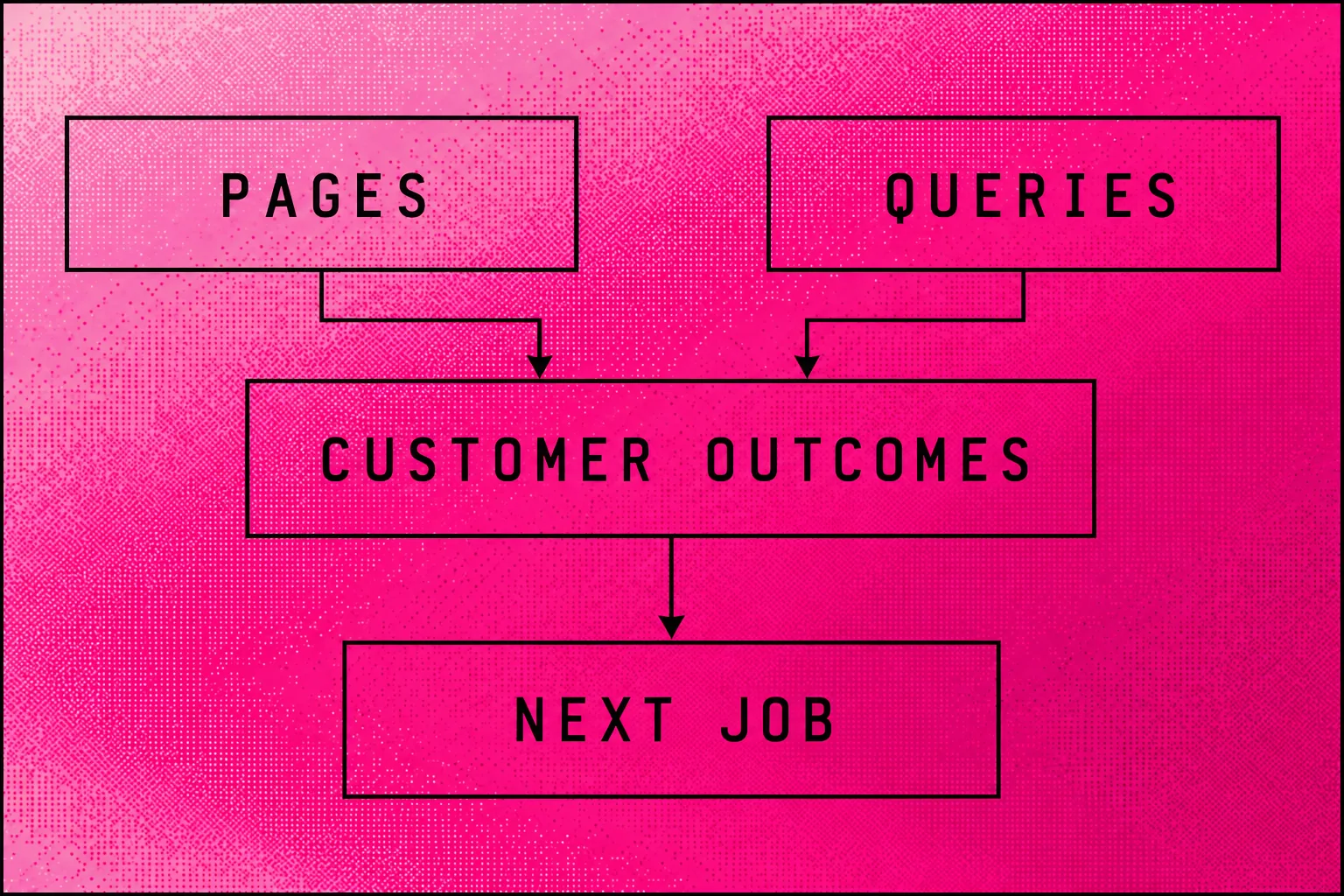
Find your SEO priorities in Search Console by exporting page and query data, then adding business value to the shortlist.[1] Use four steps: set a period, sort pages, inspect queries and check customer outcomes. You'll need access to the right site and its enquiry or sales records.
Set a period you can compare
Open the site's Performance report. It contains clicks, impressions, average position and queries, with page and search-term detail.[1] Export the Pages and Queries tables for your chosen period.[1]
For a starting monthly review, I would use matched 28-day periods. Keep the search type, country and device filters consistent between periods. Mark any seasonal event or promotion beside the comparison.
Sort pages by clicks
Sort the page export from most clicks to fewest. Add a running total beside the clicks column. Then calculate each row's cumulative share:
Cumulative share of exported-page clicks = running total of clicks ÷ sum of clicks in the page export.
Divide the number of leading pages by all pages in the export, then compare that with their share of clicks. Hypothetical example: two of ten pages get 800 of 1,000 clicks. That's 20% of pages earning 80% of clicks. Keep your actual split even when it differs.
Inspect the query themes
Sort the query export and group searches that seek the same answer. The 8020.in guide recommends reviewing query groups alongside intent and business value.[1]
Keep searches containing your business name separate from searches for a service or problem. For each shortlisted page, review the relevant queries in Search Console. Check whether the page answers the request behind them.
Keep impressions and average position beside clicks. Investigate a page that appears for relevant searches but attracts few visits. Read the live results and the page before choosing a title change.
Add enquiries and sales
Use GA4 and sales records to review what happened after a visit. Searchmaxxed's work-selection method combines GSC pages and queries with landing-page behaviour, conversions and sales feedback.
Build a worksheet with these fields:
| Field | What to enter |
|---|---|
| Page or query theme | The URL or search topic |
| Search performance | Clicks, impressions and average position. |
| Business fit | The offer and customer action it supports |
| Customer outcome | Enquiries, bookings or sales you can trace |
| Proposed change | The specific fault or gap to address |
| Effort and risk | Who must do it and what could break |
| Review | Release date, comparison period and outcome |
Mark unknown outcomes as unknown. Check tracking before treating a blank field as evidence that the page has no value.
Which keywords should you prioritise?
I prioritise SEO queries that match what the business sells and support a clear customer action. Start with query evidence, then check the page's fit. Searchmaxxed's work-selection method weighs proximity to customers and revenue alongside evidence and delivery cost.
For an Australian roofing business, consider a repair-enquiry search alongside a general roof-maintenance question. These are example intents. I would give the repair page first attention if its visits connect to good enquiries and the page has a clear gap.
The maintenance article could still deserve work. Check whether it helps customers understand a repair, supports another page or brings enquiries of its own.
Avoid making a new page for every spelling variation. Google's language systems can connect a page with related queries even when it lacks every exact phrase.[3] Group the searches by the answer they need and give each page a clear purpose.
For wider planning, our content strategy service explains how we choose the pages to create or rebuild. Use the shortlist to decide what needs attention now; keep the wider plan for work that needs more evidence.
Which content, technical fixes and backlinks deserve work first?
I choose an SEO task by business value, evidence, effort and release risk. Searchmaxxed uses those factors in its work-selection method. Give the next release to a clear constraint on a valuable page, then verify the change.
Use these conditional examples when reviewing your worksheet:
| What you observe | What I would inspect next |
|---|---|
| Google can't access a service page's main content | The access fault before copy edits |
| Relevant searches show a page with a vague title | The search results and title's fit |
| An existing guide misses the question behind its queries | The missing answer and examples |
| A service page lacks links from related pages | A relevant internal link path |
| External records give conflicting business details | The facts and records to correct |
Google says access to page resources affects its understanding of content.[4] Use URL Inspection in Search Console to check what Google sees.[4] Our technical SEO service covers this type of work.
Google recommends titles that are clear, concise and accurate for the page.[5] Change a title when you can name its defect. Keep the promise consistent with the content the visitor reaches.
Internal links help users and search engines find related pages.[6] Add a link where it gives the visitor a relevant next step. Google's guidance also recommends anchor text that explains the destination.[6]
For backlinks, decide what the source would add before pursuing it. I would seek a relevant source that supports the business or page, then check what went live. Our link-building service explains that work.
For a local business, include its profile and review work in the shortlist. Searchmaxxed's local SEO service includes profile management, reviews and local-source work.
Write the reason for each proposed task in a sentence. If you can't connect it to a customer need, a technical fault or evidence from search, park it for investigation.
What does the 80/20 rule in SEO look like in practice?
At Radiant Roof Repairs on the Gold Coast, three high-intent roofing searches reached number one within 90 days. I built the business from zero to more than $1 million a year in revenue using SEO as the only marketing channel. I did the research, pages, competitor checks and updates manually.
I take a practical lesson from that work: start with searches close to a job the business can deliver. Build the page around that request, then keep checking the result.
The Radiant Roof Repairs case study covers the historical SEO work. Measure your own traffic split and the effect of individual fixes before drawing a conclusion about either.
Apply the same decision to your own shortlist. If a service page attracts suitable enquiries, investigate its missing answers or access problems before another round of edits elsewhere. If a new service has no page, investigate that gap even though it has no existing clicks.
What does Google say about focusing your SEO work?
Google's SEO Starter Guide says compelling, helpful content will likely affect search presence more than its other suggestions.[3] Its people-first guidance asks whether visitors leave with enough information to achieve their goal.[7] Judge a proposed change against that need.
Google also recommends examining the pages and searches affected by a traffic drop.[7] That gives you somewhere specific to investigate. Review the page against its current search intent before commissioning a rewrite.
Google has no preferred word count.[7] It also says adding or removing lots of content to make a site seem fresh won't help rankings overall.[7]
So I wouldn't make a page longer to meet a quota. Add the missing answer, evidence or explanation. Keep new pages tied to a real offer or audience need.
Treat the Pareto principle as your planning tool. Google says its guidance contains no secret that will automatically rank a site first.[8] A short task list still needs sound choices and follow-up checks.
How do you check whether your SEO priorities worked?
Check an SEO priority by logging the release, comparing the same Search Console scope and reviewing customer outcomes. Use three checks: the live change, search performance and enquiries or sales. Keep the page, date and intended outcome together.
First, inspect the live page. Check that the answer, link or technical change works as intended. Test the enquiry path when the job touches it.
Next, compare the chosen pages and query themes across matched periods. Keep a separate note for changes elsewhere on the site. I would also note promotions or changes in the searches you target.
Then review enquiries and sales alongside the search results. Keep a traffic increase separate from a business improvement until the customer records support both.
Google says changes can take hours to months to appear in search.[9] It suggests waiting a few weeks to assess the effect, and warns that some changes produce no noticeable impact.[9]
Searchmaxxed uses a 7-day view for operational checks, matched 28-day periods for monthly decisions and matched 90-day periods for direction. Those are review windows. Give a slow-moving change time while fixing a live fault when you find it.
Where does Searchmaxxed fit?
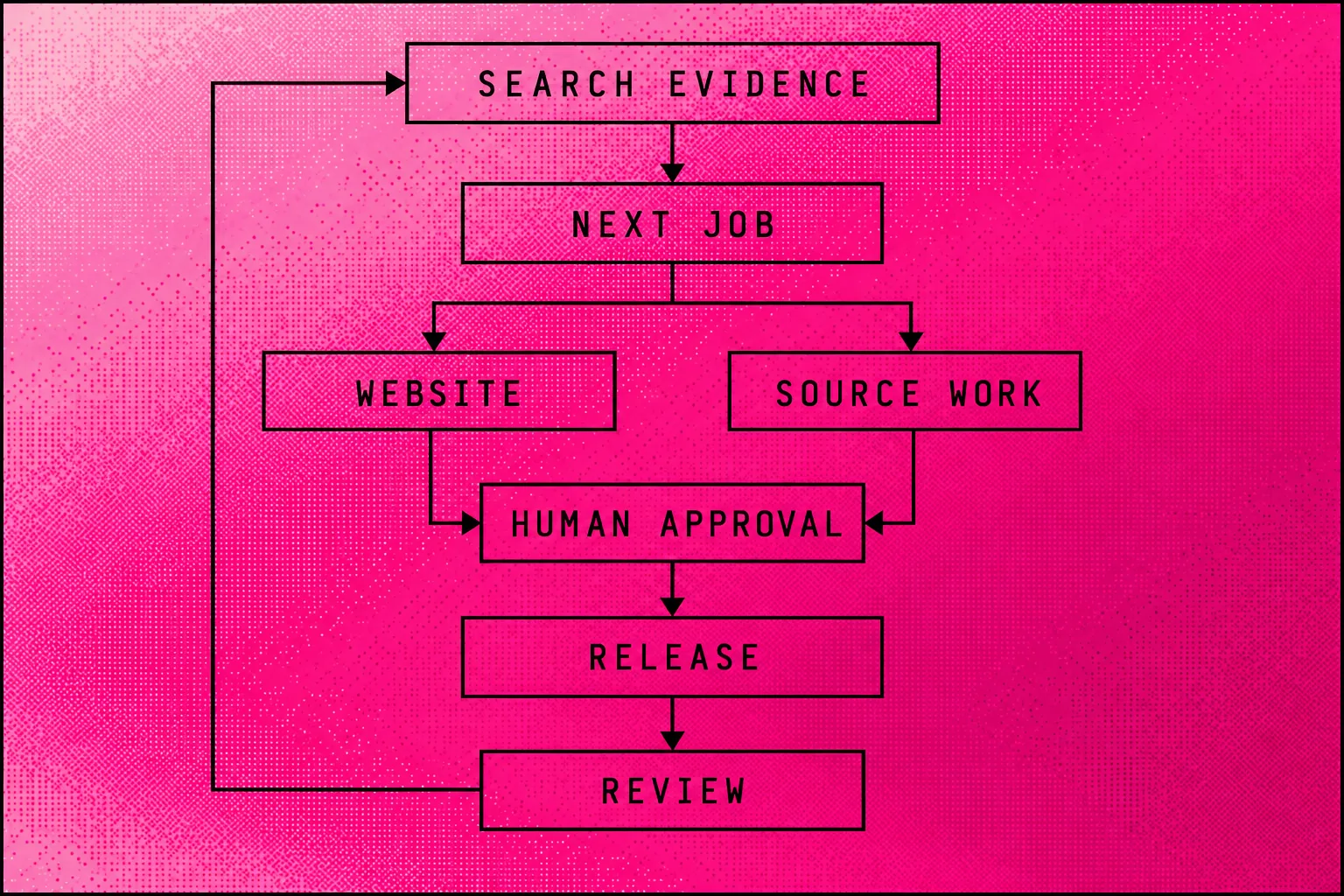
Searchmaxxed runs agentic SEO: AI agents help research and choose work, while people approve changes. Our Managed Search Loop connects search evidence with the plan, selects the next job and reviews what happened after release.
We connect the agents to your whole Search Console and GA4. Each week they read competitors' sites, Google results and AI answers about your business. We review the gap and choose the work.
We make new pages and fixes on your Agentic Website. It lives on GitHub and Vercel, and you own it. We also add schema, the code that states page facts, and internal links.
Our Off-Page Source Layer develops links, reviews, citations, press and mentions on other sites. A person approves every change before it goes live. The agents then measure the result so we can choose the next job.
Our SEO service covers the work on Google. AEO and GEO cover answer-engine and generative-search work, including checks of AI answers. Our AI SEO explainer describes how the parts fit together.
The managed packages set the delivery scope:
| Package | What it includes |
|---|---|
| Local Search | Local pages, profile management, reviews, citations, local links and AI-answer tracking |
| Growth System | Page releases, landing-page work, technical fixes, internal links and source work |
| Agentic Search Engineering | Growth System work plus more pages, digital PR and wider AI-answer tracking |
| Custom & Enterprise | Agreed scope for multiple markets, dedicated engineering and custom research |
The Agentic Website Full Build covers research, site structure, design, technical SEO and measurement. Agentic Migration keeps a design worth keeping and moves the site to an owned repository. The AI SEO Audit identifies gaps and ranks fixes before setting the plan.
For buying context, compare SEO costs in Australia and my Australian SEO agency shortlist.
Frequently asked questions
What is the 80/20 rule for SEO?
The 80/20 rule for SEO means putting your work into the few pages, queries or tasks with the closest link to results.[1] Use your site's evidence to find them. Keep the actual traffic split you measure instead of forcing the familiar ratio.
Does 20% of my website have to produce 80% of traffic?
No. The 8020.in guide warns against treating that split as a universal law for a website.[1] Calculate your own page-click distribution, then review business value before selecting work.
What is the 80/20 rule in marketing?
The 80/20 rule in marketing applies the Pareto idea of roughly 80% of outcomes coming from 20% of inputs.[2] I would test that idea across customers or channels using sales records. For SEO, start with pages and query themes.
What are the top 5 SEO strategies?
Is SEO dead now with AI?
No. Google's current guidance still describes SEO as helpful when it supports people-first content.[7] I would keep improving pages for customers while checking AI answers as a separate part of the search plan.
Can I use the 80/20 rule on a new website?
Should I delete pages that get no clicks?
I wouldn't delete a page on click count alone. Check its purpose, links and customer role first. Google warns against bulk content removal merely to make a site seem fresh.[7] Remove or combine content when you can explain the specific problem it solves.
Should I improve old content or publish new pages?
Improve an existing page when you can name its defect. Create a page when a genuine customer question or offer lacks an answer. Check whether a page already exists for the question before you write a new one.
Can Searchmaxxed help me choose the next SEO task?
Yes. Searchmaxxed's Managed Search Loop combines GSC queries and pages with GA4, sales feedback, competitor pages and technical checks. We weigh customer value, evidence, effort and release risk, then build and review the selected change.
How often should I review my SEO priorities?
I would check live work each week and review results across matched monthly periods. Compare matched 28-day periods for monthly decisions and 90-day periods for direction. Google advises allowing a few weeks before assessing search effects.[9]